Lithostone prices: what you’re paying for (and what changes the cost)
Lithostone prices: what you’re paying for (and what changes the cost)
Lithostone benchtops don’t have one fixed price. The total depends on the stone you choose and how complex the job is to make and install.
If you want an accurate quote, send your plan plus a couple of photos. We’ll price your exact layout (including cut-outs, joins and access).
Quick next step: View the Lithostone range at SEQ Stone, then send your plan or measurements for a quote.
What is Lithostone?
Lithostone is a brand of engineered quartz surfaces used for kitchens, laundries and bathrooms.
You may see it written as:
- lithostone
- litho stone (same thing)
- litestone (usually a typo)
For pricing, treat these as the same product type: engineered stone cut to suit your cabinetry, then installed on site.
Lithostone price ranges in Australia (what to expect)
The most accurate price is always a quote against your plan. Still, most pricing falls into two quote styles.
- Supply-only (often priced per m²): stone supply only. No measuring, fabrication or install.
- Fully installed: quoted as a total based on your kitchen (templating, fabrication, cut-outs, joins and installation).
In general, simple layouts in standard colours sit at the lower end. Veining, waterfall ends, splashbacks and tricky access push the price up.
If you send your plan and 1–2 colours, we can price it properly and compare like-for-like with other brands.
The main drivers of Lithostone prices
Most quotes come down to two buckets:
- Material (slabs and colour tier)
- Fabrication + installation (measure, labour, cut-outs, joins, handling and access)
Colour tier, pattern and availability
Not all Lithostone colours cost the same. Heavier veining and more complex patterns often sit in higher tiers.
Availability matters as well. If a colour isn’t in local stock, lead time (and sometimes cost) can change.
Slab yield also affects price. If you want veining to run a certain direction across an island or waterfall, you may need extra slab to get the look.
If you’re comparing brands (including Caesarstone), compare:
- Solid vs veined pattern complexity
- Same finish (polished, matte, textured)
- Similar slab format/availability
Thickness: 20mm vs 40mm (what “40mm” usually means)
Thickness is one of the easiest ways to control cost.
- 20mm: modern look and often best value
- 40mm look: usually costs more due to extra workshop time and weight
In engineered stone, “40mm” can mean:
- Solid 40mm: true thickness (less common, heavier, usually more expensive)
- Mitred 40mm edge build-up (most common): a 20mm top with an added mitred edge to create a 40mm look on visible edges
A common compromise is a 20mm top with a 40mm mitred edge on the island front.
Layout and slab yield
Two kitchens can have the same square metres and different prices. That’s because piece sizes, join locations and how the stone nests on a slab change waste and labour.
Small design tweaks can sometimes reduce cost, such as:
- Shifting a join away from a sink or cooktop
- Slightly adjusting an island length
- Changing the direction of a run to improve slab yield
Sometimes the “cheapest” change adds a visible join. It’s worth balancing savings with day-to-day aesthetics.
Cut-outs and machining
Cut-outs add labour and finishing. Some are more time-consuming.
Common items that affect price:
- Undermount sink cut-out (more polishing/edge finishing)
- Topmount/drop-in sink cut-out (usually simpler)
- Cooktop cut-out
- Tap holes / accessory holes
- Drainer grooves
If you’re supplying the sink or cooktop, send the model or spec sheet. It helps confirm clearances and support requirements before anything is cut.
Edge profile
Square edges are the most common. More detailed profiles take more time.
Common edge options:
- Square edge
- Pencil round
- Mitred edge (often used for the 40mm look)
Waterfall end panels
Waterfall ends can significantly change the quote. They add stone area, polishing, joins and install handling.
If you want one waterfall end or two, call it out early. Pricing can differ a lot.
Splashbacks (upstand vs full height)
Stone splashbacks can add detail and labour, especially with interruptions.
Pricing changes with:
- Upstand vs full-height splashback
- Returns and window reveals
- Power point cut-outs
- Wall straightness (important for full height)
Joins/seams
Joins affect both the look and the labour.
Cost changes with:
- Number of joins
- Where the joins go (especially near sinks/cooktops)
- Whether extra joins are needed due to long runs, slab yield or access
A layout may be possible as one piece in a workshop, but not installable as one piece in a real home.
Site access and install conditions (big in SEQ)
Access can be a major cost driver because it affects labour time and safe handling.
Common SEQ factors:
- Queenslander stairs and split levels
- Narrow hallways or tight side access
- Limited parking or a long carry
- Apartments (lift bookings, loading dock rules, inductions)
- Large island pieces that need extra crew
- Crane requirements (occasionally)
A couple of phone photos of the entry path (street to kitchen) helps avoid surprises.
Installed vs supply-only (what’s included)
A big reason quotes look different is scope. Always confirm whether you’re looking at supply-only or fully installed.
Supply-only usually includes
- Lithostone slab/surface supply (colour/finish as specified)
Supply-only usually excludes
- Measure/template
- Fabrication (cutting, polishing, edge finishing)
- Cut-outs
- Delivery
- Installation
Installed quotes commonly include
- Site measure/template (once cabinetry is ready)
- Fabrication (including edge finishing and polishing)
- Cut-outs as specified
- Delivery
- Installation
Common exclusions to watch for
- Plumbing and electrical disconnect/reconnect
- Sink/cooktop supply (unless stated)
- Cabinet levelling/packing or rectification
- Wall rectification (important for splashbacks)
- Access-related extras (stairs, long carry, lift booking fees, crane)
- Removal/disposal of old tops (often separate)
Quote checklist (copy/paste)
Use this to get faster pricing and compare quotes fairly.
Layout and scope
- Areas included (kitchen only, or laundry/bathroom too?)
- Runs and sizes (include island dimensions)
- Waterfall panels (one end or both ends?)
- Splashback scope (upstand or full height, including returns/reveals)
Thickness and edges
- 20mm or 40mm
- If 40mm: solid 40mm or mitred build-up
- Edge profile (square / pencil round / mitred)
- Which edges are finished (front only, ends, island all around)
Cut-outs and machining
- Sink type (undermount or topmount)
- Cooktop model/spec
- Tap holes and accessory holes
- Drainer grooves (if required)
Joins/seams
- Number of joins
- Join locations shown or described
Measure, fabrication and install
- Template/measure included (and when)
- Fabrication included
- Installation included
Removal and access
- Removal/disposal of old tops included or separate
- Access notes (stairs, narrow access, apartment rules, long carry)
Lithostone Builders Range: what to expect
The Lithostone Builders Range is usually a smaller, more predictable selection aimed at common cabinetry and streamlined decisions.
It often suits:
- New builds with allowances
- Investment properties
- Repeat selections across multiple jobs
It can be more cost-effective because it typically focuses on readily available colours and straightforward finishes. Final pricing still depends on your layout, cut-outs, joins and access.
Lithostone vs other engineered stone brands (including Caesarstone)
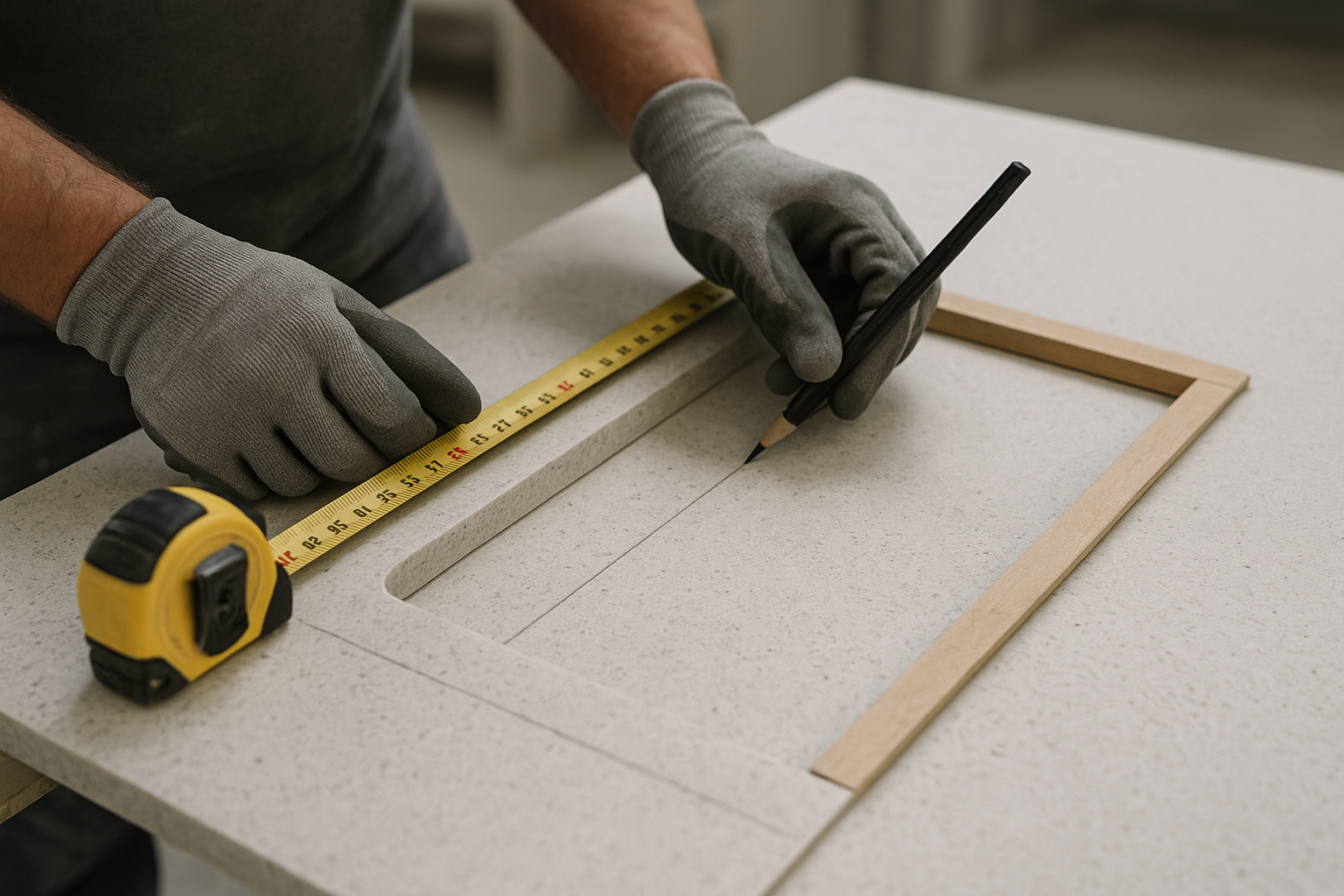
Accurate measuring and templating is a key part of getting pricing right.
Lithostone sits in the same category as other engineered stone benchtops. Like-for-like comparisons matter.
To compare fairly, price the same kitchen with:
- The same thickness
- The same edge profile
- The same cut-outs
- Similar colour complexity and finish
Compliance and safety (Australia/QLD note)
Engineered stone work should be done with appropriate safety controls and in line with manufacturer requirements and industry obligations.
If you want, ask what dust control and handling controls apply on your job, and how the install plan changes for your access.
Example: what changes the price on a typical kitchen
Same Lithostone colour. Different scope.
Kitchen A (usually lower cost)
- 20mm top
- One undermount sink cut-out
- One cooktop cut-out
- Upstand splashback
- Simple edges
Kitchen B (usually higher cost)
- 40mm-look island (mitred edge) with waterfall ends
- Two sinks (main + bar)
- Full-height splashback with power point cut-outs
- Extra joins due to long runs
Kitchen B costs more because it needs more material, more fabrication time, more joins and more handling on install.
How to get an accurate Lithostone quote from SEQ Stone
Send:
- PDF kitchen plan or cabinet drawings
- 2–4 photos of the space
- Your suburb (Brisbane / Logan / Ipswich / Redlands / Gold Coast / Sunshine Coast)
- Your shortlist of Lithostone colours (or your Builders Range colour)
- Thickness: 20mm or 40mm (and if 40mm is mitred)
- Edge profile (square / pencil round / mitred)
- Sink type (undermount/topmount) and cooktop model
- Any waterfall ends or stone splashbacks
- Access notes (stairs, tight corners, apartments/lifts)
No plans yet? Send rough measurements and photos for a ballpark. Once cabinetry is installed and levelled, we’ll template/measure and confirm final pricing.
Helpful links:
Lead times and scheduling
Lead time depends on colour availability, job complexity, and whether you’re ready for final measure.
Before install, you usually need:
- Cabinetry installed and secured
- Cabinets levelled and finished (fillers matter)
- Sink and appliances confirmed (model/spec)
- Clear access on install day
- Coordination with plumber/electrician for fit-off
If you’re working to a schedule, tell us your target install week. We’ll confirm what’s realistic and what needs to happen before templating.
Care and maintenance (quick basics)
Engineered stone is made for everyday use, but basic habits protect the finish.
- Use a chopping board
- Use trivets for hot cookware
- Clean spills early (especially oils and strong colourants)
- Avoid harsh or abrasive cleaners unless recommended
Matte/textured finishes can show smears and fingerprints differently to polished. Ask what day-to-day cleaning looks like for your chosen finish.
Ready for pricing?
The fastest way to compare Lithostone (or compare it to other brands) is to price your actual layout.
Send your plan and a couple of photos and we’ll quote it with cut-outs, edges, joins and installation (including access).
- Request a quote: Lithostone – SEQ Stone
- Or start here: SEQ Stone home
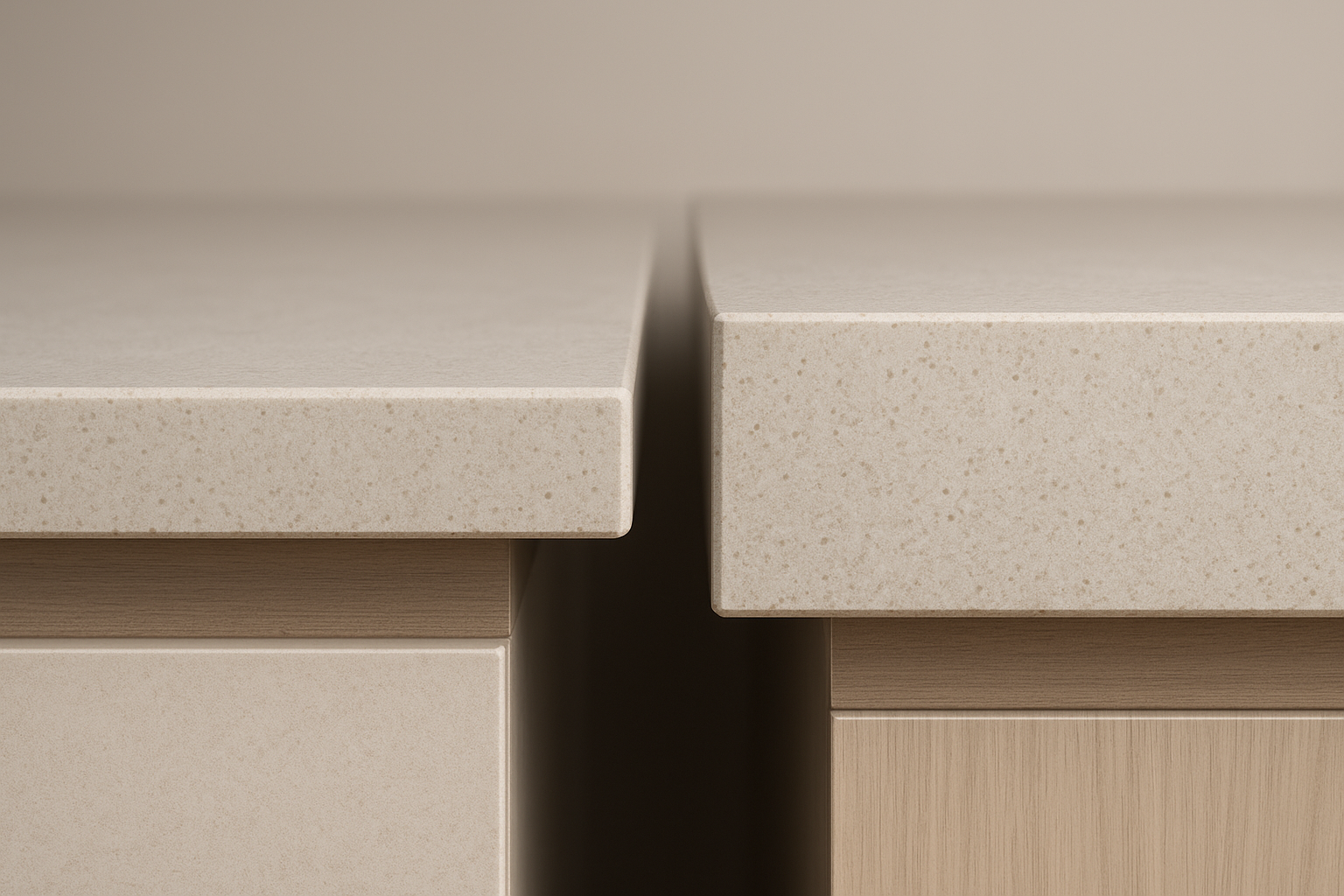
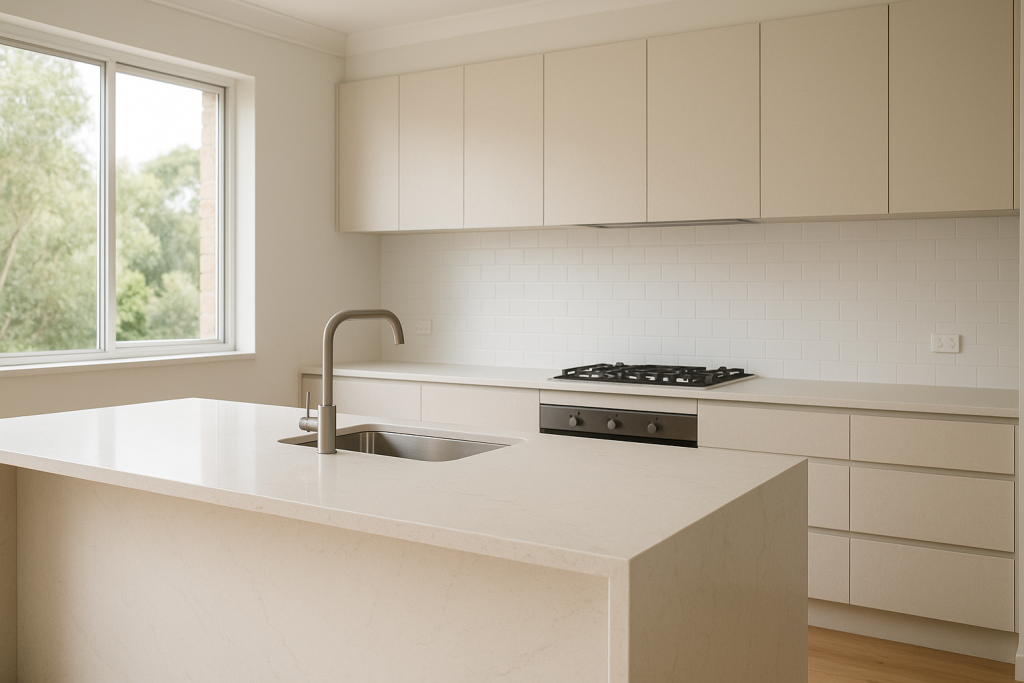
20mm vs 40mm changes both the look and the installed cost.
FAQs
Why do Lithostone prices change from one kitchen to the next?
Because the total depends on material tier and job scope: thickness, cut-outs, joins, splashbacks, edge profile, waterfall panels and installation access.
Are all Lithostone colours the same price?
No. Colours sit in different tiers, and veining direction can affect slab yield.
How do Lithostone and Caesarstone prices compare?
Both vary by colour tier and scope. The fairest comparison is pricing the same kitchen in 1–2 colours from each brand with identical thickness, edges and cut-outs.
What’s better: 20mm or 40mm?
20mm suits most modern kitchens and is often better value. A 40mm look is usually a mitred edge build-up on a 20mm top. Solid 40mm is heavier and typically costs more.
What do you need for an accurate quote?
Plans or measurements, photos, suburb, thickness (and whether 40mm is mitred), edge profile, and sink/cooktop details.
Do you supply and install across South East Queensland?
Yes. We’re based on the Gold Coast and service much of SEQ. Send your suburb and we’ll confirm coverage and access requirements.
Do you service Melbourne for Lithostone?
We focus on SEQ. If you’re outside SEQ (including Melbourne), it depends on local fabricators/stockists. If you share your suburb and colour, we can try to point you in the right direction.