Stone benchtops in SEQ: a practical guide (Gold Coast + South East Queensland)
Stone benchtops in SEQ: a practical guide (Gold Coast + South East Queensland)
Stone benchtops look best when the key choices are locked in early. Once we template, the stone is measured and cut to suit your exact cabinets.
This guide covers the decisions that most affect finish quality, lead time, and cost for kitchen and bathroom stone benchtops across the Gold Coast and South East Queensland (SEQ).
For a quick overview, see SEQ Stone – Stone Mason Gold Coast.
Start with how you use the kitchen
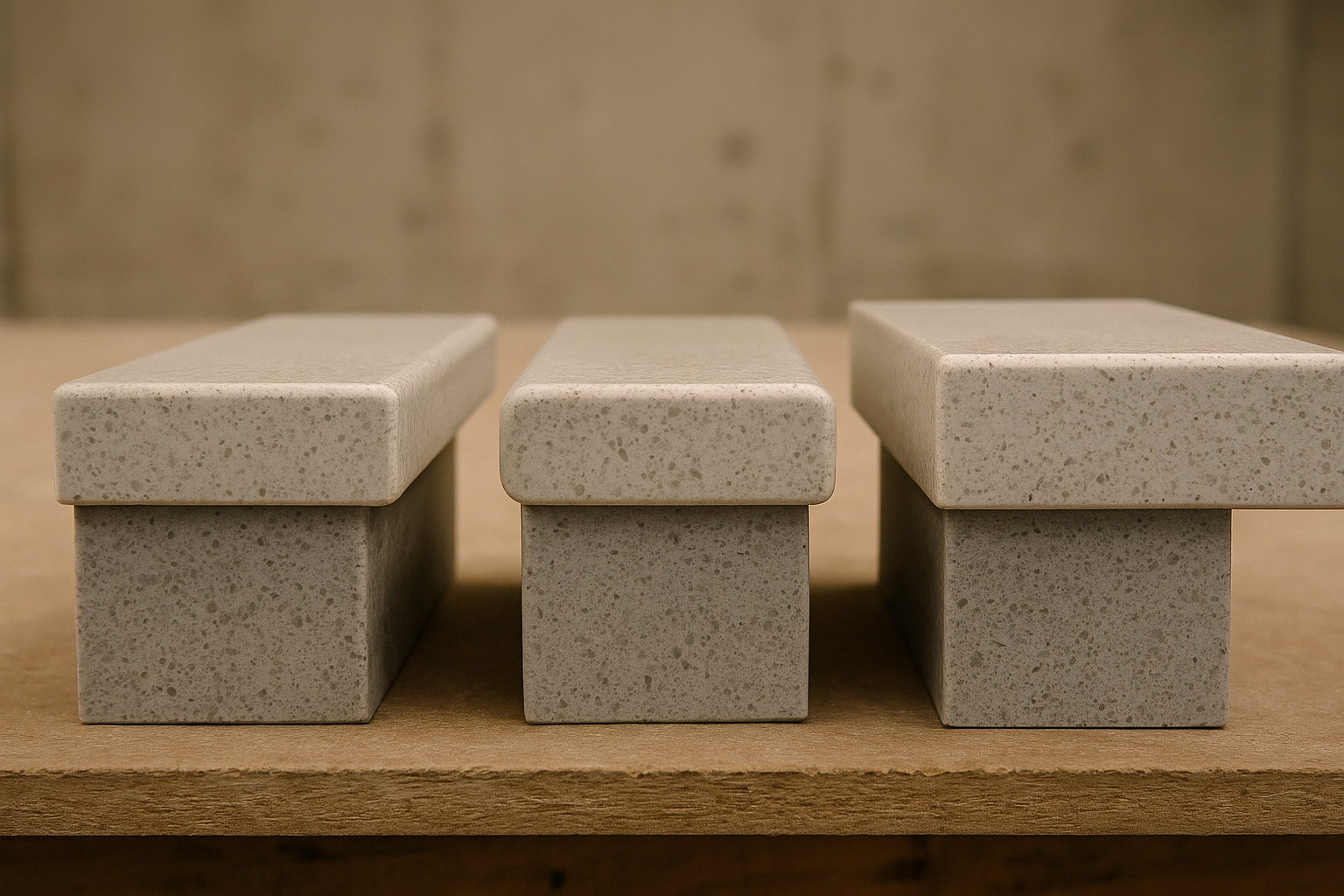
Edge profile samples help you choose the right feel for your kitchen.
Your day-to-day use should drive the details (not just the colour).
- Cook a lot? Plan safe heat habits (use trivets) and allow landing space near the cooktop and oven.
- Busy family home? Expect more knocks on corners and overhangs. A slightly softened edge helps.
- Entertain at an island? Plan seating and power early. Pop-ups and grommets need to be decided before measuring.
These choices affect thickness, edge profile, and where joins should go.
SEQ tip: plan the “view angles”
Open-plan kitchens are common in SEQ. Think about what you’ll see from the living area.
This can affect where joins are hidden and which side of an island gets the best-looking slab movement.
Choosing stone: engineered vs natural
Both can suit SEQ homes. The best option depends on the look you want, how much variation you like, and how low-maintenance you want it to be.
Engineered stone (quartz benchtops)
Engineered stone is popular for clean, consistent finishes.
- Consistent pattern and colour from slab to slab
- Suits modern designs (common in SEQ builds and coastal-style renos)
- Wide range of whites, neutrals, marble-look, and darker tones
Common brands include Lavistone, Vicostone, Vadara, and YDL Stone.
Browse options via our Stone Range. If you already know your brand, see Vicostone and Lavistone.
Worth knowing in bright SEQ homes
Light colours and matte finishes can show dust, crumbs, and water marks more than mid-tones. They still look great, but you’ll notice everyday mess sooner in strong natural light.
Check cleaner and heat limits
Some colours and finishes are more sensitive to certain cleaners, heat, or scratches.
When you shortlist a stone, ask what cleaners to avoid and whether boards and trivets are “musts” for that finish.
Natural stone (more variation, more character)
Natural stone gives you movement and variation that manufactured patterns can’t fully copy.
Key things to allow for:
- Variation in veining and tone is normal (even within one slab).
- Some natural stones need periodic sealing.
- Good habits matter: wipe spills, use boards, avoid harsh cleaners.
If you’re choosing between slabs, think about visibility. A waterfall end shows veining far more than a run against a wall.
Important: performance varies by stone type
“Natural stone” covers a wide range of materials. Some handle acids (lemon/vinegar), oils, and heat better than others.
Ask how your shortlisted stone performs in real kitchen use, and what to avoid.
Kitchen vs bathroom benchtops: what changes?
Stone works well in bathrooms, but the conditions are different.
Key points:
- Moisture and humidity: daily splashes and steam mean cleaning and sealing (where needed) matter. In SEQ, good ventilation reduces build-up and mould around edges and silicone.
- Shallower vanities: tap placement and bowl choice can reduce usable bench space.
- Basin type: above-counter, undermount, and integrated basins change cut-outs and edge details.
- Wall-to-wall accuracy: tight spaces need tidy scribing and clean silicone lines.
- Splash zones: if you’re running stone up the wall, lock in tap and mirror heights early.
If you’re doing multiple rooms, choose kitchen and bathroom colours together so the palette stays consistent, especially in open-plan homes.
Bathroom cleaner warning
Some bathroom cleaners are acidic or bleach-heavy. If you’re planning natural stone, check that your day-to-day products are stone-safe.
Thickness: 20mm vs 40mm look
Answer first: 20mm is the clean, modern standard. A 40mm look adds visual weight and is often made with a mitred edge.
20mm
- Clean profile
- Suits most kitchen designs
- Works well with minimalist cabinetry and smaller spaces
40mm look (often mitred)
- Adds visual weight on larger islands
- Suits statement or classic designs
- Needs tidy detailing at corners and joins
If you want the chunkier look, confirm how it’s made (mitred edge vs a true thick slab). The goal is strength and neat junctions.
Edge profiles (small choice, big impact)
The edge changes both the look and how the bench wears over time.
Common options:
- Eased edge (square with a small arris): sharp look, comfortable in most kitchens
- Pencil round: softer feel, good for family homes
- Decorative profiles: usually best for classic styles
A slightly softened edge can hide minor knocks better than a crisp corner.
Cut-outs and fixtures (lock these in early)
Late changes here are a common cause of delays.
Before final measure, confirm:
- Sink type: top-mount, undermount, or flush fit
- Cooktop model and required clearances
- Tap hole positions (including filtered water or Zip-style taps)
- Island power: pop-up sockets or grommets
- Integrated bins, dishwashers, and end panels that affect returns
Reusing an existing sink or cooktop? Have the model number or spec sheet ready.
Important
If the cabinetmaker changes sink cabinet width, dishwasher position, or end panels after measure, you may need a re-measure.
SEQ reno note
In older homes, walls and floors can be out of square. That can affect appliance fit and how tight tolerances can be.
Splashbacks: stone, tiled, or an upstand
Splashback choices affect measuring and trade sequencing.
Common options:
- 100mm stone upstand: tidy, simple, easy to clean
- Full-height stone: bold look and fewer grout lines
- Tiled splashback with stone bench: classic and flexible
If you’re going full height in stone, lock in power points, window reveals, and rangehood details early.
Joins: where they go and how they look
Most kitchens need at least one join, especially with long runs, islands, and L-shapes.
Joins are usually placed:
- Away from main prep zones
- Where patterns line up better
- Where they’re less visible from living areas
Joins are normal. The goal is good placement and a neat finish.
If you want a very clean look, ask early where joins are likely to land. You may be able to tweak the layout before templating.
Overhangs and waterfall ends (support matters)
Overhangs look great for seating, but they need correct support.
We’ll check:
- Overhang depth and seating position
- Cabinet support and bracket needs
- Waterfall ends and how the veining will run
For waterfall ends, confirm pattern direction early. It’s the simplest way to avoid a “cut and shut” look.
Templating and cutting: how stone benchtops are measured in SEQ
Templating is what makes the benchtop sit properly, look straight, and seal neatly.
What happens at template / final measure
- Confirm cabinets are installed, level, and fixed off
- Measure exact finished dimensions (including overhangs and end panels)
- Check walls for out-of-square areas and note scribing needs
- Lock in joins, edge profile, and cut-outs (sink, cooktop, taps, power)
- For waterfall ends or feature veining, confirm the best layout before cutting
After templating
The stone is cut and finished to the agreed details. Changes after templating (cabinet layout, appliance models, tap positions) can mean a re-measure and may affect lead time.
Local SEQ benefit
A SEQ-based team can usually schedule site visits and quick checks more easily. That helps when you’re coordinating cabinetmaker, plumber, electrician, and tiler.
Professional installation: what to expect on install day
Install day is where fit and finish really show.
A typical install includes:
- Safe handling and carrying (especially for stairs or tight access)
- Dry-fitting pieces to confirm joins and alignment
- Levelling and bedding so the stone sits correctly
- Joining and finishing seams neatly
- Sealing/siliconing where required (walls, sinks, wet areas)
How to prep the site
- Keep access clear (cars out, walkways free)
- Secure pets
- Plan for plumbing and electrical fit-off after the benchtop is installed
If it’s a reno, consider protecting floors and freshly painted walls in high-traffic areas.
Site readiness (before we measure)
Stone can’t fix cabinets that aren’t ready.
Before templating:
- Cabinets installed, level, and fixed off
- End panels and fillers installed
- Sink and cooktop confirmed
- Layout changes completed
If the cabinet install is still being adjusted, it’s usually better to wait a day or two than template too early.
Lead times in SEQ
Answer first: many straightforward jobs are often turned around in 3–5 working days once everything is locked in.
This is after:
- stone is confirmed and available
- cabinets are ready to measure
- cut-outs and edge details are final
Complex jobs can take longer (multiple splashbacks, lots of cut-outs, tricky access). Slab supply can also affect timing.
If you’re selecting a specific natural stone slab, allow extra time for selection and layout decisions.
What affects price (and how to make quoting easier)
Stone pricing isn’t just square metres. Cost is shaped by:
- Stone type/colour and slab availability
- Thickness and edge detail
- Number of cut-outs (sink, cooktop, tap holes)
- Splashbacks and window reveals
- Waterfall ends and panel work
- Site access (stairs, tight corners, long carries)
To get a fast, accurate quote
Send:
- Cabinet plan (PDF)
- Your suburb (anywhere in SEQ)
- Photos (especially for renos)
- Stone brand/colour options
- Sink and cooktop specs
If you’re still deciding, send 2–3 colour options and we can price them side by side.
Budget tip
Keep detailing simple where you can (fewer cut-outs, fewer panels, fewer splashback returns). Spend on the stone colour/finish you actually want.
Care and maintenance
Good care is mostly everyday habits. Sealing matters for some natural stones, but daily cleaning does most of the work.
Engineered stone (quartz) care
- Clean daily with a soft cloth and pH-neutral cleaner or mild dish soap
- Wipe spills sooner rather than later (coffee, wine, turmeric, oils, makeup)
- Avoid harsh/abrasive products (scourers, gritty creams, oven cleaner, strong acids/alkalis)
- Use trivets and boards (direct heat can still cause damage)
- Keep the sink area dry to reduce build-up around tap bases and dispensers
If a spray doesn’t clearly say it’s suitable for engineered stone, check before using it.
Natural stone care (plus sealing if needed)
- Wipe spills quickly (some stones can etch or stain with acids like lemon, vinegar, wine)
- Use a stone-safe pH-neutral cleaner (avoid acidic bathroom sprays and bleach-heavy products)
- Use cutting boards to protect the finish
- If sealing is required, we’ll advise what’s suitable and when re-sealing is likely
- Bathroom tip: don’t leave toothpaste, hair dye, or strong skincare products sitting on the surface
If you’re unsure about a cleaner, ask before using it.
Checklist before final measure
- Stone selected (brand/colour confirmed)
- 20mm or 40mm look chosen
- Edge profile chosen
- Sink type and model confirmed
- Cooktop model confirmed
- Splashback plan confirmed
- Power points and tap holes located
- Cabinets installed and level
If you get stuck, send what you have and we’ll tell you the next step.
See real finishes
To compare colours, edges, waterfalls, and splashbacks in real homes, visit our Gallery.
When viewing photos, look for long-term details: where joins land, how the stone meets the wall, and how the sink cut-out is finished.
Ready for pricing and a clear lead time?
Send your measurements or cabinet drawings, plus a few photos of the space.
Use our Get a quote form and include:
- your suburb (Gold Coast, Brisbane, or anywhere in SEQ)
- stone colour/brand options
- thickness (20mm or 40mm look)
- sink and cooktop details
We’ll reply with clear pricing, next steps, and a realistic install window.
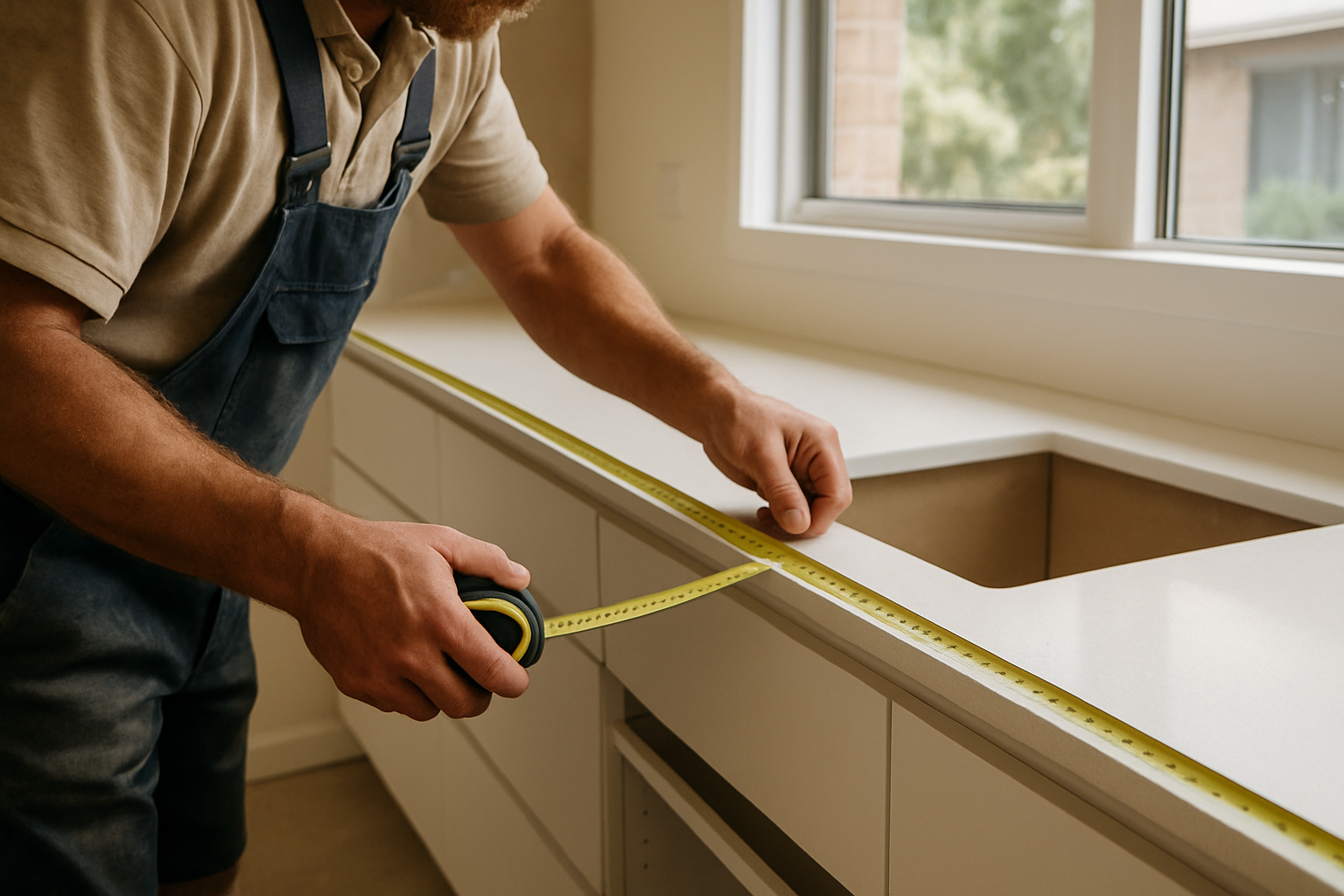
Accurate measuring is what makes cut-outs and joins line up properly.
FAQs
What do you need from me to quote a stone benchtop accurately?
Send your kitchen plan (PDF is fine), rough sizes for each run and island, your suburb (anywhere in SEQ), and photos if it’s a reno.
Include the stone brand/colour (or 2–3 options), thickness (20mm or 40mm look), an edge profile idea, and all cut-outs (sink, cooktop, tap holes). If you don’t have final drawings yet, send what you have and we’ll tell you what’s missing.
Is 20mm or 40mm better for a kitchen benchtop?
It mainly comes down to the look. 20mm suits modern kitchens and keeps lines clean.
A 40mm look adds visual weight and can suit larger islands or more classic styles. We’ll confirm what suits your cabinetry, overhangs, and edge profile before cutting.
How long does a stone benchtop take from measure to install in SEQ?
It depends on the stone, the job size, and the schedule. Many straightforward jobs are often completed within 3–5 working days once stone is confirmed and cabinets are ready.
We’ll confirm lead time after reviewing your plan and location.
Can I use my existing sink and cooktop with a new stone top?
Often, yes. We’ll confirm the model, measurements, and cut-out style (top-mount, undermount, flush fit).
For best results, have the appliance specs ready before final measure.
What’s the difference between engineered stone and natural stone for benchtops?
Engineered stone (often called quartz) is consistent in colour and pattern and suits clean, even finishes.
Natural stone has more variation and can be a feature. Both need sensible daily care. We’ll help you choose based on the look you want and how you use the space.
Do stone benchtops need sealing or special maintenance?
It depends on the material. Some natural stones need periodic sealing.
Engineered stone is usually regular cleaning, avoiding harsh chemicals, and using trivets and cutting boards. We’ll give care advice for your specific stone.
What can cause delays on benchtop installs?
Common delays include cabinets not being level or fixed off, late changes to sink/cooktop models, missing power or plumbing details for cut-outs, slab availability, and access issues on install day.
Share your timeline early so we can plan measure and install around other trades.