Essastone colours: how to choose the right benchtop colour for your kitchen or bathroom
Essastone colours: how to choose the right benchtop colour for your kitchen or bathroom
Choosing an Essastone colour is easiest when you go in this order: undertone, then pattern, then finish, then how much daily mess you want to see. This guide helps you shortlist options that suit your cabinetry, lighting and real-life use.
At SEQ Stone, we cut and install Essastone quartz benchtops across Brisbane, the Gold Coast and the Sunshine Coast. You can browse the Essastone® range and send us your shortlist for pricing, slab availability and lead time. Prefer to see options in person? Visit our local facility to view slabs and organise a measure and quote.
Why Essastone colours look different at home
Answer first: light and scale change everything.
Two things catch most people out:
- The same colour looks different in different homes.
- A small sample can look very different to a full slab.
In South East Queensland, bright daylight, open-plan layouts and warm LED downlights can shift how a “white” or “grey” reads. Wall colour, splashback tiles, timber floors and even greenery outside can also add a subtle colour cast.
Practical tip: Choose your benchtop after you’ve locked in cabinet colour and flooring (or at least have physical samples). It’s easier to match stone to fixed finishes than the other way around.
Step 1: Start with undertone (warm vs cool)
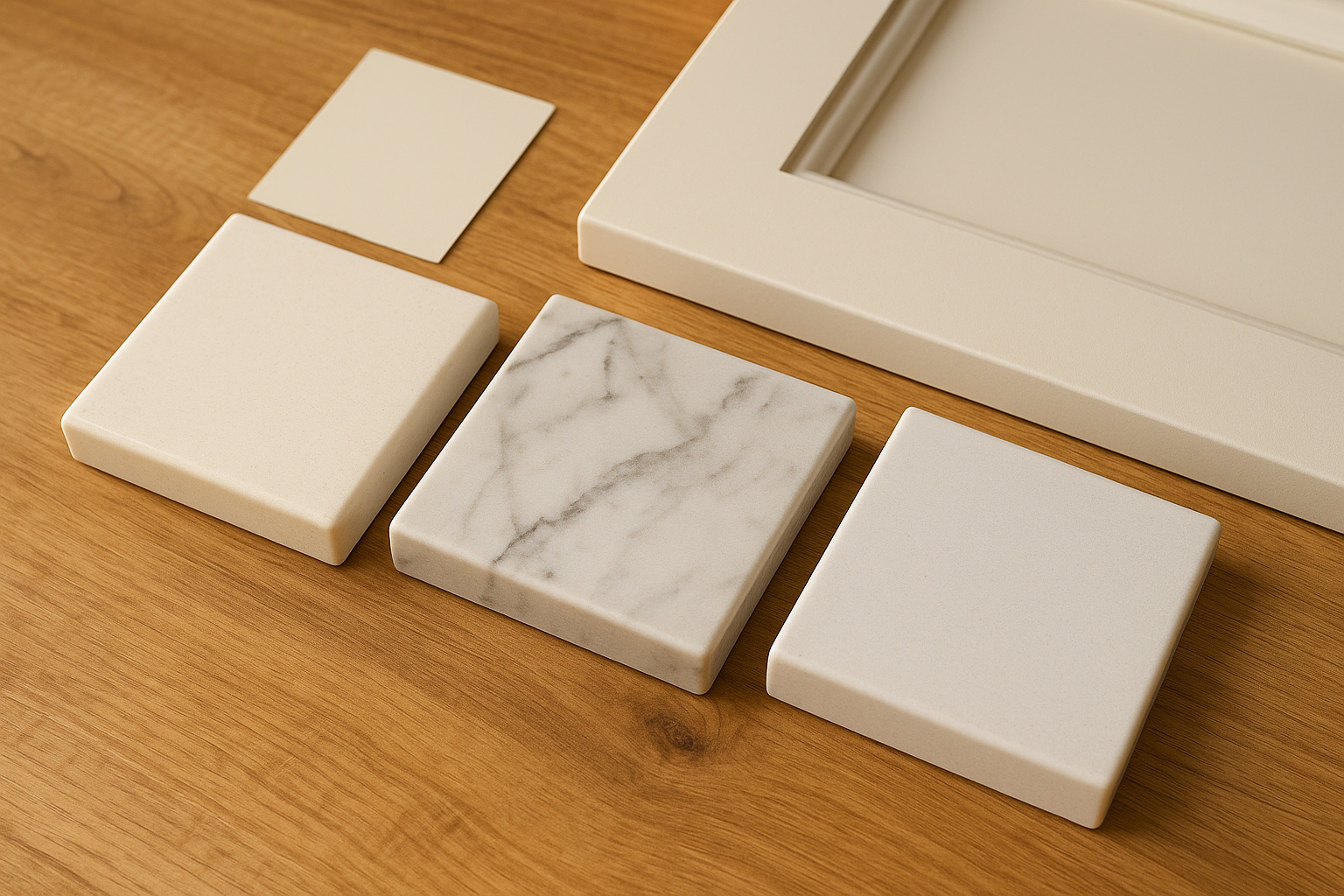
Undertone is the subtle colour sitting under the main colour. Get it right and the space feels cohesive. Get it wrong and it can feel slightly “off”.
Quick check: Hold your cabinet door sample next to the stone sample. If the cabinet suddenly looks yellow, pink or grey, the undertones are clashing.
Warm whites and greiges
Warm tones usually suit:
- beige tiles and cream walls
- honey/caramel timber floors
- brushed brass, warm stainless and earthy hardware
Warm whites also tend to look softer under warm downlights (common in Queensland homes).
Warm-leaning Essastone examples:
- Bone: soft warm off-white for coastal or classic kitchens with timber
- Chalk: calm, creamy white when you want light stone without a cold/blue read
Rule of thumb: If your “white” cabinetry is actually off-white, a warm-leaning stone can stop cupboards looking extra creamy next to the benchtop.
Cool whites and blue-greys
Cool tones usually suit:
- crisp white cabinetry
- concrete looks, cool greys and cooler porcelain tiles
- chrome and polished nickel finishes
Cool whites can look especially clean in bright, daylight-heavy kitchens.
Cool-leaning Essastone examples:
- Grigio: cool grey for modern schemes and concrete-look floors
- Carrara Essastone styles: white base with grey veining for a classic marble look that reads cool and fresh
Lighting caveat: Cool whites can look a bit icy at night under very warm lighting. If you want a cool look, check the sample under your planned globe colour temperature.
Check the sample in your real lighting
If you can, check the sample where the benchtop will go:
- morning
- midday
- night (under downlights)
You’re not chasing perfection. You’re checking you still like it in the light you actually live in.
Extra check: Stand the sample upright (like a splashback) and lay it flat (like a benchtop). Vertical and horizontal surfaces catch light differently.
Step 2: Choose a pattern (solid, soft movement, or veining)
Pattern controls how “busy” the benchtop looks and how much dust, crumbs and water marks you’ll notice.
Clean and minimal (solid or fine grain)
Best when you want the bench to stay simple and let other features stand out.
- Works well with busy splashback tiles or feature joinery.
- Easier to match across island + perimeter + laundry.
Practical note: Very flat, bright whites can show crumbs and smudges more than people expect, especially near the sink and prep zones.
Calmer, solid-style picks: colours like Chalk or Bone suit minimal kitchens where cabinetry or splashback is the hero.
Soft movement
A popular middle ground for real homes.
- Gentle flecks or cloudy movement.
- More forgiving with daily marks than flat bright white.
This style suits family homes and entertainers because it stays light without looking too perfect.
Marble-look / veined styles (Carrara-style)
This is usually what people mean when they search Carrara Essastone.
Carrara-style colours suit:
- white, light grey or timber cabinetry
- simpler splashbacks (subway tile, plain glass, or a matching stone upstand)
- larger islands where veining can run naturally
Veining tip: Ask how the pattern will run across long lengths, waterfall ends and splashbacks. Strong veining can change a lot at corners, and joins are more noticeable if veining doesn’t align.
Design rule: If you have a patterned splashback tile, keep the benchtop quieter (or vice versa). Two strong patterns can look busy fast, especially in open-plan SEQ kitchens.
Step 3: Pick a finish (look, feel, and cleaning)
Colour is only half the story. Finish changes the look and the day-to-day feel.
Polished
- Glossy and reflective
- Makes veining/movement look sharper and higher contrast
- Smoothest feel underhand
Cleaning reality: Wipes down easily, but can show fingerprints and smudges more on darker colours.
Honed (low-sheen / satin)
- Softer look with less reflection
- Can make whites feel calmer and more natural
- Veining can look more muted
Cleaning reality: Can show marks as slight sheen changes if build-up occurs. Consistent wiping helps, especially near cooktops and behind appliances.
Matte
- Very low reflection
- Contemporary, relaxed look
- Less glare in bright homes
Cleaning reality: Often practical visually, but benefits from regular cleaning to avoid patchiness in high-use areas.
Textured (where available)
- More tactile, suits industrial or earthy looks
- Can disguise minor marks depending on colour and pattern
Cleaning reality: Can take longer to clean because residue can catch in the texture, especially near sinks and splashback returns.
If you cook often, keep it simple: choose the colour you love, then choose a finish you’ll actually be happy to wipe down.
Light vs dark Essastone colours (what changes in real homes)
Colour affects brightness, how large the room feels and what you notice day to day.
Light colours
Pros
- Brighten smaller kitchens
- Easy to pair with most cabinet colours
- Keep a clean, open feel
Plan for
- Prompt wipe-ups for coffee, wine, oils and spices
- Strong sun can wash out very subtle patterns
SEQ tip: North-facing kitchens and big sliders can make whites look extra bright. If your sample looks too plain in full sun, consider stronger movement or a Carrara-style vein.
Dark colours
Pros
- Strong contrast with white cabinetry
- Can hide some food colour staining better than pure white
Plan for
- Dust, water spots and fingerprints can show more
- Chips (if they happen) can be more visible on edges
Dark benches can look premium, but they’re not always the lowest-maintenance option in bright, open kitchens, especially around the sink if you get hard-water spotting.
Popular Essastone colour families (what we see in SEQ)
Most shortlists fit these groups:
- Marble-look whites (Carrara styles): classic veining for bright kitchens and islands
- Warm whites and neutrals: easy with timber and beige tiles (e.g. Bone, Chalk)
- Greys and blue-greys: crisp mid-tones (e.g. Grigio)
- Concrete looks: modern and architectural
- Charcoals and blacks: high contrast with timber or crisp white cabinetry
Local trends we often see in Queensland homes:
- warmer whites paired with timber for a relaxed coastal feel
- understated movement rather than heavy speckle
- thinner, cleaner edges (20mm), often with a feature island
- mixed textures (matte cabinetry with polished or low-sheen stone)
Availability changes: Once you’ve narrowed it down, confirm slab supply before you lock anything in, especially if you need multiple slabs for long runs or waterfall ends.
20mm vs 40mm (thickness changes the look and the quote)
Most Essastone benchtops we install are 20mm, either as a standard edge or built up to look thicker.
Common options
- 20mm standard edge: clean, modern, cost-effective
- 40mm look (mitred edge): thicker profile made by joining pieces
When a thicker edge suits
- large islands
- wider overhangs (with correct support)
- more traditional kitchen styles
Planning note: A 40mm look adds fabrication steps and can affect join layout around corners and waterfall ends. It’s not a problem, but it’s best planned early so the quote matches the final layout.
Cutting and installation: why your fabricator matters
Even the best colour choice can fall flat if joins, edges and cut-outs aren’t planned well.
Your stone fabricator (stone mason) will help confirm:
- slab layout (especially for Carrara Essastone veining)
- join placement for long runs and islands
- edge profiles and thickness build-ups
- sink and cooktop cut-outs (and any drainer grooves)
A good measure-up and a clear slab layout plan make the finished benchtop look intentional, not pieced together.
Useful caveat: If you’re choosing an undermount sink, confirm the sink model early. Cut-outs are specific, and late changes can cause delays.
Comparing Essastone with other brands (Smartstone, Caesarstone and more)
If you’re comparing brands, the biggest differences are usually:
- tone and pattern (each brand’s “white” is different)
- finish options
- slab availability when you’re ready to cut
A good approach is to shortlist 3–5 colours, then view them under the same light beside your cabinet and floor samples.
Browse ranges:
Essastone pricing: what drives the cost
There isn’t one price per colour. The design affects cutting time, installation complexity and slab usage.
Your quote is mainly driven by:
- total benchtop length and depth
- island size and waterfall ends
- cut-outs (sink, cooktop, tap holes)
- drainer grooves and custom details
- splashbacks (full height or upstands)
- edge profile
- access for install (stairs, tight hallways, crane needs)
- chosen colour group and finish
If budget is tight, the biggest levers are usually: fewer waterfall ends, fewer extras (like drainer grooves), and a simpler edge profile.
Worth knowing: Splashbacks and waterfall ends often use more slab area than people expect. A tiled splashback with a small stone upstand can be a good compromise.
Essastone durability and maintenance (daily care)
Essastone quartz is built for busy kitchens and bathrooms. It’s tough, but not indestructible.
What it handles well
- Everyday wear: regular cooking, entertaining and family use
- Chip resistance: strong overall, but edges and corners are still most vulnerable to impact
Scratch resistance
Essastone is scratch resistant in normal use, but not scratch-proof.
- Use a chopping board for knives.
- Don’t drag rough ceramics or heavy items across the surface.
Stain resistance
Essastone is stain resistant and usually forgiving with day-to-day spills.
Best habits (especially for lighter colours like Chalk or Bone):
- wipe up coffee, wine, oils and spices sooner rather than later
- don’t let coloured spills sit around joins, tap bases or behind appliances
Heat and chemicals
- Use trivets for hot cookware.
- Avoid harsh, abrasive cleaners and strong chemicals unless recommended for engineered stone.
Simple cleaning routine
- Regular clean: soft cloth or sponge with mild detergent and water
- Build-up: gentle, non-abrasive cleaner, then wipe with clean water
A simple way to shortlist Essastone colours
Use this checklist first:
- Cabinet colour (white, off-white, timber, charcoal)
- Splashback plan (busy tile, simple tile, glass, or matching stone)
- Floor tone (warm timber, cool grey, beige, mixed)
- Lighting (warm downlights, skylights, strong afternoon sun)
- Your tolerance for cleaning (be honest)
Then pick:
- 1 safe option (soft movement)
- 1 bold option (vein or dark)
- 1 middle option
You’ll decide faster and avoid surprises.
Common Essastone pairings in SEQ homes
These combos tend to work well in typical SEQ light:
- Warm white stone (Bone or Chalk) + timber cabinetry: coastal and easy to live with
- Cool white stone + crisp white cabinets: clean modern look
- Marble-look (Carrara Essastone style) + light grey cabinets: balanced and forgiving
- Mid-grey stone (Grigio) + white cabinets: practical contrast without going full dark
If you’re near the coast, always check samples in strong natural light. Big windows can make finishes read differently than they do in a showroom.
Ready to price your Essastone benchtop?
If you’re ready to move from research to install, we can help across Brisbane, the Gold Coast and the Sunshine Coast.
To quote accurately, send:
- your plan or rough measurements
- 3–5 shortlisted colours
- your suburb (Brisbane, Gold Coast or Sunshine Coast)
- thickness (20mm or 40mm look) and any waterfall ends
We’ll confirm availability, lead time and provide a clear quote. You can also organise a local measure so joins, edges and sink cut-outs are planned properly.
Visit the Essastone® page to enquire, or start from the SEQ Stone home to request a callback.
FAQs
How do I choose between warm and cool Essastone colours?
Match undertone to your fixed finishes. Warm timbers and beige tones often suit warm whites like Bone or Chalk. Cool greys and crisp whites often suit cool options like Grigio or a Carrara Essastone style. Compare samples beside your cabinet door in the same light (day and night).
What’s the difference between polished, honed and matte?
Polished reflects more light and makes patterns look sharper. Honed is lower-sheen and softer. Matte is very low-reflection and relaxed. View the exact finish in daylight and under your downlights.
Do light Essastone colours stain?
Essastone is stain resistant, but not stain-proof. Wipe spills early, especially coffee, wine, oils and spices (particularly on lighter colours like Chalk).
Is Essastone scratch resistant?
Yes, for everyday use. It can still scratch with knives or rough items. Use a chopping board and avoid dragging heavy objects.
Is 20mm or 40mm better?
20mm suits most kitchens and keeps lines clean. 40mm gives a heavier profile. A common option is 20mm everywhere with a 40mm mitred edge on the island.
Can you help compare with Smartstone or Caesarstone?
Yes. We can compare tone, finishes and availability across brands. Start with the look you want, then narrow it based on slab availability and your timeline.
Do you service Perth for “essa stone benchtops Perth”?
We’re based in South East Queensland and service Brisbane, the Gold Coast and the Sunshine Coast. If you’re outside SEQ, send your postcode and we’ll confirm what we can help with.