Caesarstone Australia: what it is, how to choose colours, and what benchtops cost
Caesarstone Australia: what it is, how to choose colours, and what benchtops cost
Caesarstone is a popular engineered stone (quartz surface) used for kitchen benchtops and bathroom vanities across Australia.
If you want to keep your project moving, focus on four decisions early: colour, thickness (20mm vs a 40mm look), cut-outs/edges, and budget.
SEQ Stone supplies, fabricates and installs stone benchtops across South East Queensland, including Brisbane and the Gold Coast. This guide explains what Caesarstone is, how to choose colours, and what affects installed pricing.
What is Caesarstone?
Caesarstone® is a branded engineered stone made mostly from natural quartz, plus binders and pigments. It’s pressed into slabs and then cut and installed by a stonemason.
People choose it because the look is consistent. The pattern you pick is usually repeatable across slabs, with options from plain whites to concrete looks and marble-style veining.
Common uses
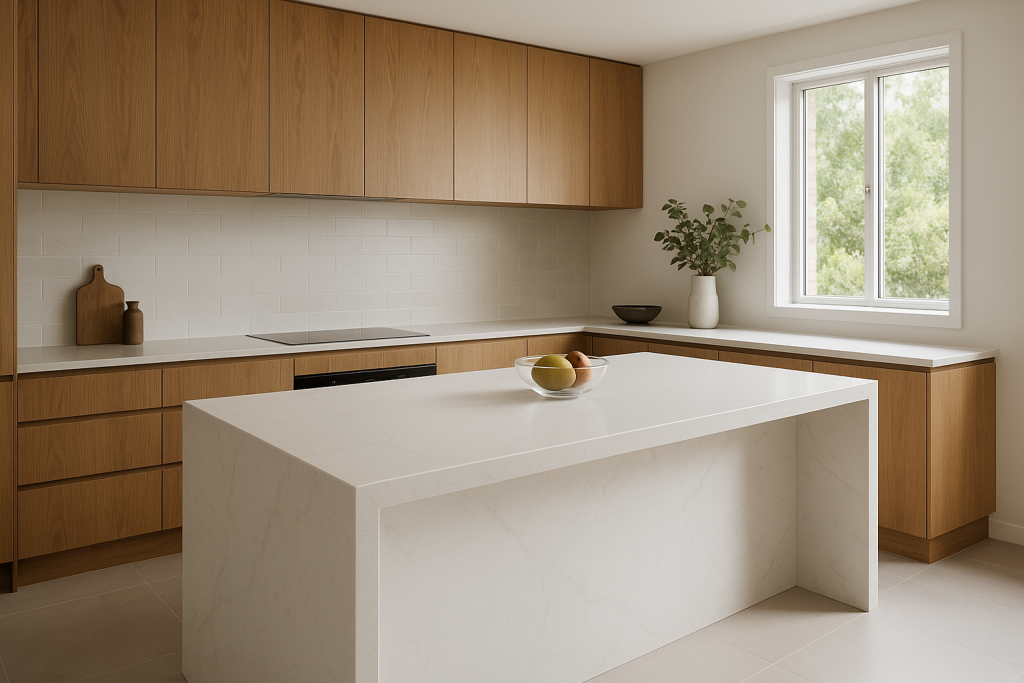
- Kitchen benchtops (including islands and waterfall ends)
- Bathroom vanities
- Splashbacks (where suitable)
Suitability note (especially splashbacks)
Not every finish suits every application. Splashbacks can have extra requirements depending on what’s behind them and how close they are to heat.
If you share your plan and cooktop type, we can confirm what’s suitable and when tile or glass is the better option.
Why Caesarstone benchtops are popular in Australian homes
Most people choose Caesarstone for everyday practicality.
- Consistent look: what you approve is usually close to what arrives.
- Durable for normal use: great for busy kitchens (still use boards and trivets).
- Wide style range: whites, greys, concrete looks, veining, darker tones.
In coastal South East Queensland, grit and sand can wear any surface over time. Wipe spills quickly and keep grit away from high-use spots like under boards, coffee machines and appliances.
Caesarstone colours: how to pick the right one (and avoid surprises)
Choose your colour after you’ve confirmed your fixed finishes. That’s the easiest way to avoid whites clashing or undertones looking “off” at home.
Here’s the process we use with clients.
1) Start with your fixed items
Try to have these selected (or at least sampled) before locking in stone:
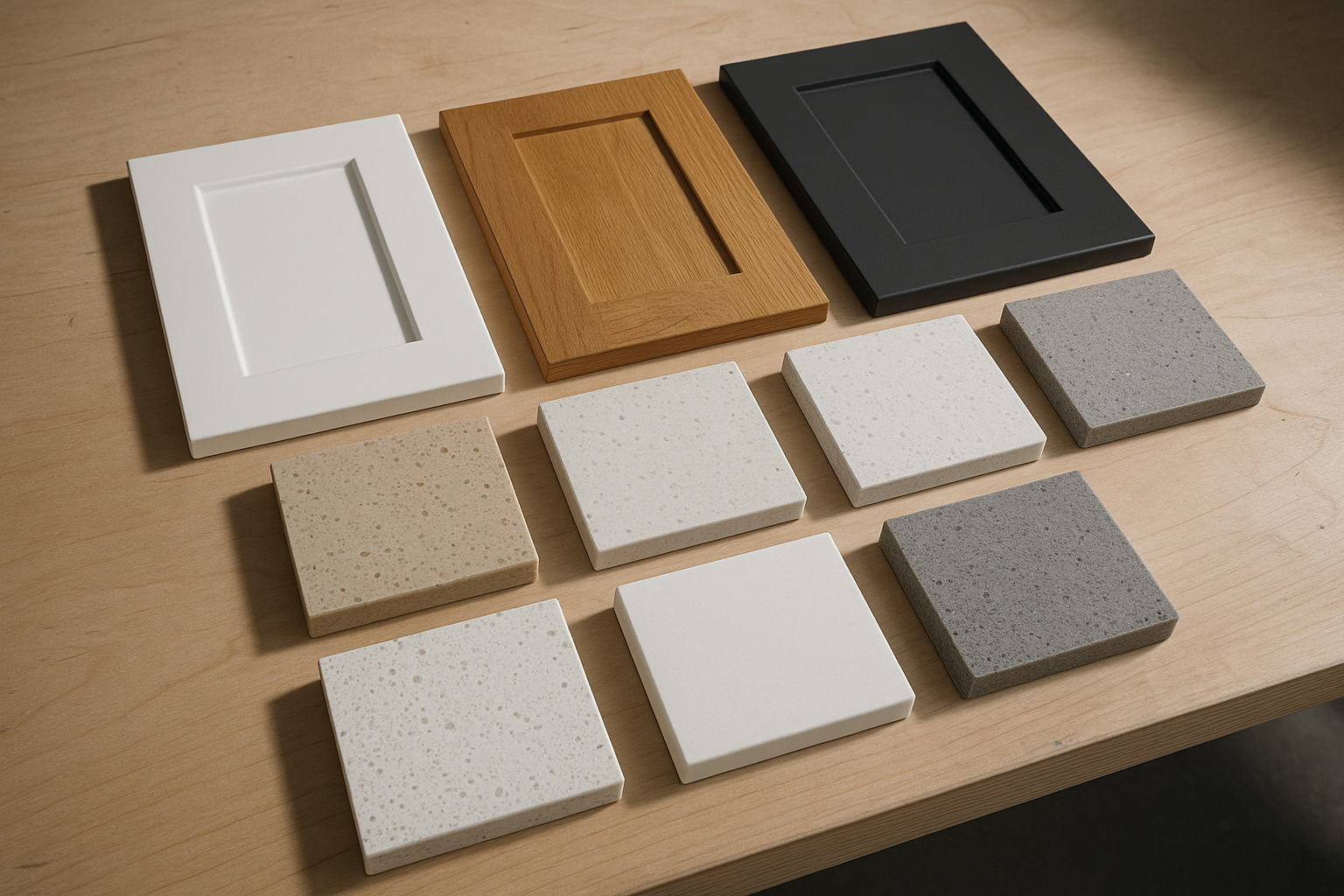
- Cabinet colour (a door sample is best)
- Flooring or timber tone
- Splashback tile (or planned paint colour)
- Sink colour and tapware finish
Lighting changes colour. If possible, view samples in your kitchen in morning, afternoon and night light.
Also check it under your planned downlights. Warm vs cool LEDs can change a white from crisp to creamy (or grey).
2) Choose an undertone: cool, warm, or neutral
- Cool whites/greys: often suit bright whites, stainless, and cooler tiles.
- Warm whites: often suit oak, beige tones, brass, and warmer lighting.
- Neutral whites: usually the safest choice when you’re mixing finishes.
If you’re unsure, don’t force a warm or cool match. Neutral tones are often easier to live with long term.
3) Decide how much “movement” you want
“Movement” is how strong the pattern looks across the slab.
- Low movement: clean and minimal.
- Medium movement: adds interest without dominating.
- High movement: strong veining (more like marble).
High movement can look great on a large island. It also makes slab planning more important, because vein direction and join placement affect the final result.
If you care about vein alignment across a waterfall or joins, mention it early. It can increase waste (and cost) on some layouts.
4) Popular pick: Caesarstone Arctic White
Caesarstone Arctic White is popular because it reads clean and bright.
Before you commit, check:
- Wall paint and tile whites (some whites clash)
- Lighting temperature (warm LEDs soften; cool LEDs can make greys feel harder)
If timing is tight, shortlist 2–4 backups. That way the job doesn’t stall if your first choice isn’t available.
You can browse options on our Caesarstone® page, then shortlist 3–5 colours to view as physical samples.
20mm vs 40mm: what looks better on a Caesarstone kitchen bench?
There’s no single “best” thickness. Pick what suits your cabinetry style, island size, and how many visible edges you’ll have.
Also think about overhangs and seating. Those details can affect both the look and the build requirements.
20mm Caesarstone benchtops (the slim look)
20mm gives a clean, modern finish.
- Look: lighter, sharper, more minimal
- Where it’s common: most kitchens, laundries, bathroom vanities
- Practical upside: simplest fit for standard cabinetry
- Cost: usually the most cost-effective option
If your cabinetry and tapware are modern and simple, 20mm usually suits.
40mm look (thicker edge profile)
In most Australian kitchens, the “40mm Caesarstone” look is usually made with a 40mm build-up edge (laminated edge), not a solid 40mm slab.
- Look: heavier, more furniture-like
- Where it’s common: large islands, feature ends, shaker/profile doors
- Cost: typically higher than 20mm due to extra fabrication and finishing
A small kitchen can look heavy with a chunky edge. A big island can look underdone with a thin profile.
If you’re undecided, send a photo of your cabinetry profile and your island dimensions. We can suggest what usually looks right for the scale.
Caesarstone price in Australia: realistic ranges (installed)
Installed pricing isn’t just “per square metre”. Cut-outs, joins, edges and site access can change the cost as much as the slab.
These ranges are a useful starting point for installed Caesarstone in Australia.
Typical installed price ranges
- Standard straight kitchen run (simple edges, one sink cut-out): $3,000–$6,000 installed
- Kitchen with island (more surface area, more handling and joins): $6,000–$12,000+ installed
- Premium designs (waterfalls, complex layout, multiple cut-outs): $12,000–$20,000+ installed
Square-metre guide (installed): many engineered stone benchtops commonly work out around $650–$1,200+ per m² installed, depending on colour range and job complexity.
Prices can move with availability, freight, labour rates, scheduling and region. Even within South East Queensland, access and travel can change the final installed cost.
What affects the cost of Caesarstone benchtops?
These are the main factors that push an installed quote up or down.
Colour range and availability
Some colours and collections cost more than others. Two similar-looking whites can be in different price brackets.
Availability matters too. If a slab is hard to source, lead times can stretch and you may need to switch colours.
Thickness and the 40mm look
- 20mm: usually most cost-effective
- 40mm build-up edge: usually costs more due to extra material and fabrication
Slab size, layout and how many slabs you need
Two kitchens with the same total square metres can price differently. The difference is often whether your layout cuts efficiently from slabs.
Islands, long runs and tall panels can increase slab count.
Edge profile
Square or pencil edges are usually cheaper. Detailed profiles take longer to machine and finish.
Cut-outs and drilling
Cut-outs vary a lot in labour and finishing.
- Undermount sink cut-outs need more polishing than drop-in sinks
- Cooktop cut-outs vary by model and clearances
- Extra holes (taps, filtered water, soap dispenser) add time
Tip: lock in your sink and cooktop early. Late changes can affect cut-outs and sometimes join layout.
Waterfall ends and feature panels
Waterfalls and panels add:
- More material
- More joins and seam planning
- More labour and handling on site
If you want veining to “wrap” down a waterfall, it can also increase slab usage.
Joins and seam placement
Long runs and large islands often need joins. Joins are normal, but they add labour and planning.
With veined designs, seam placement and vein direction affect the final look. If you have strong preferences, raise them early.
Layout and waste
Waste can increase with:
- Long, shallow runs
- Lots of separate pieces
- Large waterfall panels
- Vein direction requirements
Installation complexity and site access
Access is a common hidden cost.
- Stairs, tight hallways, small lifts
- Long carry distances
- Limited parking or loading
- Multi-level homes
Location (delivery and travel)
Across South East Queensland, suburb and travel time can affect delivery and scheduling.
The installation process for Caesarstone benchtops (what to expect)
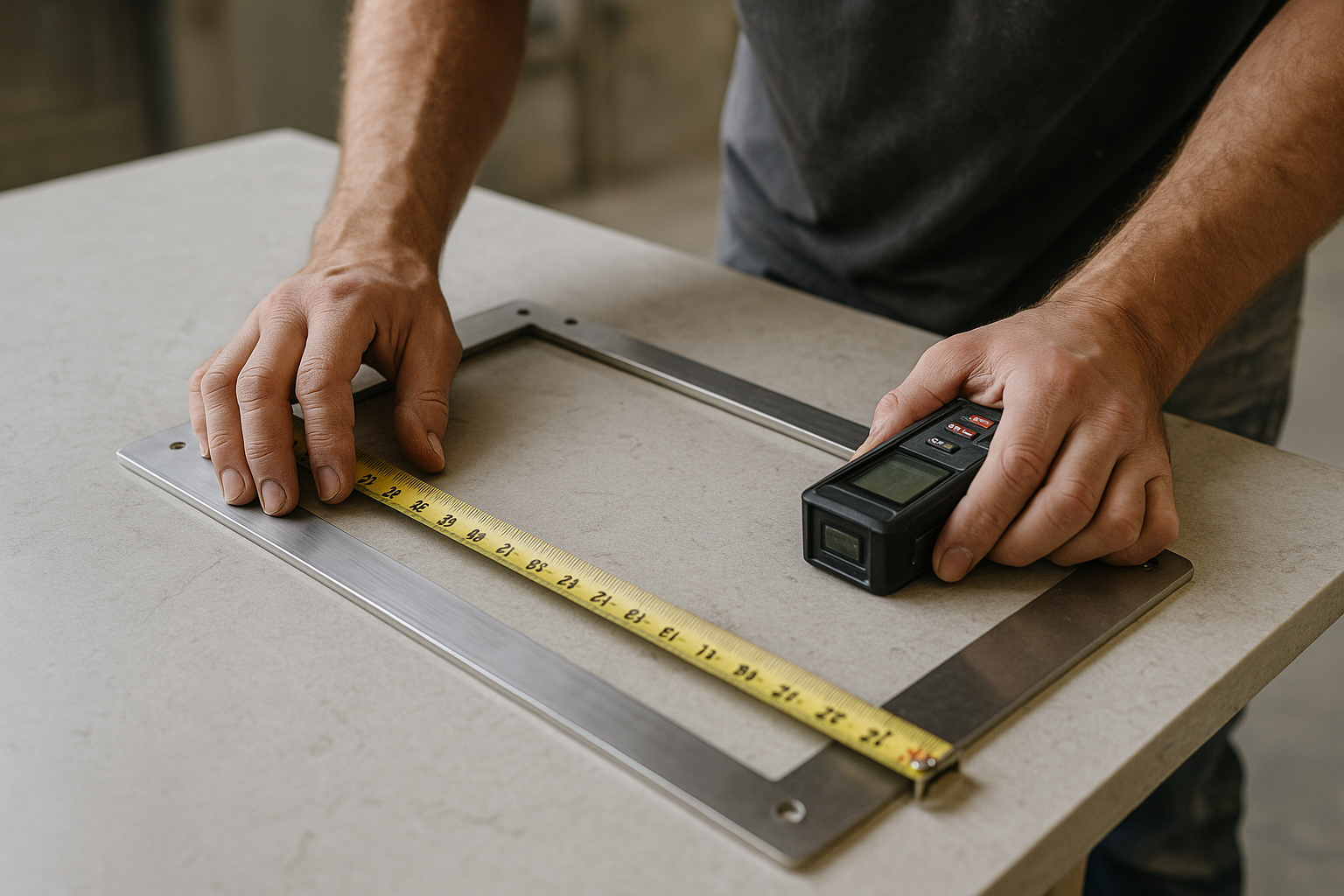
A great result isn’t just the slab choice. Installation is where the finish is won or lost.
Here’s the usual flow in South East Queensland.
1) Final checks before templating
Before measuring, we confirm:
- Cabinets are installed, fixed and level
- Overhangs are agreed (especially islands)
- Sink and cooktop models are confirmed
- Waterfalls, panels and splashback heights are decided
Measuring too early can cause delays or rework.
2) Measure and template
This captures your exact space, including:
- Wall lines (rarely perfectly straight)
- Planned joins
- Edge profiles
- Cut-outs and tap holes
In renovations, out-of-square walls are normal. Good templating allows for it.
3) Workshop fabrication
Pieces are cut, edges finished, and cut-outs completed. If you’re doing a 40mm look, build-ups are fabricated.
Veined designs need extra planning so joins and waterfalls flow well.
4) Delivery and on-site installation
On install day, the team typically:
- Carries and positions pieces
- Dry-fits, then secures and aligns joins
- Seals and finishes joins
- Installs waterfall ends and panels (if included)
What increases installation complexity (and cost)
- Multiple cut-outs (undermount sinks, cooktops, pop-up power, extra tap holes)
- Waterfall ends (heavier pieces, tighter alignment)
- Tight access (stairs, long carries, limited parking/loading)
- Renovations (uneven floors, walls out of square)
If you share a couple of photos showing the access path from driveway to kitchen, we can often flag issues early.
Real-world pricing scenarios
The same stone can price differently depending on the layout and fabrication details.
Scenario A: Simple kitchen run
- One straight run
- 20mm
- Standard edge
- One sink cut-out
This is usually at the lower end of the installed ranges.
Scenario B: Kitchen + island with a 40mm look
- Main run + island
- 40mm build-up edge on visible faces
- Undermount sink cut-out + cooktop cut-out
This often sits in the mid to higher range.
Scenario C: Waterfall island + splashback panels
- Island with 1–2 waterfall ends
- Full-height splashback panels (where suitable)
- Multiple joins along long walls
This typically moves into premium pricing.
How to get an accurate Caesarstone quote (and avoid budget blowouts)
To get a quote that stays accurate after appliances are chosen, lock in key details early.
If you’re deciding between two sinks or cooktop sizes, tell your stonemason upfront. It’s easier to manage options before templating.
What to send
- Kitchen plan (PDF ideal) and rough dimensions
- Suburb and whether it’s a reno or new build
- 2–4 photos of the space and access (stairs, tight corners, parking)
- Sink and cooktop specs (links or cut-out sheets)
- Edge profile (and whether you want a 40mm look)
- Splashback plan (tiled vs stone, approximate heights)
How to choose the right Caesarstone for your project
The right choice suits your finishes, your lifestyle and your timeline.
- Match undertones to cabinets, floors and tiles (and view samples in your lighting)
- Choose the finish that suits your day-to-day cleaning (polished vs matte feel different)
- Match movement to scale (bolder patterns usually suit larger surfaces)
- Shortlist backup colours if timing is tight
Caesarstone vs Essastone (and other engineered stone brands in Australia)
Australia has several engineered stone brands, including Essastone, Silestone, Smartstone and others.
The best comparison is what you’ll see at home, not just in a showroom.
Essastone vs Caesarstone: what to compare
Both can suit a quality kitchen. Differences usually come down to the exact colour, finish, availability and how it fabricates for your layout.
Compare:
- Undertones in your lighting (not showroom lighting)
- Pattern scale and repeat (important for islands and waterfalls)
- Finish and feel (polished vs matte, and how wipe marks show)
- Join planning (where seams will land and whether veining can align)
- Availability and lead times
- Total installed cost (cut-outs, edges, waterfalls, delivery and installation)
If you’re open to options, view our broader stone range, including WK Stone, Lithostone and Stone Ambassador.
The process of buying and installing Caesarstone in South East Queensland
Most delays happen when steps are done out of order. This is the typical flow.
- Choose colour and thickness (20mm or 40mm look)
- Confirm details (cut-outs, edges, overhangs, splashback plan)
- Measure/template once cabinets are installed and level
- Fabrication in the workshop
- Install and final fit
Lead times vary by slab availability and job complexity. If you have fixed cabinet install dates, tell us early so we can plan measure and install windows.
Caesarstone benchtops: care tips for real kitchens
These habits help your benchtop stay looking good.
- Use a chopping board
- Wipe spills sooner rather than later (wine, curry, coffee, beetroot)
- Use trivets for hot pots and heat-producing appliances
- Clean with a soft cloth and mild cleaner (avoid harsh abrasives)
Matte/honed finishes can show smears and fingerprints more than polished. That’s normal day to day.
If you’re near the coast, don’t let sand sit under appliances or boards. Grit can mark surfaces when items slide.
Searches like “Caesarstone benchtops Adelaide”, “Braeside”, and “Richmond”
Searches like Caesarstone benchtops Adelaide, Caesarstone Braeside or Caesarstone Richmond are usually people looking for local supply, showrooms or fabricators.
Wherever you are in Australia, the basics are the same:
- Check availability and lead times
- View samples in your own lighting
- Make sure the quote includes measure/template, cut-outs, edges, joins, delivery and installation
- Ask how joins will be handled for your layout (especially islands and long runs)
SEQ Stone is based on the Gold Coast and services Brisbane and South East Queensland. If you’re local, we can manage supply, fabrication, delivery and installation.
If you’re in Adelaide or Melbourne suburbs like Braeside or Richmond, a local fabricator is usually the best place to start for site measure and install logistics.
Ready for a quote on Caesarstone benchtops?
If you have plans, we can price it properly and confirm timing for South East Queensland.
Send:
- Your kitchen plan (or a sketch with measurements)
- 2–4 photos of the space
- Your shortlist of Caesarstone colours
- Sink and cooktop details
Get started here:
- Request a Caesarstone quote with SEQ Stone
- Or visit SEQ Stone home to contact our team.
Quick FAQs
What is Caesarstone?
Caesarstone® is a branded engineered stone made mainly from natural quartz. It’s one of the most common quartz surfaces used for benchtops and vanities in Australia.
What affects the Caesarstone price range?
Colour/range, thickness, slab count, edge profile, cut-outs, joins, waterfall ends, splashbacks, installation complexity, site access and location.
What’s the average cost of Caesarstone benchtops in Australia?
Many projects land around $650–$1,200+ per m² installed, with total kitchen supply-and-install often $3,000–$12,000+, depending on size and complexity.
Is 20mm or 40mm better?
20mm suits most kitchens and is usually more cost-effective. A 40mm look adds visual weight and is commonly done with a built-up edge, which can increase cost.
Why does the same Caesarstone colour price differently between kitchens?
Because layout and fabrication can force extra slabs, additional joins, more cut-outs, a more complex edge profile, or harder site access.
What’s included in an installed benchtop quote (and what should I check)?
A clear quote should list measure/template, supply, fabrication, cut-outs, edge finishing, joins, delivery and installation. When comparing quotes, check they’re like-for-like.
Is Caesarstone Arctic White a good choice?
It’s a popular crisp white. Check undertones against your tiles and lighting before locking it in.
Can you help me choose between Essastone vs Caesarstone (or Silestone/Smartstone)?
Yes. Compare real samples next to your cabinet and tile colours in the same light, then confirm finish, availability, lead time and total installed cost for your layout.
Related reading: Click Here