Quantum Quartz Melbourne: colours, finishes and benchtop tips
Quantum Quartz Melbourne: colours, finishes, benchtop tips, and how to order with confidence
If you’re searching Quantum Quartz Melbourne, you usually want three things: what it looks like in real homes, which finish suits daily use, and how to order without expensive mistakes.
We’re SEQ Stone (based in Burleigh Heads, QLD). We don’t install in Victoria, but we can help you shortlist colours, compare finishes, and write a clear brief for your Melbourne stonemason.
Can you get Quantum Quartz in Melbourne and Victoria?
Yes. Quantum Quartz is commonly supplied and installed across Melbourne and wider Victoria through local stonemasons, fabricators, and suppliers.
How the process usually works
- View and choose slabs: via a VIC supplier or stonemason. Ask if you can pick exact slabs and reserve a batch.
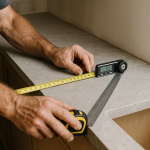
- Final measure (templating): after cabinets are installed and fixed. Many shops use digital/laser templating, but good manual templating can also be accurate.
- Fabrication: CNC cutting, polishing, edge work, and join prep.
- Installation: pieces are carried in, levelled, joined with colour-matched epoxy, then siliconed and braced.
- Lead times (guide only): often 1–3 weeks after final measure and slab confirmation. Allow longer in peak periods or for backorders.
Warranty: confirm who covers what
Get this in writing:
- Slab/product issues: usually supplier/brand
- Fabrication (joins, edges, cut-outs): fabricator
- Installation and site conditions: installer/fabricator
Melbourne tip: ask who does each step
Ask who will template, fabricate, and install. If parts are outsourced, communication can suffer (especially if sink models or tap holes change late).
Access matters in Melbourne (and it can change the seam plan)
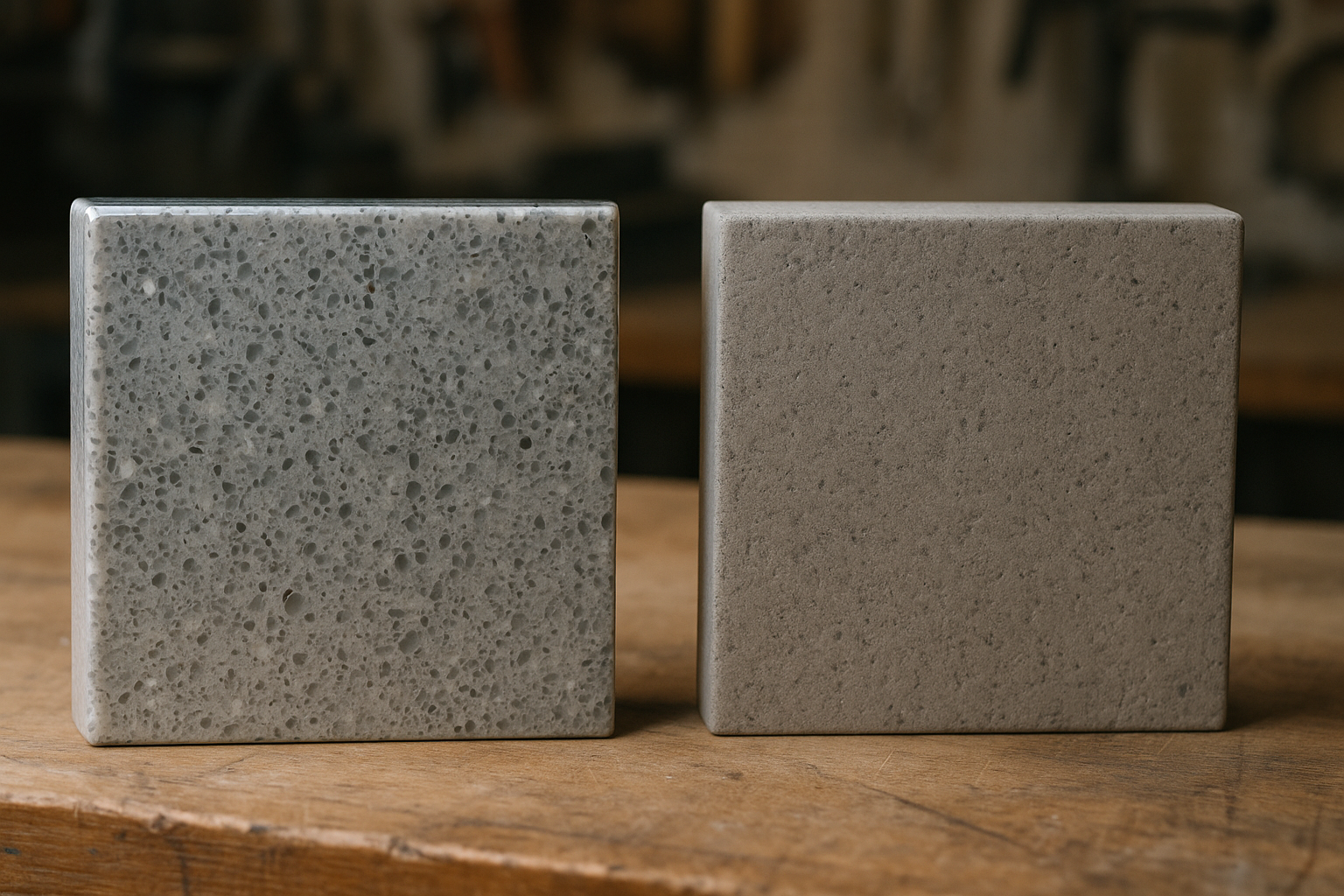
Polished vs concrete matte: the sheen change is easiest to see in raking light.
Tight access is common in Melbourne homes and apartments. It can add handling time and also affect how many pieces your benchtop must be split into.
Common issues include:
- lift bookings and size limits
- stairs and tight turns
- terrace-house hallways
- no-loading zones and limited parking
If you want to talk through a layout before you meet a VIC stonemason: Contact SEQ Stone.
If you already know you want WK Quantum Quartz, view the range here: WK Stone range.
What Quantum Quartz is (and isn’t)
Quantum Quartz is an engineered stone surface (also called reconstituted stone). It’s commonly used for:
- kitchen benchtops
- bathroom vanities
- laundry benchtops
- some splashbacks
People like engineered stone because it offers consistent colour, a wide range of styles, and solid day-to-day durability.
It still needs normal care. Use chopping boards, wipe spills, and don’t put hot pans or heat-venting appliances (like air fryers) directly on the surface.
Victoria note on compliance
Rules and expectations can change. Your Victorian supplier/fabricator should confirm current requirements for engineered stone products and install practices.
Before you choose a colour: check these in a Melbourne home
Colour often looks different in Melbourne’s cooler daylight and frequent overcast conditions.
A white that looks “clean” in a showroom can read slightly blue at home. Strong downlights can also create raking light, which can highlight joins, texture, and fingerprints.
Four things to check first
- Lighting: warm LEDs soften whites; cool LEDs/daylight can make them look crisper.
- Cabinet colour: whites shift next to timber, grey, or bright-white cabinets.
- Splashback choice: tile adds texture and grout lines; full-height stone is calmer but less forgiving on uneven walls.
- Finish: polished reflects more; matte looks softer but can show handling marks differently.
Tip: if you can, view a full slab (or at least a large sample). Small chips often hide undertones and veining.
Comparing other brands in Melbourne?
These are often cross-shopped:
Keep it simple. Shortlist 2–3 colours, then view them side-by-side in similar light. Take a cabinet door sample if possible.
Colour shortlist for Melbourne: Alpine White and easy neutrals
Alpine White (popular pick)
Alpine White is popular because it suits most cabinet styles and helps kitchens feel brighter.
Undertone check: “clean whites” can look cooler (crisper) in cool daylight and under cool LEDs. If your home gets a lot of southern light, check it in the actual room next to your cabinet door sample.
If you’re doing the common Melbourne pairing of white + timber + black hardware, do an in-room check. Black taps/handles can make whites look cooler by contrast.
Other Melbourne-friendly neutrals
These usually feel calm and timeless:
- Soft warm whites: helpful if you want to avoid a “blue” read in cooler daylight
- Light greys: forgiving for crumbs and daily mess; can look flatter at night, so check evening lighting
- Greige (grey-beige): useful when mixing warm timber with cooler elements like concrete-look tiles
If you’re unsure, choose your benchtop colour after flooring, cabinet colour, and main wall paint are locked in.
Finishes: polished vs matte vs concrete matte (honed)
If you’re searching Quantum Quartz concrete matte, you may also see it called honed or low-sheen.
- Polished: glossy, reflective
- Matte: low sheen, softer look
- Concrete matte / honed: deeper low-sheen “architectural” look (names vary by range)
Quick finish comparison
| Finish | Look | Fingerprinting | Light reflection | Scratch visibility | Cleaning |
|---|---|---|---|---|---|
| Polished | Glossy, crisp | Lower (usually) | High | Fine marks can catch light at some angles | Usually easiest |
| Matte | Soft, modern | Medium–higher (esp. dark colours) | Low–medium | Can show handling marks under raking light | Easy, may need more wiping |
| Concrete matte / honed | Low-sheen, “architectural” | Medium–higher | Low | Smears can look more obvious until wiped | Simple cleaners work; consistent wiping helps |
Quartz doesn’t etch like marble. However, low-sheen finishes can make smears more noticeable on long islands under downlights.
Thickness and edges (20mm vs 40mm look)
Most Quantum Quartz benchtops are either 20mm or a 40mm look.
20mm (standard)
- clean, modern profile
- suits most cabinetry
- usually the most cost-effective
Support note: overhang limits depend on brackets, substrate, and design. Confirm early if you want a breakfast bar.
40mm look (laminated or mitred)
- thicker visual edge (popular on islands)
- usually a built-up edge or mitred edge (not a solid 40mm slab)
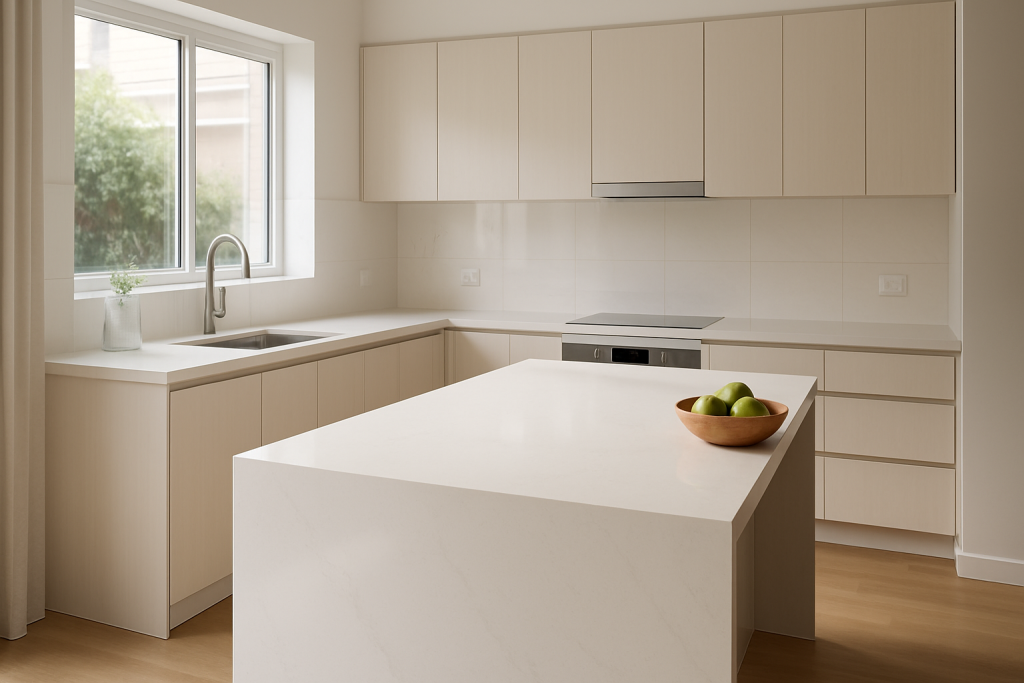
- makes waterfall ends look more substantial
It usually costs more due to extra fabrication and careful handling.
Edge profiles (simple guide)
- Arrised (eased): small bevel; modern and practical
- Pencil round: small radius; good for family kitchens and busy corners
- Mitred: used for the 40mm look and waterfalls; sharp finish, needs precise fabrication
If you want modern but practical, arrised is often a safe choice.
Seams, joints and cut-outs (what to expect)
Seam planning is about safe handling, access, and making joins less obvious.
In Melbourne, access often forces more joins than you’d prefer (stairs, narrow entries, apartments).
Also plan around timing. Templating is normally booked after cabinets are installed. Rushing this step is a common cause of gaps and tight fits.
Seam placement basics
- place seams at natural breaks (corners, depth changes, beside towers)
- avoid a seam through the middle of an island when possible
- avoid seams through sink or cooktop cut-outs when possible
- long runs and waterfall ends may need seams due to slab size, weight, and access
What good joining looks like
- tight join line with colour-matched epoxy
- level to the touch (no lip)
- seam position considered with lighting (downlights can highlight joins)
Some seam visibility is normal, especially in bright whites.
Sink and cooktop cut-out best practice
Cut-outs affect both cost and risk. Lock in model numbers early.
- Radiused internal corners: reduces stress compared to sharp internal corners
- Reinforcement: often used around larger openings (especially under-mount sinks)
- Cooktops: confirm clearances to drawers/rails and heat requirements
- Drainer grooves: possible in many designs; confirm water flow and cleaning expectations for your finish
Splashbacks and waterfall ends
Upstand vs full-height splashback
- Upstand: simpler and often cheaper; easier in older homes with wall movement
- Full-height: clean and grout-free; needs careful planning around windows, shelves, and power points
For full-height installs, confirm if the electrician wants power points set before templating. It often saves rework.
Heat behind cooktops
Heat is the main issue for stone splashbacks.
- behind gas cooktops or high-heat zones, some homeowners choose tiles, stainless, or glass
- follow cooktop clearance guidance and your fabricator’s advice for your design
Waterfall ends
Plan early:
- mitre direction and pattern alignment (if relevant)
- seam locations (some waterfalls must be joined)
- cabinetry support so the panel stays straight
If you want minimal seams on a long island, raise it early so the stonemason can confirm what’s realistic.
“Quality quartz stone”: what actually changes the result
“Quality” comes from two places:
- The slab: colour and finish consistency, and what’s available in the range
- The workmanship: templating accuracy, joins, edge finishing, cut-out detailing, and correct support
When comparing quotes, don’t just compare $/m². Ask what’s included for joins, cut-outs, edge work, and access allowances.
Cabinetry readiness checklist (before final measure in Melbourne)
Before templating, confirm:
- cabinets installed and fixed to wall/floor
- cabinets level and plumb (packed/shimmed, no rocking)
- end panels, fillers, and gables installed
- substrate/support confirmed where required (dishwasher spans, voids, wide spans)
- overhangs confirmed (brackets/steel planned before cutting)
- sink and cooktop confirmed (ideally on site, or exact model numbers locked in)
- tapware and extras confirmed (filter tap, soap dispenser, etc.)
Access check (common in Melbourne apartments)
- lift size and booking rules
- stair turns and landings
- parking/loading availability
- building protection requirements
- approved delivery/installation hours
What affects the final price in Melbourne
Pricing usually changes with:
- slab category/colour and availability
- total square metres
- number of joins and complexity
- edge profile and 40mm mitred work
- waterfall ends
- sink type and cut-out complexity
- extra cut-outs (tap holes, power points)
- drainer grooves
- splashbacks (upstand vs full height)
- access (stairs, lifts, tight entry, crane needs)
- removal/disposal of existing tops
Get an accurate quote faster
Send your stonemason:
- plan or cabinet drawing (PDF is fine)
- a few site photos (especially access path)
- your colour/finish shortlist
- suburb and timeline
- sink/cooktop model numbers and spec sheets
If multiple trades are involved, share the same drawing set so no one quotes off an old plan.
Ordering checklist (to avoid expensive mistakes)
1) Cabinetry readiness
- cabinets installed, fixed, and level
- end panels, fillers, and gables installed
- correct substrate/support where required
- overhangs confirmed with brackets/steel support
2) Templating (final measure)
- final measure after cabinets are installed (not off plans alone)
- confirm digital/laser templating vs manual (either can work if checked properly)
- confirm how out-of-square walls will be handled
- confirm under-mount sink clearance and cabinet width
3) Seam plan
- agree seam locations before cutting
- confirm pattern alignment priorities (if relevant)
4) Appliances and tapware
- provide spec sheets for cooktop, sink, taps, filter taps, dispensers
- confirm corner radii and clearances
5) Splashback decision
- decide upstand vs full height early
- lock in power point positions before templating (especially for full height)
6) Install day basics
- clear access and protect floors
- confirm parking/loading options (or building rules)
- confirm who disconnects/reconnects plumbing and appliances
Quantum Quartz vs Smartstone vs YDL Stone vs Stone Ambassador
In Melbourne and Victoria, the practical differences are usually:
-
what’s in stock locally
-
which colours you like
-
which finishes are available in that colour
-
how warranty support is handled
-
Quantum Quartz (WK): broad range; polished and low-sheen options vary by colour; availability depends on what’s landed in VIC.
-
Smartstone: popular in contemporary and marble-look styles; finish options vary by colour.
-
YDL Stone: mix of classic and modern looks; availability varies.
-
Stone Ambassador: range-specific patterns and finishes; check local stock.
Whatever brand you choose, confirm the warranty split: product (supplier/brand) vs workmanship (fabricator/installer).
Care basics (simple and realistic)
- clean with mild dish soap and water
- wipe spills early (coffee, wine, oil)
- use trivets for hot cookware and air fryers
- don’t cut directly on the bench
- avoid harsh chemicals and abrasive pads
Low-sheen finishes usually need more wiping on busy islands.
About this guide
This guide was prepared by the SEQ Stone team. It reflects common questions about colour choice, finish trade-offs, seams, thickness, and ordering steps.
If you’re in Melbourne, we can help you shortlist options and prepare an ordering brief. Final templating, fabrication, and installation should be confirmed with your Victorian fabricator.
Next steps
- View the range: WK Stone
- Want pricing guidance? Request a callback with your plans and shortlist.
- Ready to move forward? Send measurements, photos, and appliance details for a quote.
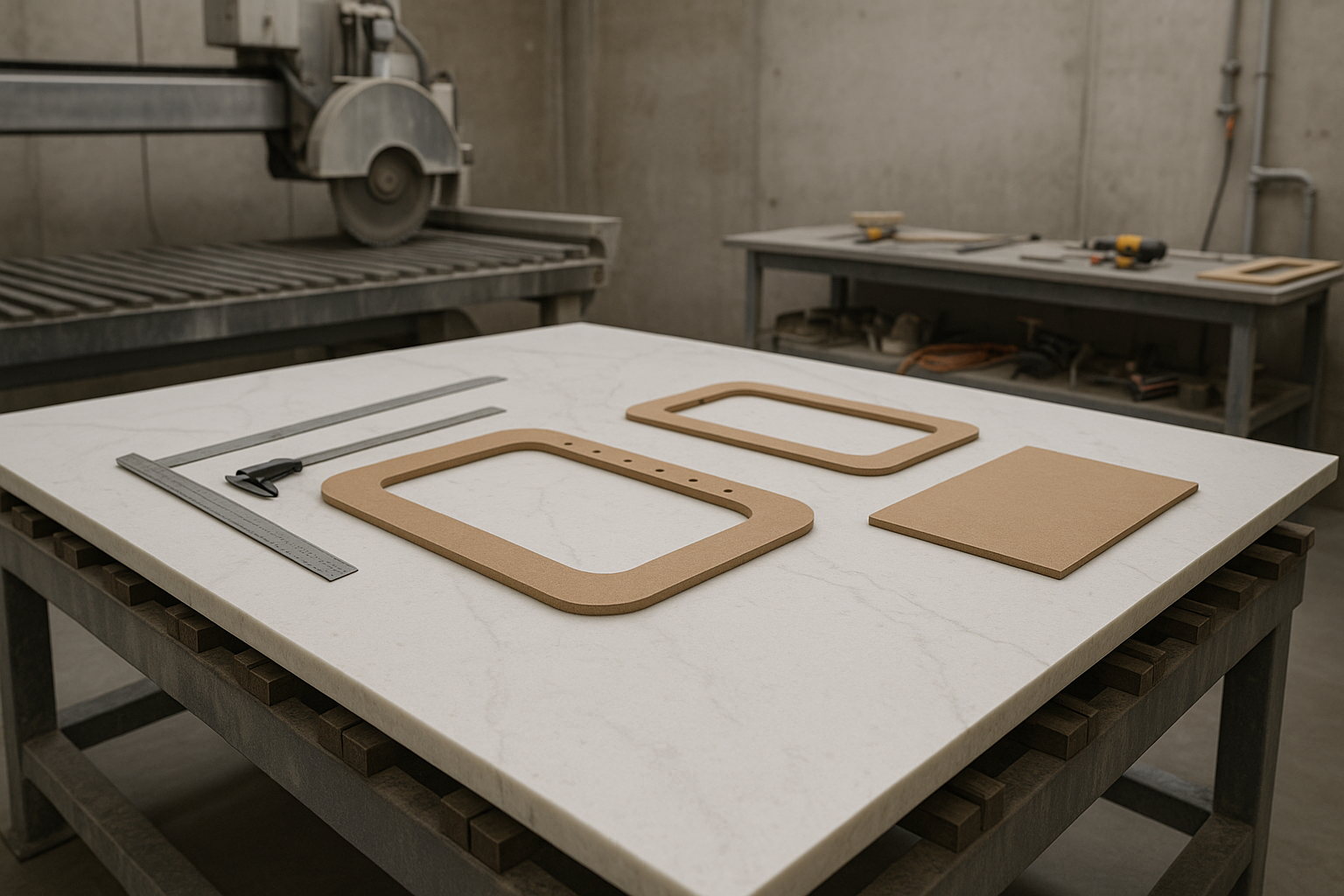
Accurate cut-outs start with clear plans, appliance specs, and a proper measure.
FAQs
Is Quantum Quartz heat resistant?
It handles normal kitchen temperatures, but it’s not designed for direct heat. Use trivets and don’t place hot pots, pans, or heat-venting appliances (like air fryers) directly on the surface.
Can you do waterfall ends in Quantum Quartz?
Yes. Waterfall ends are common with both 20mm and a 40mm mitred look. Plan joins, mitres, and cabinetry support early.
How visible are seams in Quantum Quartz benchtops?
A good seam should be level, tight, and colour-matched. Visibility depends on colour, finish, lighting, and seam placement. Bright whites and strong downlights can make seams easier to notice.
What’s the best cleaner for Quantum Quartz?
Mild dish soap and warm water with a soft cloth is usually enough. Avoid abrasive pads and harsh chemicals.
Is Quantum Quartz a good choice for kitchen benchtops?
Yes. It’s consistent in colour, hard-wearing in daily use, and easy to clean. Use chopping boards, wipe spills, and keep hot cookware off the surface.
What’s the difference between 20mm and 40mm Quantum Quartz benchtops?
20mm is the standard thickness. A 40mm look is usually a built-up (laminated) or mitred edge for a thicker visual profile. The difference is mainly appearance and fabrication time (and often cost).
What is Quantum Quartz concrete matte, and where does it work best?
It’s a low-sheen (honed-style) finish with a softer, modern look. It suits islands and long runs, but can show fingerprints and oils more than polished.
Is Alpine White Quantum Quartz warm or cool?
It usually reads as a clean, bright white, but lighting and surrounding colours can shift it cooler. Check a sample in your kitchen before deciding.
Can you help if I’m searching for Quantum Quartz in Melbourne?
Yes. We can help with selection and the ordering steps, and tell you what to confirm with a Victorian fabricator (stock, templating timing, seam plan, cut-outs, lead time).
What do you need for an accurate benchtop quote?
Plans or measurements, photos, colour/finish, 20mm vs 40mm preference, splashback choice, and appliance details (sink, cooktop, tap holes). Model numbers and spec sheets help prevent mistakes.
Related reading: Contact SEQ Stone