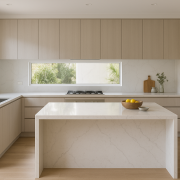
Laminex EssaStone: Expert Guidance for Choosing Your Stone Benchtop
If you’re considering a Laminex Essastone benchtop for a new kitchen or renovation in South East Queensland, there’s a lot to like. As specialist stonemasons servicing the Gold Coast and Brisbane, we see firsthand why Essastone is a go-to option for both homeowners and builders—especially if you want a top-tier finish, fast turnaround, and reliable local support.
What is Essastone?
Essastone is Laminex’s engineered stone. It’s made from natural quartz—one of the hardest minerals on earth—blended with resins to make a dense, durable slab. This makes it great for benchtops, splashbacks, bathroom vanities, and highly used surfaces. Essastone is known for its range of designer colours, including classic whites through to modern marble-inspired looks like Carrara and Unique Calacatta.
Why Choose Essastone for Your Benchtop?
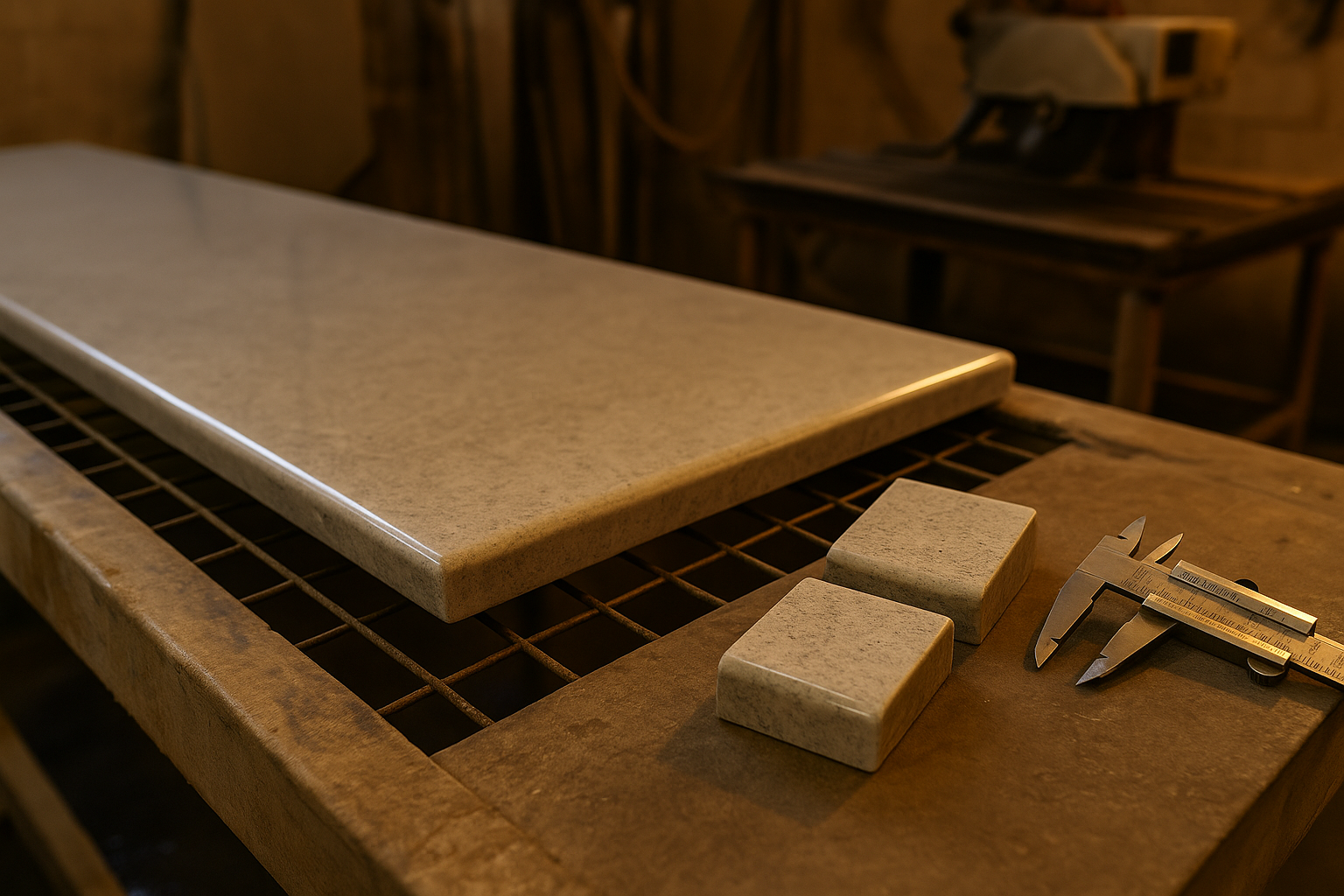
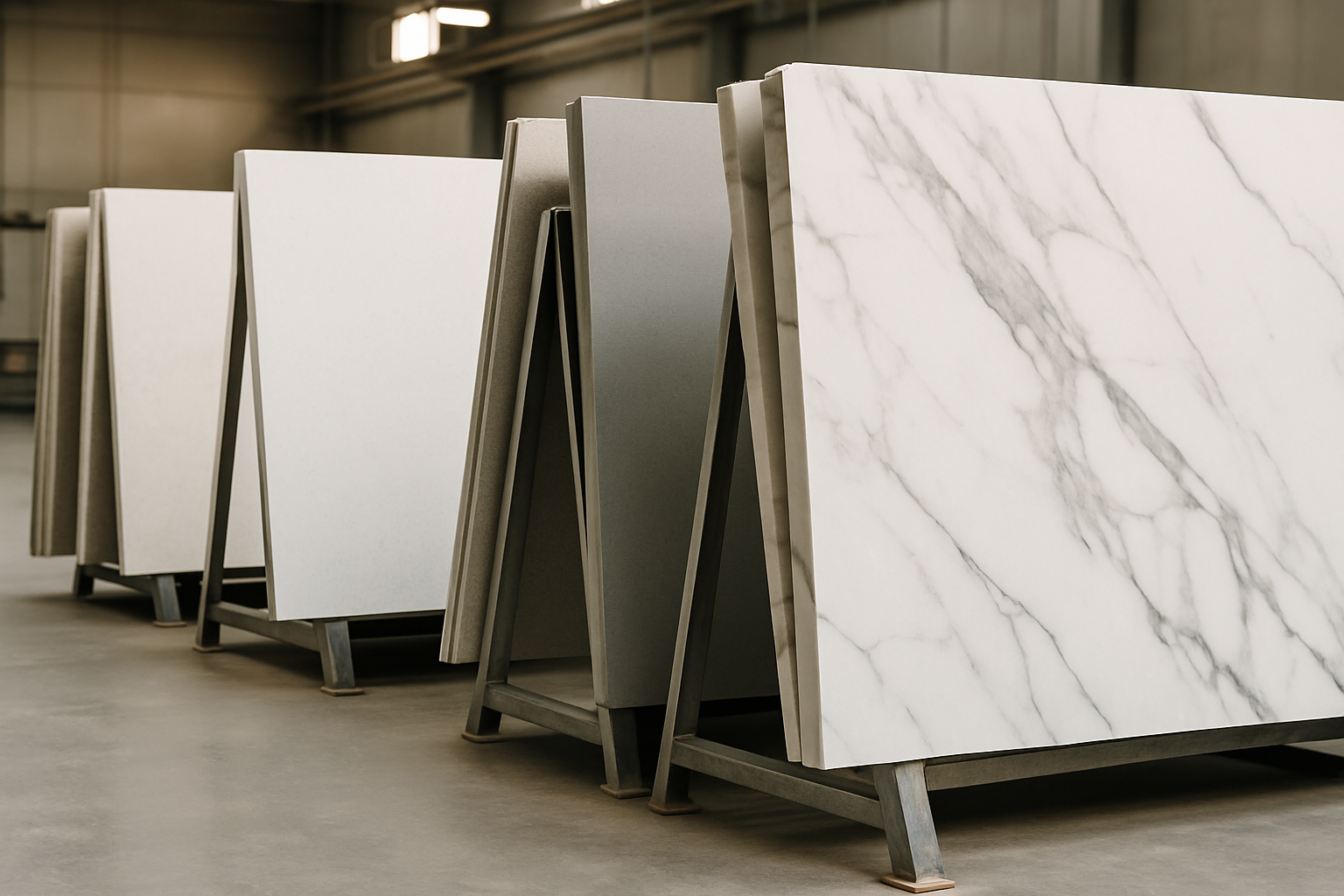
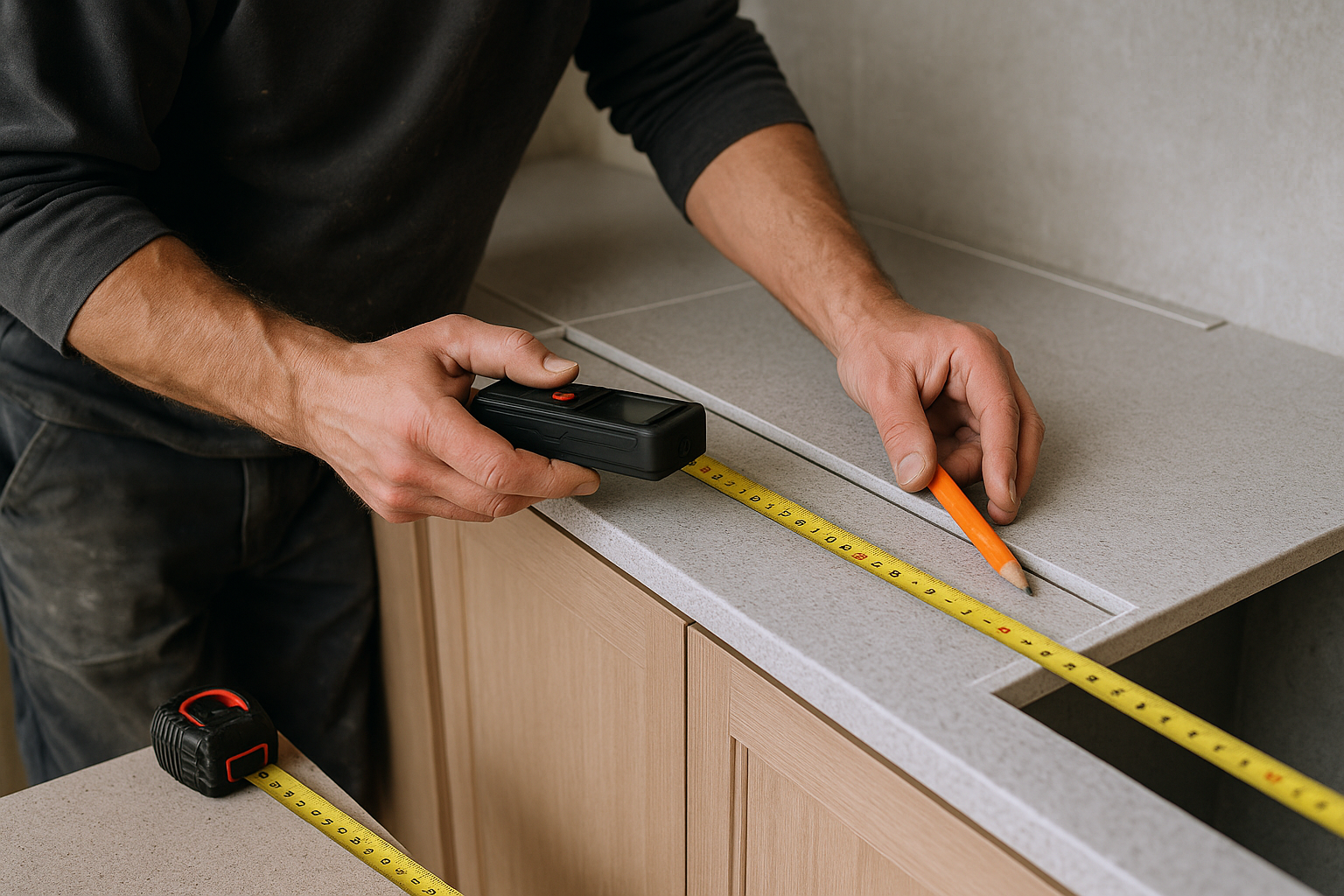
Skilled stone finishing for Essastone benchtops.
Hardwearing finish: Resists most scratches and chips from day-to-day use.
Easy-care surface: Low porosity helps reduce staining, though we still recommend wiping spills.
Range of looks: Includes everything from crisp Arctic White to striking Verona Mist or soft, veined marbles.
Australian standards: Laminex products are tested for local conditions and backed by a reputable supply chain.
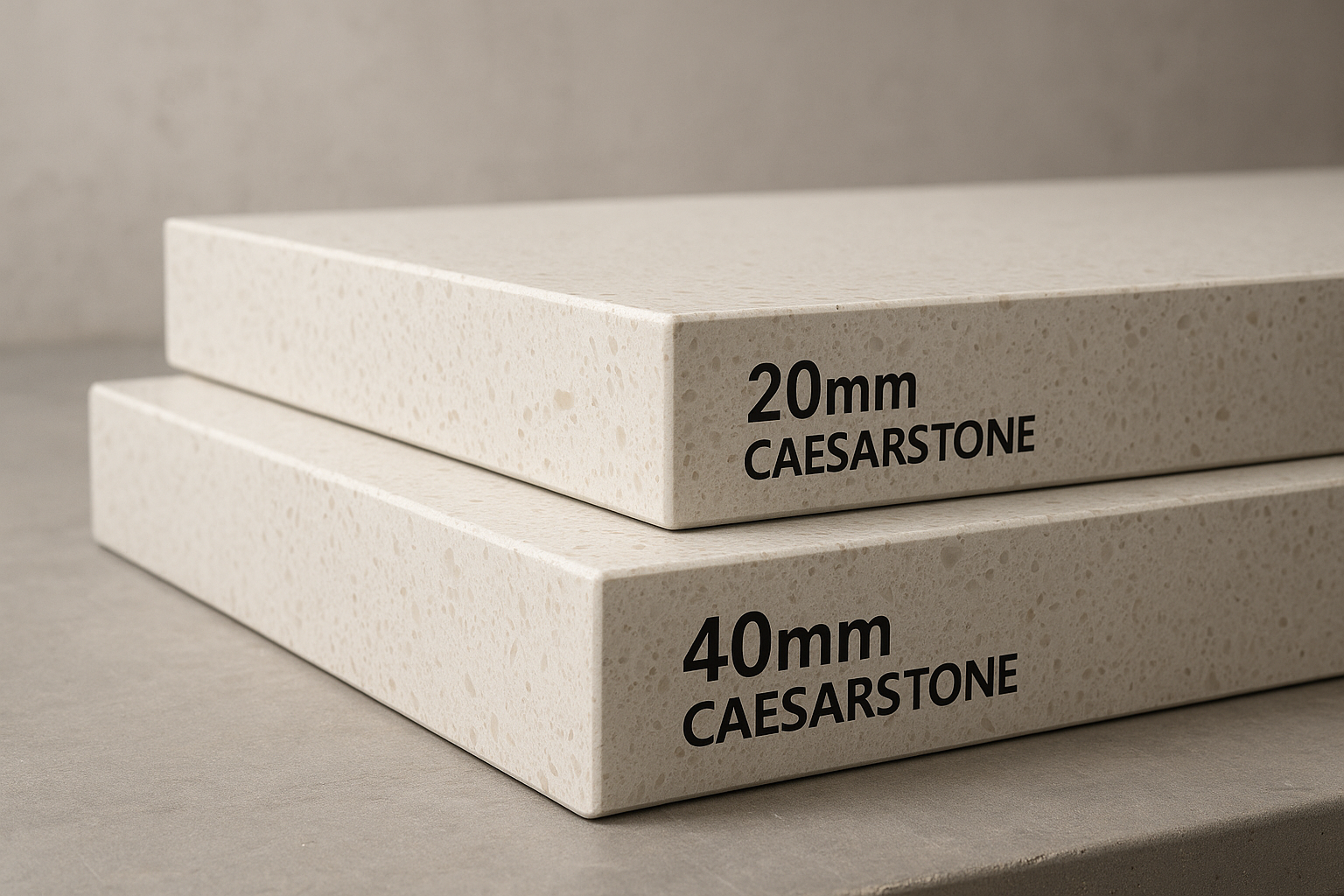
Are you set on 20mm or 40mm? Most SEQ kitchens choose 20mm for a clean, modern profile. If you want a thicker look for your island, 40mm is available as well.
Popular Essastone Colours & Styles
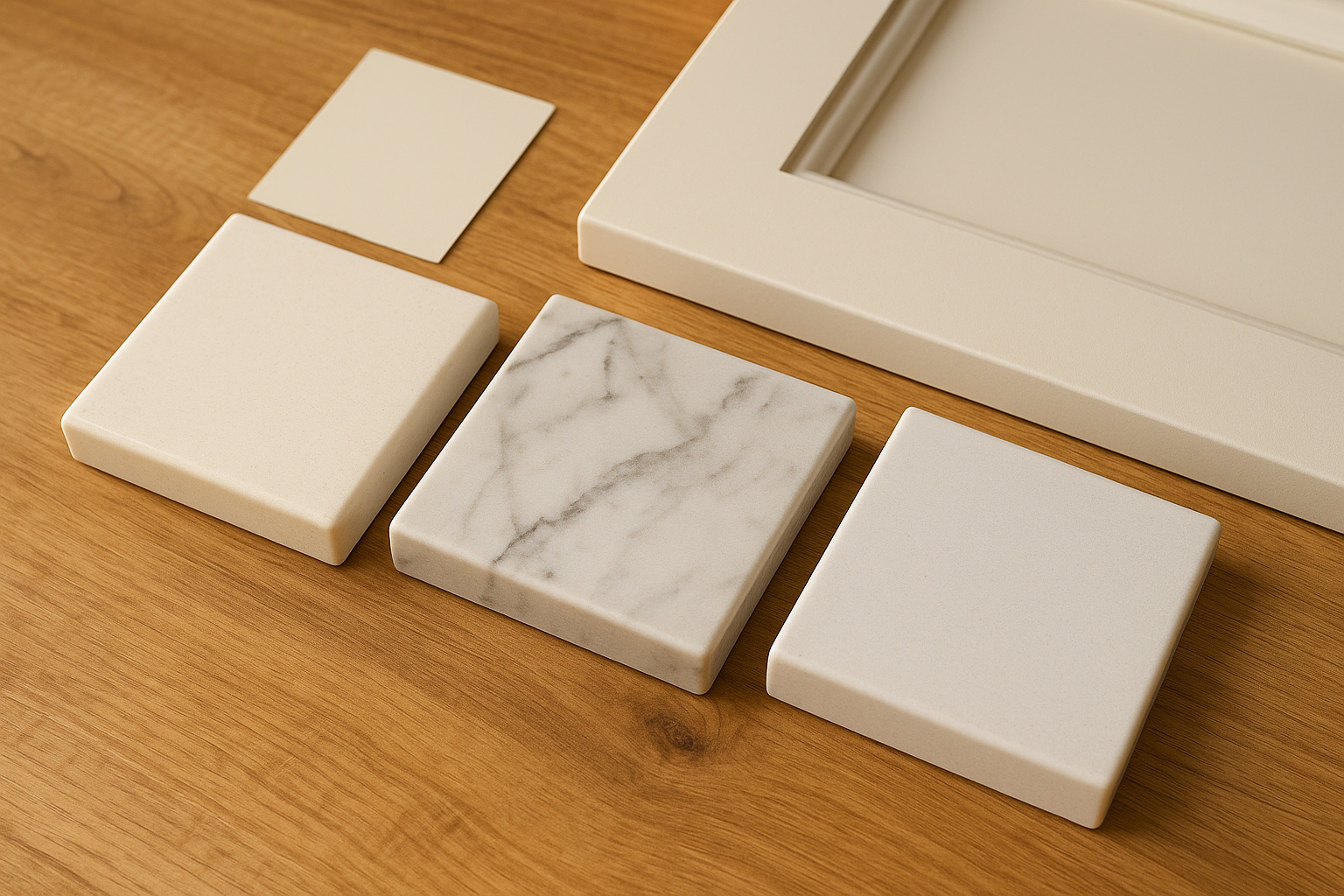
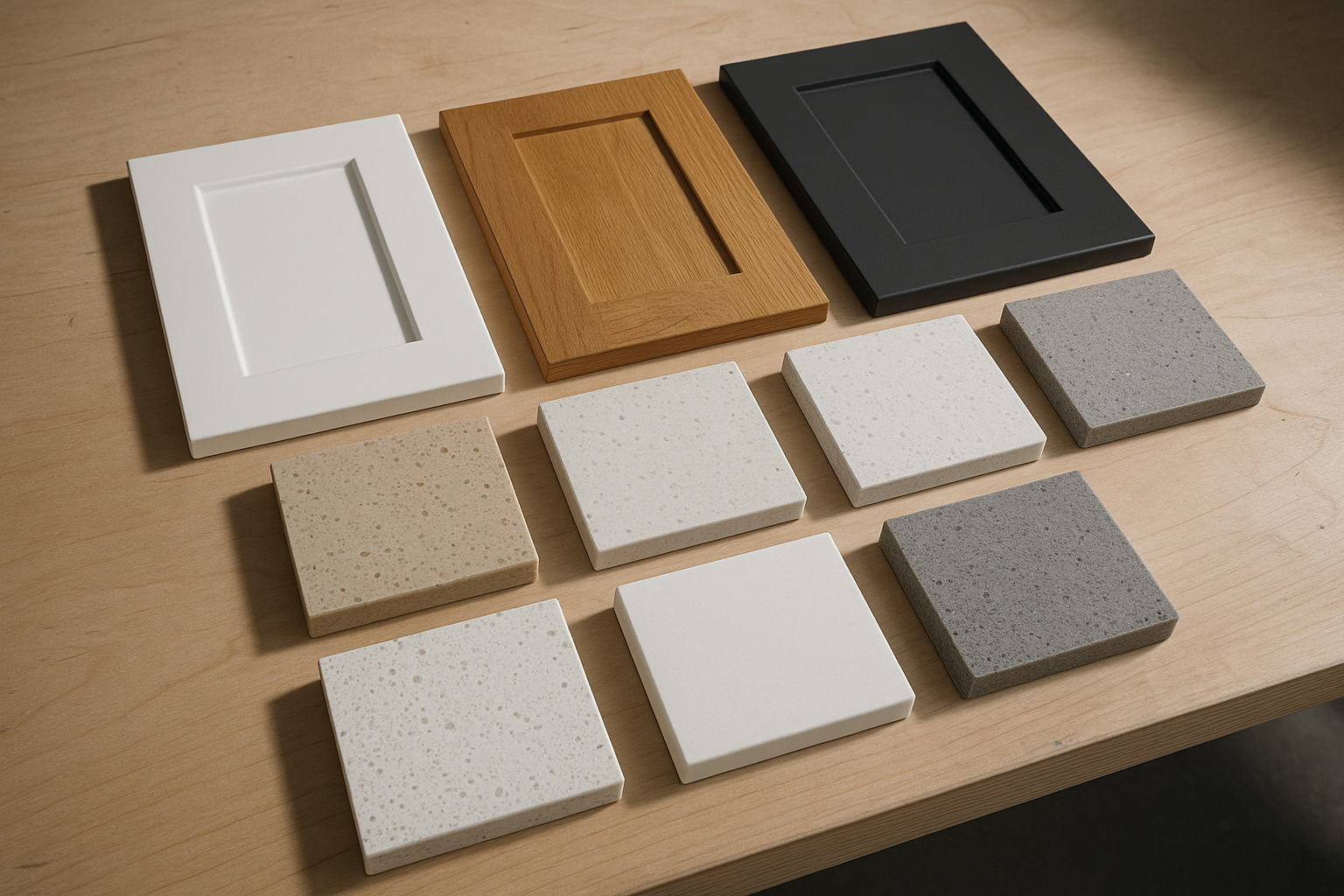
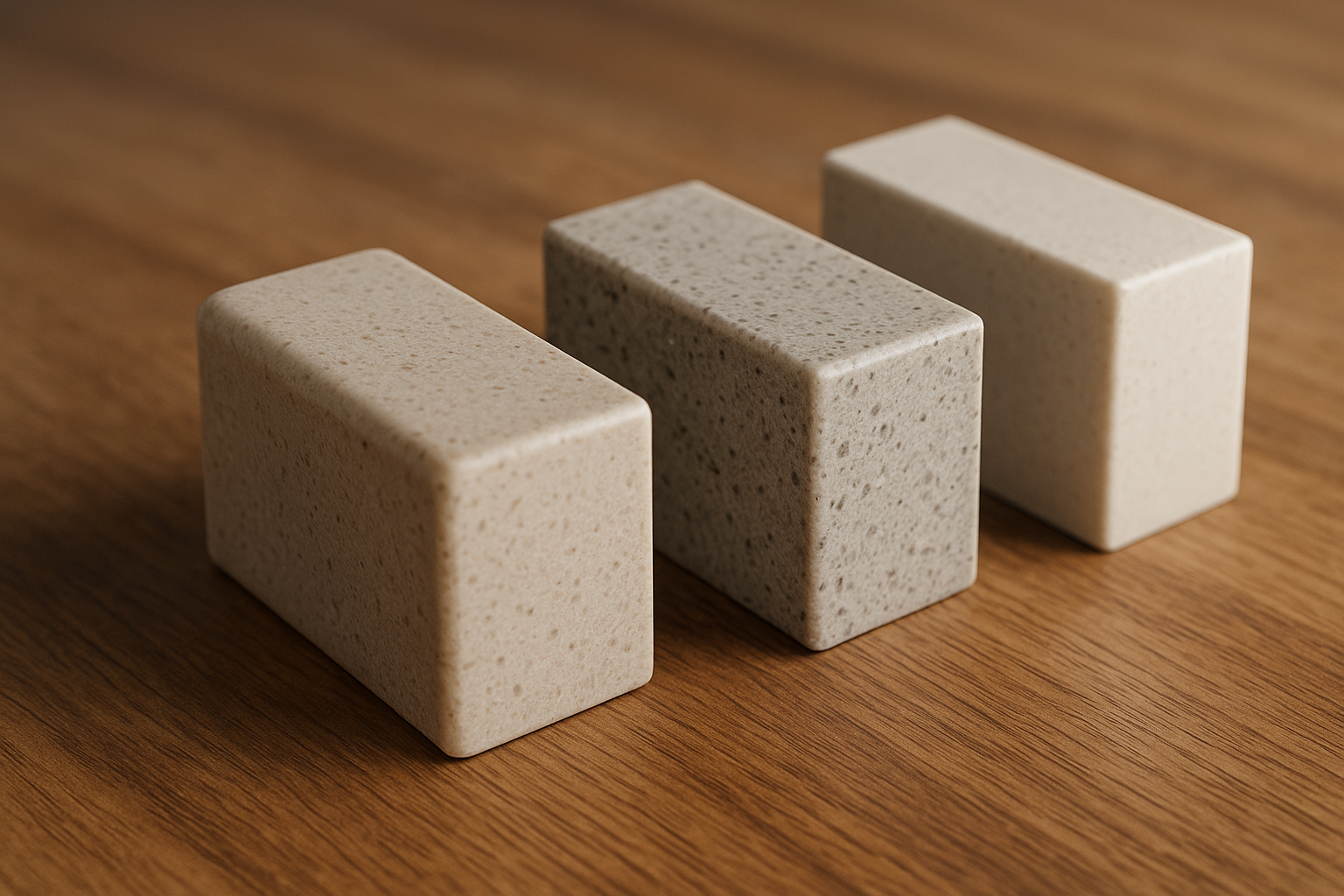
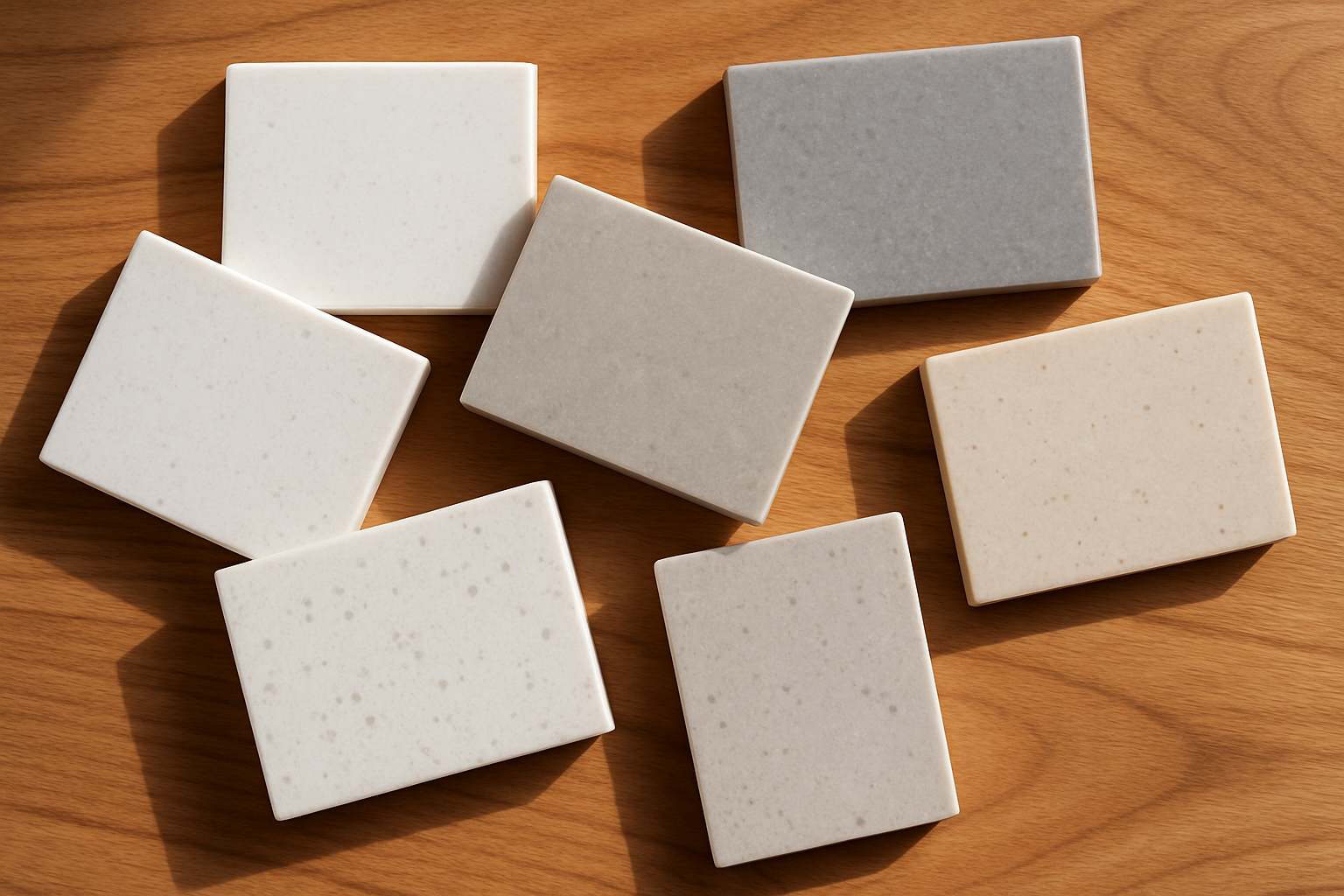
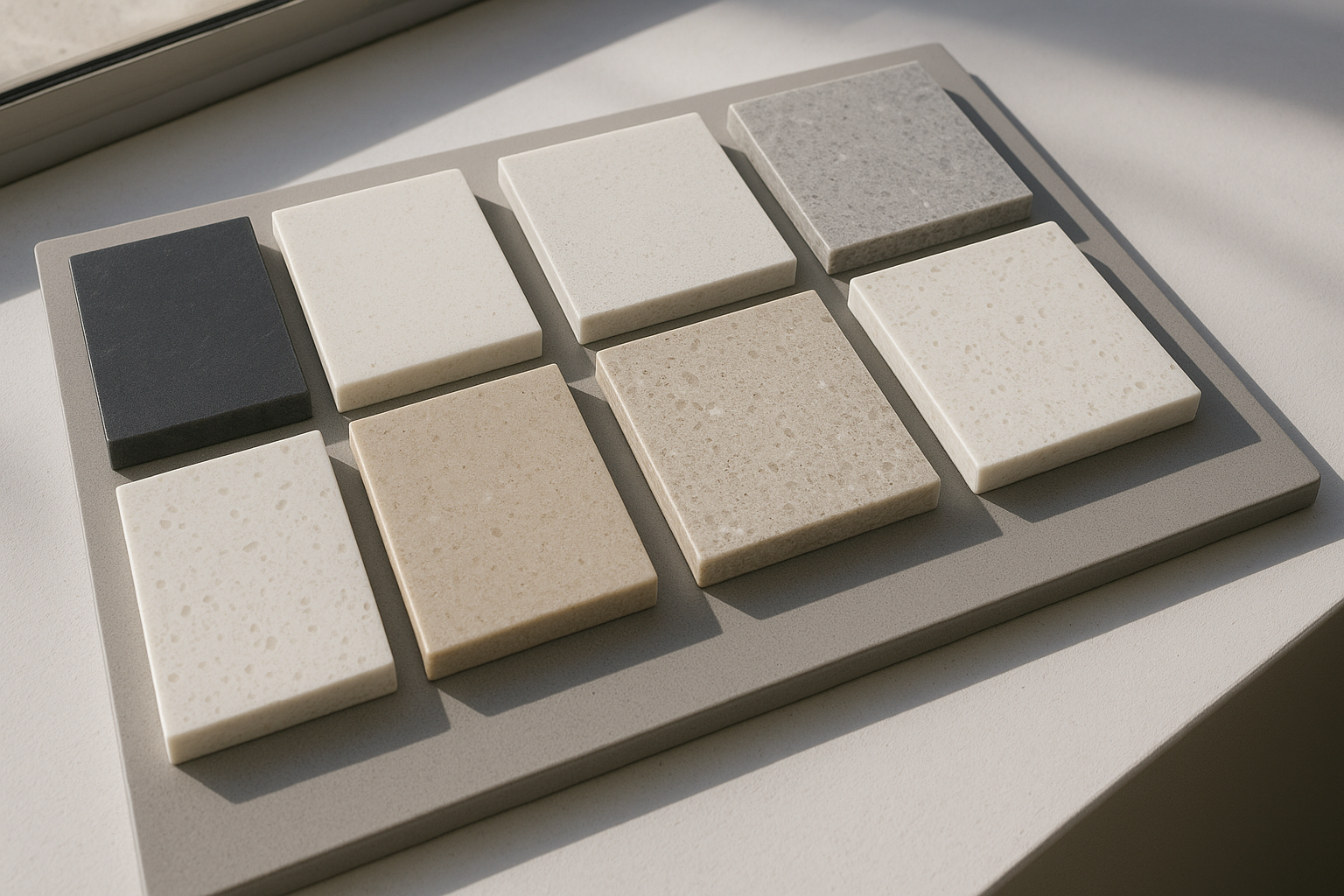
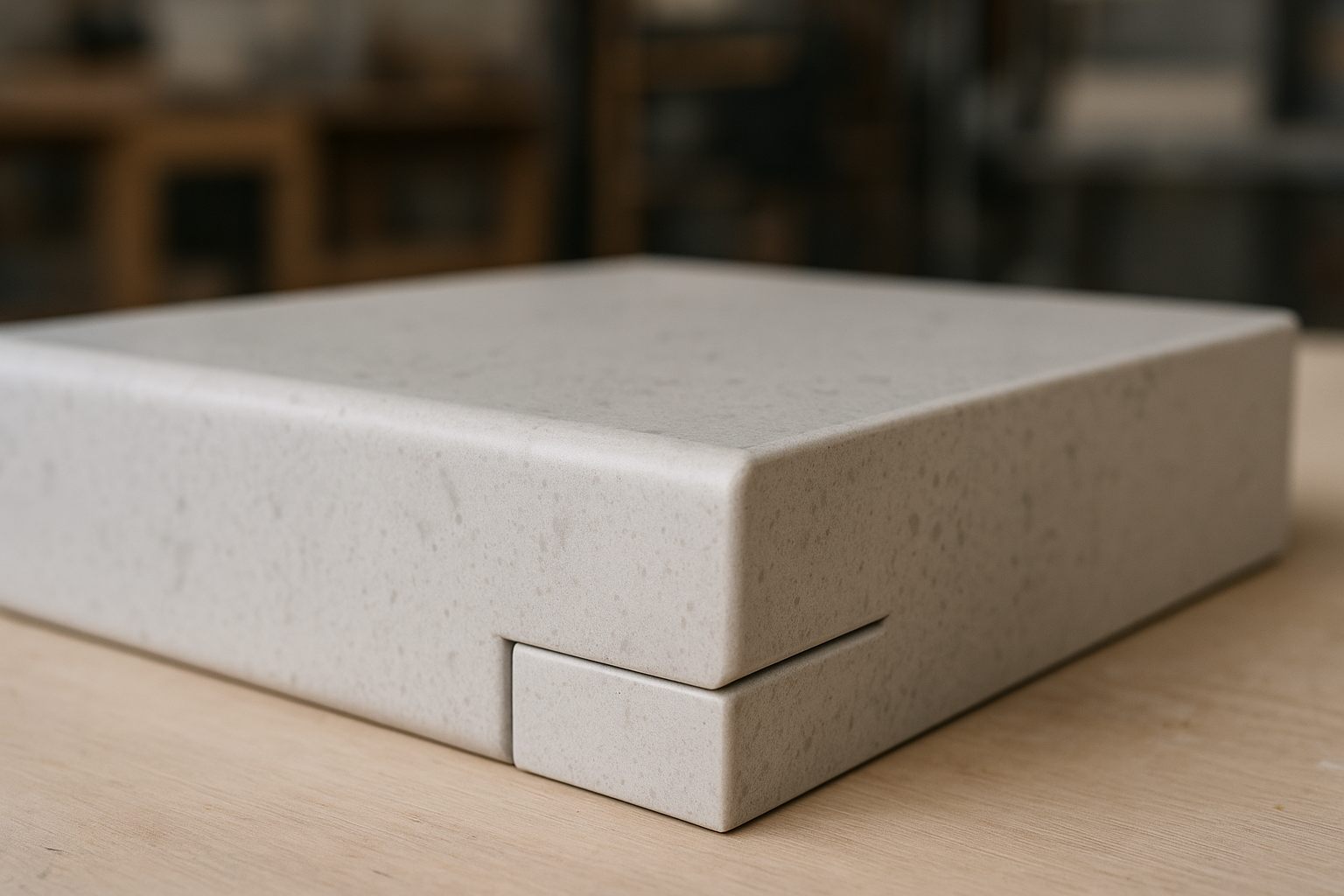
Essastone colour samples ready for selection.
We stock and cut the latest Essastone range, with colours like:
Carrara Essastone – Subtle grey veining, works well in light-filled, coastal kitchens.
Essastone Unique Calacatta – Popular for bold marble look with broad veining.
Essastone Calcite – Softer profile, great for busy family kitchens.
Verona Mist – A modern neutral trending in open-plan homes.
If you’re after something specific, bring a photo or plans, or check out our Essastone® benchtop range.
Essastone vs Caesarstone: What’s the Main Difference?
Both are premium brands, both perform well under normal kitchen wear. Essastone offers a selective range of classic colours and is known for crisp marble effects. Caesarstone brings more textures and sometimes broader design trends.
If you’re tossing up between the two, base your decision on:
Your preferred colour and pattern
Availability for your build schedule
Any technical needs (like specific edge profiles or cut-outs)
1. Selection & Quote
Send us your plans or arrange a site measure. We help you shortlist Essastone colours and edge options. Get a clear price—no hidden extras.
2. Fast Turnaround
Most Essastone jobs move from check-measure to install in 3–7 working days. We confirm timelines up front, ideal for builders and homeowners aiming to keep projects moving.
3. Custom Cutting
We precision-cut your benchtops (and splashbacks, if required) in our Burleigh Heads workshop. All sink and cooktop cut-outs are included.
4. Professional Installation
Our team delivers and installs across Gold Coast, Brisbane, and SEQ—always with a keen eye for accuracy.
Answers to Common Essastone Questions
Do you supply both 20mm and 40mm Essastone?
Yes, both thicknesses are available for kitchens and bathrooms. 20mm is our most requested.
Is Essastone suitable for outdoor kitchens?
Essastone is mainly recommended for indoor use. For outdoor projects, natural stone or specific quartz products may be more suitable—ask us for tailored advice.
Can you match Essastone benchtops with splashbacks?
Absolutely. Many of our clients choose to run the same Essastone colour up the wall for a seamless look.
How do I care for an Essastone benchtop?
Wipe spills promptly, use a cutting board, and avoid placing hot pots directly on the surface. Regular cleaning with warm, soapy water is best.
Get a Quote or Book Your Measure
Ready to move forward? Whether you’re working from plans or need us onsite for a measure, our team at SEQ Stone can help you finalise your Essastone selection and lock in an install date.
https://seqstone.com.au/wp-content/uploads/2026/06/featured-1-17.png10241536adminhttps://seqstone.com.au/wp-content/uploads/2022/06/footer-logo-300x92.pngadmin2026-06-18 00:38:162026-06-18 00:38:16Laminex Essastone: Expert Guidance for Choosing Your Stone Benchtop
CaesarStone Price Ranges Explained: What Impacts Cost in Gold Coast & SEQ Installs
Choosing Caesarstone benchtops for your kitchen or bathroom is a practical upgrade, but the price can vary more than most expect. At SEQ Stone, we supply, cut, and install Caesarstone across the Gold Coast and South East Queensland. Here, you’ll find out how Caesarstone price ranges work—what changes the final Quote, how the deluxe range fits in, and how we keep installs on schedule.
What is Caesarstone?
Caesarstone is an engineered stone made from over 90% quartz. It’s hard-wearing, low maintenance, and comes in dozens of colours and finishes for kitchens, bathrooms, laundries, and more. Compared to natural stone, Caesarstone gives you more colour consistency and usually a faster supply chain. You’ll find it in modern renovations and new builds all over Australia.
Main Factors That Affect Caesarstone Pricing
It’s not only about which colour you choose. Here’s what changes the quote on a typical Caesarstone job in Gold Coast, Brisbane, or SEQ:
Slab thickness: 20mm is standard. 40mm is heavier, needs more handling and joins, and costs more.
Colour range: Caesarstone sets their pricing by colour groups. Standard is most cost-effective. Deluxe and Supernatural are premium with designer looks, unique veining, or special finishes.
Benchtop size and layout: The more square metres, the more material and labour needed. Large island benches or wide splashbacks will affect cost.
Edging and cut-outs: Waterfall ends, special edge profiles, and extra cut-outs (sink, cooktop, power boxes) mean extra fabrication time and precision.
Site location and access: Elevated installs, tricky driveways, or regional sites may involve extra crew or delivery plans.
Supplier and installer choice: Using a local, experienced mason means faster turnaround and fewer mistakes. SEQ Stone quotes always include delivery and installation.
Caesarstone Price Ranges (2026)
Prices change with the market, but here’s what homeowners and builders usually see on quotes:
Standard colours: Entry point, classic looks and always in stock. E.g., Ice Snow or White Shimmer.
Deluxe range: Sought-after finishes with more movement, subtle veins, or bolder tones—think 4004 Caesarstone or Buttermilk Caesarstone. This is in the mid-to-upper price range. Perfect when you want a touch of luxury but not the cost of Supernatural.
Supernatural / Ultranatural: Premium veined styles mimicking marble or granite. Highest cost per square metre.
For an average Gold Coast kitchen (5–7 metres of benchtop) in the standard range, installed price usually starts from the low thousands. Deluxe and Supernatural add at least 15–30% depending on the specific colour. To compare: Lithostone prices, Essastone vs Caesarstone, or YDL stone price list can differ on colour, supply, and finish.
If you’re after a specific colour or finish—like Buttermilk Caesarstone (a creamy, subtle base popular in coastal homes) or the designer-favourite 4004 Caesarstone (shock-resistant, deluxe light quartz)—let us know early. Limited-edition colours sometimes have shorter supply times.
Thickness: 20mm vs 40mm
Most Australian kitchens stick with 20mm slabs for a modern, neat look. 40mm (sometimes called a ‘laminated’ edge) gives bulk, classic weight, and stands out in stone feature islands. It costs more due to extra manufacturing and handling. We can produce both on-site—if you’re unsure which suits your kitchen, we can recommend what fits best with your cabinets and style.
Caesarstone Benchtops for the Gold Coast & SEQ
Stone benchtops in this region have a few extra needs: they have to survive beach sand, spills, and regular use. Caesarstone handles these conditions well—whether it’s the family kitchen, a high-traffic rental, or a bespoke build project. Our local crew cuts, delivers, and installs from Burleigh Heads:
Lead times: Most projects finish in 3–5 working days from template and colour approval.
Support: Full service—design consult, supply, cutting, install, clean-up.
Showroom: View samples and edge profiles on site.
Colour guidance: Our team will go through all Caesarstone colours, plus recommend Smartstone, Lithostone, or Caesar quartz if you want to compare textures/costs.
How to Get an Exact Caesarstone Quote in SEQ
No universal price list can guarantee accuracy. The best way to get a fixed price is:
Decide your preferred colour (have a look at the Caesarstone deluxe range and others on our Caesarstone® page).
Measure your benchtop or send us your plan/sketch/photos.
Choose your thickness (20mm or 40mm?).
Let us know if you need splashbacks, waterfalls, or cut-outs.
Send your details to SEQ Stone—we’ll get a detailed quote back fast.
Frequently Asked Questions
Can I view Caesarstone in person before deciding? Yes. Visit our Burleigh Heads location to check Caesarstone, Caesar marble, and full stone options side by side. You’ll see 20mm, 40mm, edge profiles, and get advice from a working mason.
How do SEQ Stone prices compare to Melbourne or Adelaide? Prices for Caesarstone benchtops vary by city due to freight, supply chains, and installer demand. Our pricing is local to Gold Coast and SEQ, so you get faster turnaround and clear local guarantees.
Is Caesarstone suitable for outdoor kitchens? Caesarstone is made for interiors, but we can recommend alternatives for outdoor kitchens in coastal areas. Talk to us about your project.
Ready for a Caesarstone Price? Let’s Get Started
If you have sized plans or even a rough kitchen sketch, send them to SEQ Stone for a fast, clear quote. We specialise in Caesarstone benchtops—standard and deluxe range—right across the Gold Coast and SEQ.
Want advice choosing a colour? Ask about our onsite samples.
Organising a build or tight timeline? We’ll confirm lead time by suburb once we see your details.
Looking to compare brands? View our Stone Range or check Smartstone for alternatives.
Questions? Request a callback or email us your plans. We’re here to help you buy Caesarstone with clarity and confidence—delivered and installed by local experts.
Essastone benchtops: practical choices that make the install smoother
If you want an Essastone benchtop that looks great and installs with fewer surprises, decide these four things early: colour, thickness, joins, and cut-outs. Lock them in before templating and the rest of the job is usually simpler.
This guide focuses on what matters on site for homes across the Gold Coast, Brisbane and South East Queensland.
Quick answers (what most people ask first)
Edge profiles change the look and feel more than most people expect.
Colours: choose undertone (warm/cool), match the busiest visual element (often flooring or splashback), then pick veining level (low/medium/high).
20mm vs 40mm look: 20mm suits modern kitchens and tighter budgets. The “40mm look” is usually a 20mm top with a built-up or mitred edge.
Biggest price drivers: waterfalls, mitres, splashbacks, cut-outs, access, and the number/position of joins.
Less noticeable joins: plan seam locations early and avoid patterns/finishes that highlight joins.
If you’re comparing brands (Caesarstone, Smartstone, Stone Ambassador), the decision points are similar. The main differences are usually the exact colour/finish you want and whether it’s available when you need it.
What Essastone is (and where it’s used)
Essastone is engineered quartz supplied in slabs, then cut, edged and installed as finished surfaces.
Common uses:
Kitchen benchtops and islands
Laundry benchtops
Vanity tops
Waterfall ends
Stone splashbacks (standard height or full-height)
You might see searches for “essa stone” or “essa stone benchtop”. It’s the same product category. What matters most is the layout, fabrication details, and install conditions, especially how straight and level the cabinetry is.
Showroom lighting and home lighting can look very different. In SEQ, natural light can be bright and change quickly across the day, especially in open-plan homes.
Use this simple process to narrow it down.
1) Choose warm or cool undertones
Start here:
Warm: creamy whites, beige, warm greys
Cool: crisp whites, cool greys
Warm undertones often suit warmer timber floors or sandy-toned tiles (common in coastal SEQ). Cool undertones often suit cooler greys, chrome, and crisp white palettes.
2) Match the busiest visual element
Match the stone to whatever has the most “visual noise”, such as:
Flooring
Splashback tile
Timber tone (floors or cabinetry)
You don’t need an exact match. You’re mainly avoiding a clash of undertones or patterns.
3) Pick your movement level (veining)
Low movement: clean, modern, often hides joins better
Medium movement: adds interest without dominating
High movement / bold veining: premium look, but join placement and vein direction matter more
Bold veining can look amazing on an island, but it can make waterfall alignment and joins more noticeable. If you want bold veining, allow time to review layout and sign-off drawings properly.
Polished vs matte/honed-style finishes
Polished: brighter and more reflective (you’ll see lights and window reflections)
Matte/honed-style: softer look and can reduce obvious fingerprints, but some colours show smudges or dark marks more than expected
If you can, view samples in light similar to your kitchen (morning and afternoon can read differently in SEQ).
Popular looks (beyond “Carrara style”)
Carrara-style / marble-look: white base with soft grey veining
Concrete-look: modern, forgiving, works well with timber and black hardware
Solid white: crisp and minimal; lighting and shadows matter
Grey veined: a safe middle ground for many cabinetry colours
“Carrara Essastone”: two practical tips
If you want a Carrara-style look:
Plan vein direction for islands and waterfalls so the pattern doesn’t look like it flips.
Allow for batch variation between slabs, especially on large kitchens and waterfall ends.
Want a quick shortlist? Send your cabinet colour, floor colour, and a natural-light photo and we’ll suggest options that suit typical SEQ palettes.
20mm vs 40mm: what actually changes
Thickness changes the look fast, and it can affect how complex the fabrication is.
20mm Essastone benchtops
20mm suits:
Modern, flat-panel cabinetry
Smaller kitchens (a thick edge can feel heavy)
Tighter budgets
You still need correct support, especially for:
Overhangs
Dishwasher gaps
Wide cabinet spans
The “40mm look”: two common build methods
Most 40mm benches are a 20mm slab with extra edge work.
1) Laminated build-up (drop edge)
Extra 20mm strip is laminated to the front edge
Looks thicker from standing height
Best for straight runs and simpler islands
2) Mitred edge (thick look on exposed ends)
Stone is cut at 45° and joined to look like solid thickness
Best when the edge is seen from multiple angles
Common for feature islands and waterfall ends
Where the 40mm look works best
Feature islands that need more presence
Waterfall ends
Breakfast bars where the edge is part of the design
Pros and cons of the 40mm look
Pros
Stronger “feature” edge
Suits Shaker/classic cabinetry and bigger rooms
Helps an island feel more substantial
Cons
Higher cost (more labour and edge work)
More complex joins (especially mitres and waterfalls)
Heavier pieces can complicate access (stairs, narrow entries)
What drives the price difference (20mm vs 40mm look)
Laminated build-up vs mitred build
Number and length of exposed edges
Waterfall ends (extra panels and joins)
Veining complexity (more planning and matching)
Fabrication details that affect the finish
These choices affect how your kitchen looks and how it feels day to day.
Edge profiles (what to choose)
Eased / square eased (arris): clean and popular, removes sharpness
Pencil round: family-friendly, softer for knocks
Bevel: suits classic styling, adds definition
Mitred: used for thick-look edges and waterfalls, more labour-intensive
If you’ve got kids or a busy kitchen, eased or pencil-round is usually the practical choice.
Joins and seam placement (rules of thumb)
Joins are normal. They’re often required due to slab size, transport limits, access, and cut-out safety.
We generally aim to:
Avoid joins through cut-outs where possible (especially cooktops)
Keep joins out of high-visibility sightlines when we can
Match joins to the pattern so they’re less noticeable
Plan seams early on long runs (better planned than forced)
If you want the cleanest look, tell us where you’ll view the island most (kitchen side or living side). That can change the best seam location.
Cut-outs: sinks, cooktops and tap holes
Cut-outs are where accuracy matters most. They’re also where last-minute changes create delays.
Key points:
Cooktops: must follow the manufacturer’s template and clearances
Undermount sinks: need extra internal polishing and correct corner radii
Topmount sinks: simpler cut-out, but the rim is visible so finish matters
Tap holes / filtered taps: confirm early, especially with stone splashbacks
Changes after templating can mean rework. In real timelines, delays often come from late-arriving appliances or a late switch (for example, topmount to undermount).
Drainer grooves
Drainer grooves can look great, but they need planning.
Not every layout suits them (space and fall direction matter)
They need correct slope to drain properly
They can take longer to clean than a flat surface
They add fabrication time and cost
If you do lots of handwashing, a simple drainer mat can be easier to live with than grooves. It comes down to preference.
Splashback options (stone, height and cut-outs)
A stone splashback can be:
Standard height: often around 200–300mm (varies by design)
Full-height: benchtop to overhead cupboards, or benchtop to ceiling
Key checks:
Confirm power point locations before templating
Allow for window reveals and tight corners
Use correct sealing and movement gaps (don’t hard-fix into corners)
Behind cooktops, follow the appliance maker’s clearance and heat guidance
If you’re planning a servery window or wide openings, full-height splashbacks and window details need extra attention at measure stage.
Waterfall end panels: what makes them look right
Waterfalls look best when alignment and pattern direction are deliberate.
What matters most:
Mitre alignment between the top and the drop
Vein matching so the pattern looks intentional
Panel joins (sometimes needed due to height, access or slab yield)
Support and fixing so the stone isn’t taking structural load
Send island dimensions early if you want waterfall ends. It helps lock in slab usage and join planning.
What to decide before we template
Before measure and template, confirm:
Sink model and mounting type (undermount, topmount, flush-mount)
Tap hole locations (including filtered water)
Cooktop model and clearances
Dishwasher position
Pop-up power or bin systems (if any)
If you don’t have final models yet, we can still advise what must be confirmed before cutting.
Cabinet readiness checklist (to avoid delays)
Most issues aren’t the stone. They’re the cabinetry and services underneath.
Before digital measure/template, cabinetry should be:
Installed, fixed and level
As plumb and square as possible (especially near end panels)
Braced for overhangs and long spans
Confirmed for appliance specs (sink/cooktop cut-out requirements)
Planned for cooktop support rails (if required)
Finalised for power points (especially for splashbacks)
Rough-in plumbing positioned to avoid drawer/bin clashes
Clear for access (stairs, tight hallways, parking, lift access)
If key appliances aren’t locked in, it’s often better to wait than template too early and risk rework.
From quote to install (step-by-step)
Site check (if needed): access, stairs, parking, disposal
Digital measure/template: after cabinets are installed and secured
Manufacturer warranty: covers the slab under Essastone’s terms
Workmanship warranty: covers fabrication and installation (joins, fixing, fit and finish)
If there’s a concern, photos plus a short description helps assess it quickly.
Common planning mistakes (and how to avoid them)
Choosing sink/cooktop too late (cut-outs depend on exact models)
Missing window reveals and clearances (common with full-height splashbacks)
Not planning joins on long runs
Rushing island seating (overhang and support need checking)
If you want, we can review your plan and flag issues before you commit.
Stone benchtops Gold Coast (service area)
SEQ Stone is based in Burleigh Heads. We service the Gold Coast, Brisbane and South East Queensland.
If you’re working with a cabinet maker or builder, we coordinate timing around cabinet completion, plumbing/electrical rough-in, and appliance delivery so the stone stage doesn’t hold up the renovation.
If you’re unsure about your location, send your suburb and we’ll confirm availability.
Planning from outside SEQ?
We sometimes see searches like “stone benchtops Gold Coast” or “Essastone benchtops Perth”.
We service Gold Coast, Brisbane and South East Queensland only. If you’re nearby, send your suburb and we’ll confirm.
Next step: request an Essastone benchtop quote
Send us:
Your kitchen plan (PDF) or photos + rough measurements
Your preferred Essastone colour (or 2–3 options)
Sink and cooktop models (if chosen)
Your suburb and preferred install window
Then we’ll reply with clear pricing, lead time, and any design notes that affect the finish.
If you add project photos to this page, use descriptive AU-local alt text (for example, “Essastone Carrara-look waterfall island Gold Coast”) and compress images to support Core Web Vitals.
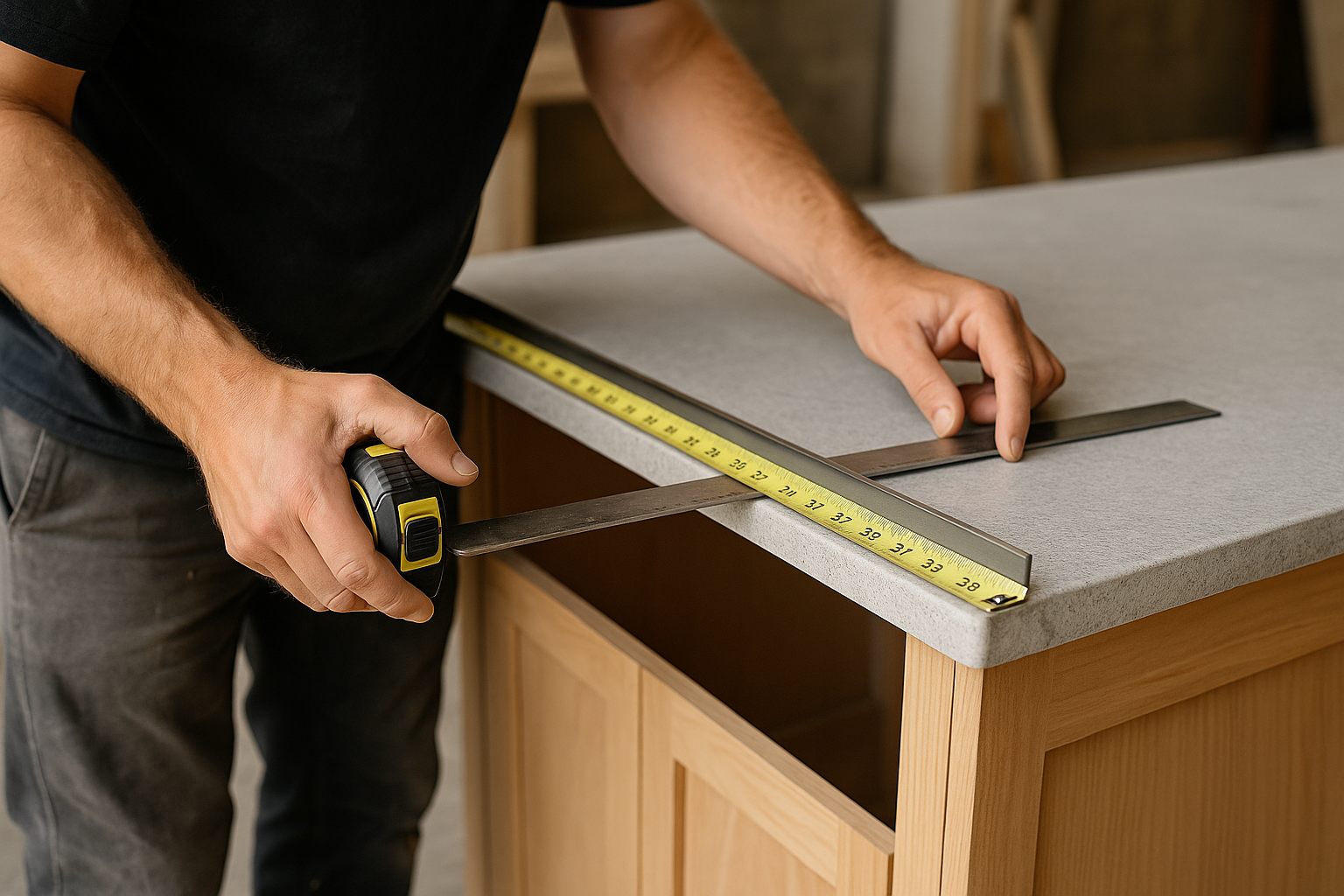
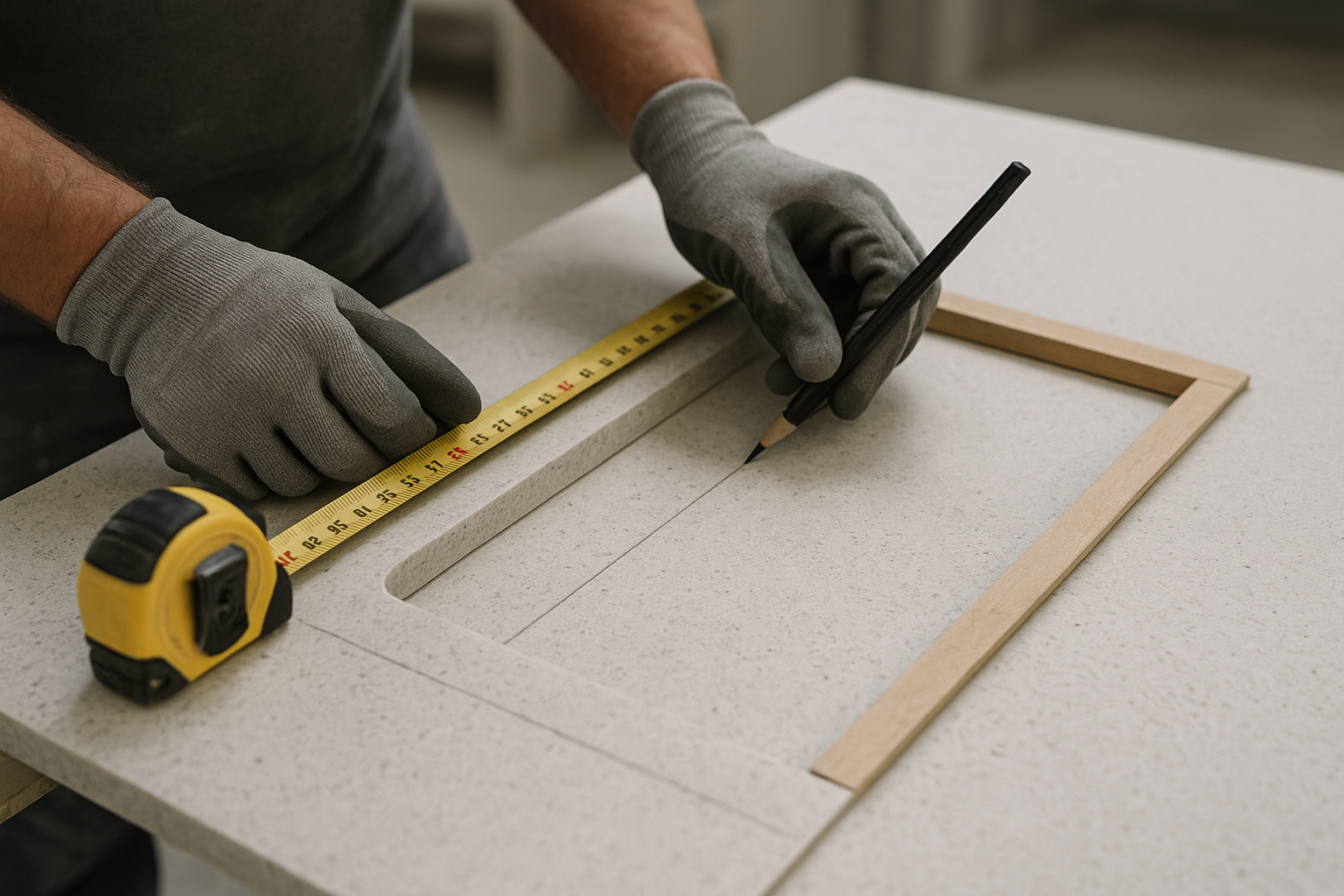
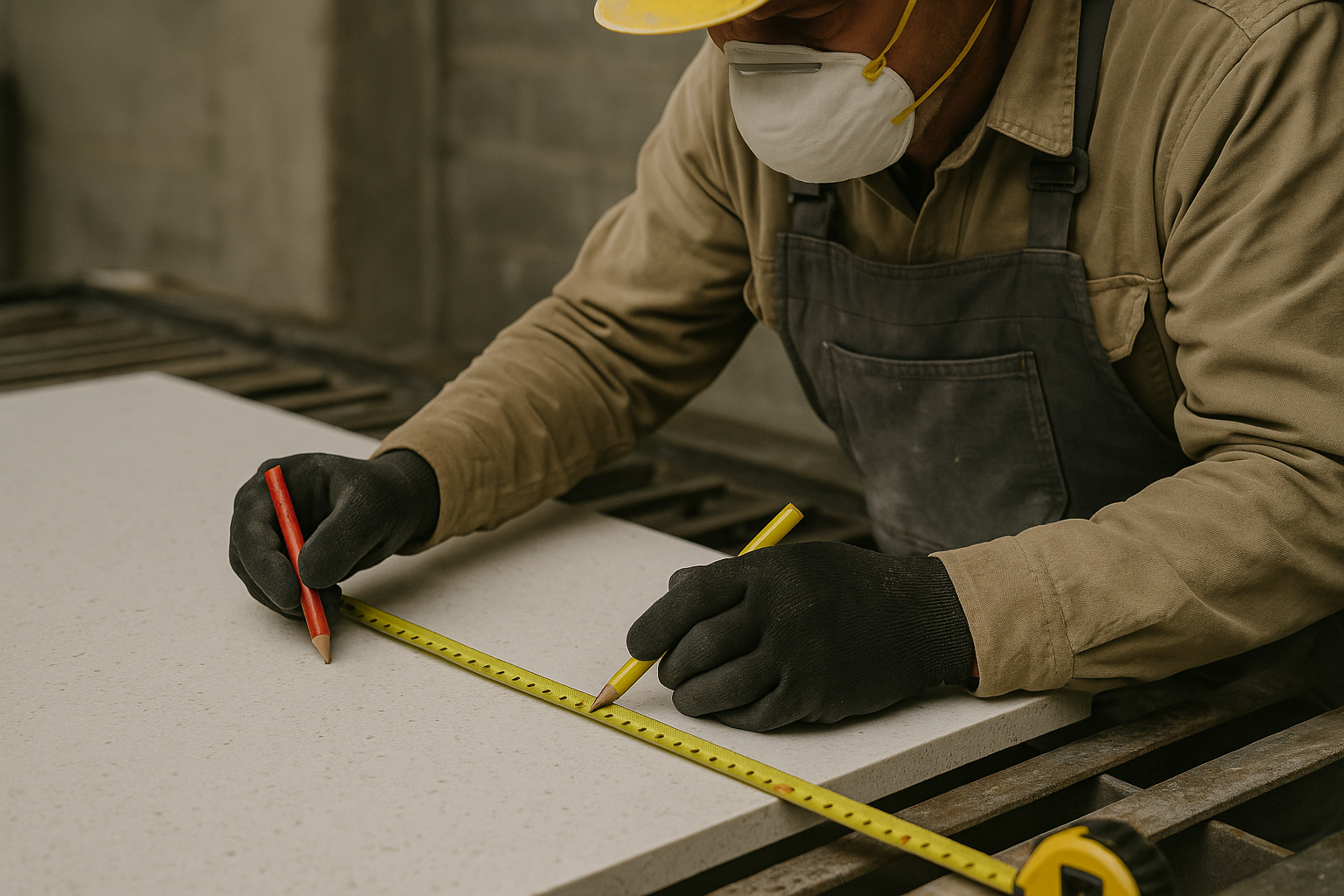
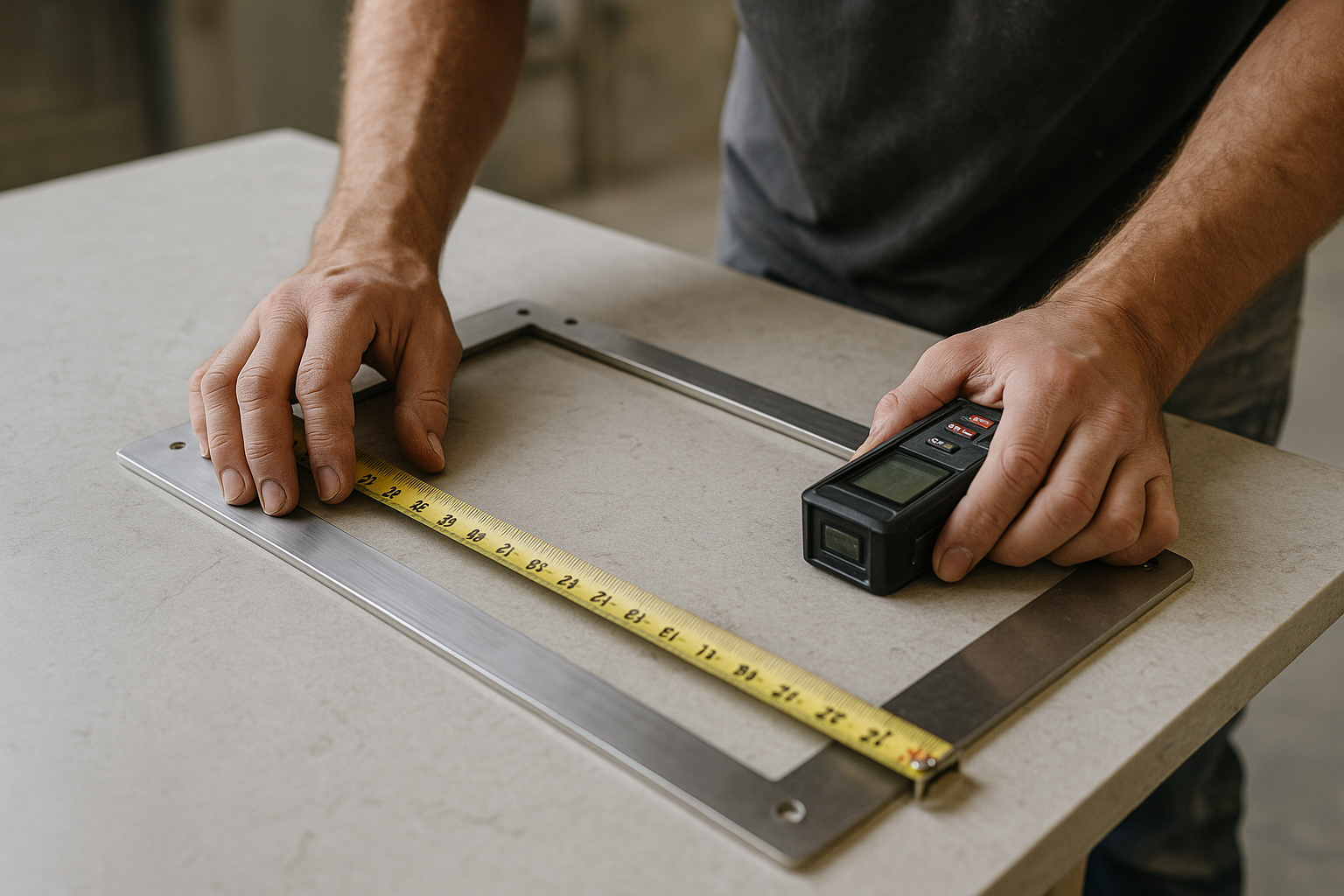
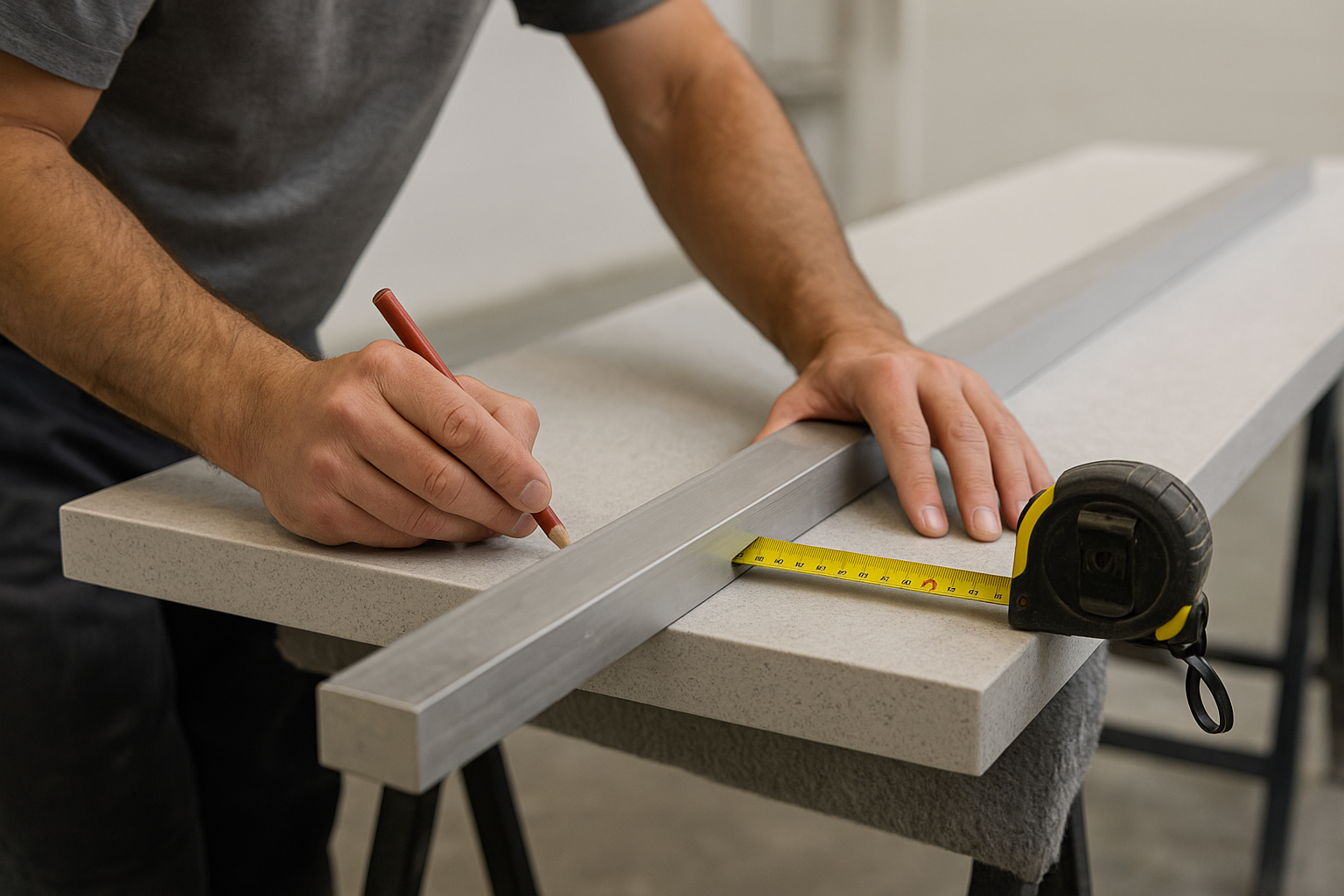
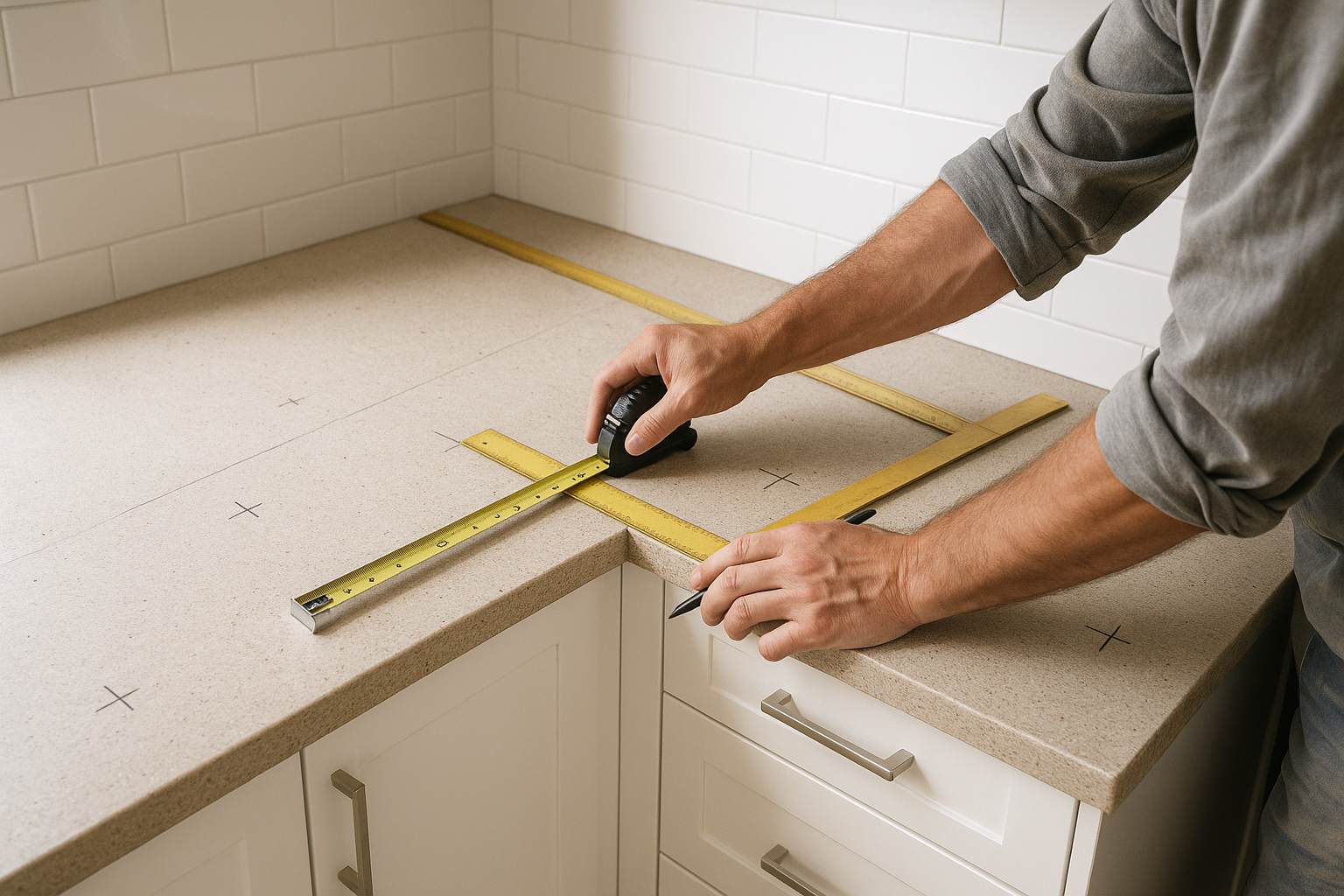
Accurate templating is where straight joins and tidy cut-outs start.
Quick FAQs
Is Essastone heat resistant?
Essastone handles everyday kitchen use well, but it’s not a direct-heat surface. Use trivets and avoid placing hot pans straight from the cooktop onto the benchtop.
Do I need 20mm or 40mm?
20mm suits clean modern kitchens and tighter budgets. A 40mm look is usually a laminated build-up or mitred edge and is popular on islands and waterfall ends. The best choice depends on proportions, exposed edges and how you want the kitchen to feel.
Where will the joins be?
Joins are planned around slab size, access, long runs and cut-outs. We avoid seams through high-stress cut-out areas where possible and aim to keep seams out of the most visible sightlines.
Can you do a stone splashback behind a cooktop?
Often, yes. Final suitability depends on the cooktop type, the manufacturer’s clearance/heat requirements, and details like power points and sealing.
How long after cabinets are installed can you measure/template?
As soon as cabinets are fully installed, fixed and level, and key appliance specs (especially sink and cooktop) are confirmed.
Can you quote from photos or do you need a plan?
We can provide an initial estimate from photos and rough measurements. Final pricing and fabrication require an on-site measure/template once cabinetry is installed.
https://seqstone.com.au/wp-content/uploads/2026/06/featured-1-15.png10241536adminhttps://seqstone.com.au/wp-content/uploads/2022/06/footer-logo-300x92.pngadmin2026-06-18 00:16:452026-06-18 00:16:45Essastone benchtops: practical choices that make the install smoother
Stone Ambassador benchtops: colours, ranges, and what to expect from quote to install
Stone Ambassador is a popular engineered stone choice for kitchens, laundries and vanities.
This guide covers the range, popular colours, what affects price, and what to expect from quote to install across South East Queensland.
Who this is for (South East Queensland only)
We’re SEQ Stone (Burleigh Heads). We supply, cut, deliver and install stone benchtops across South East Queensland, including the Gold Coast, Brisbane, and nearby areas. (Sunshine Coast and surrounds may be possible depending on access and scheduling.)
Most enquiries we see fall into a few common SEQ project types:
New builds where you need to lock in colour, thickness, and edge profile before handover.
Kitchen renos where timing needs to line up with cabinet install, plumbers and sparkies.
Investment property refreshes where you want a hard-wearing surface and a straightforward install.
Two questions come up most:
You’ve found a colour (often Blanco Bliss or Ottoman Grey) and want to know if it will work with your cabinetry and lighting.
You’re comparing Essastone®, Smartstone, Caesarstone® (and similar) and want realistic price drivers, lead times, and what affects the finished look.
At a glance
Ranges:Essential Range (streamlined) or the broader Stone Ambassador range (more variety). Availability can change, so confirm current slabs.
Popular colours:Blanco Bliss and Ottoman Grey.
Thickness: most jobs are 20mm. You can get a 40mm look with a mitred edge.
Edges: common options include square, pencil-round, and shark nose.
Popular upgrades:waterfall ends, upstands, and full-height splashbacks.
Cut-outs: sinks (undermount/topmount), taps, cooktops, and other appliance openings.
Typical timing: many SEQ jobs are around 1–2 weeks from measure to install, depending on colour availability, complexity, and site readiness.
What Stone Ambassador is
Stone Ambassador is an engineered stone surface (often called a quartz surface) used mainly for interior benchtops.
Stone Ambassador is offered in different ranges. Some are designed to keep selection simple and pricing more predictable.
That’s useful when you’re working to a build schedule or trying to keep a reno moving.
Stone Ambassador Essential Range
The Essential Range is the practical, popular end of the selection.
It suits you if you want:
a clean colour that works with most cabinetry
fewer decisions
a straightforward path from selection to install
How Essential differs from the broader range:
Patterns and finishes: Essential focuses on core, high-demand looks. The wider range typically includes more variation and may include different finishes.
Budget and planning: Essential is often chosen for simple kitchen renos, laundries, and investment refreshes.
Lead times: when colours are in steady supply, Essential can be easier to schedule. Some colours in the wider range can be more variable.
If you have a handover date or trades booked, mention it early.
In SEQ, the most common delays are slab availability and site readiness (cabinetry, panels, appliance specs), not the cutting itself.
Ready for pricing? Send your plan and suburb and we’ll confirm availability, edge detail and timing. Request a quote.
Stone Ambassador colours: how to choose
Pick your colour based on cabinetry, lighting and splashback.
Online images help you shortlist, but they don’t always show undertones accurately.
If you can, view samples under lighting close to what you’ll have at home. Warm vs cool LEDs can change how a colour reads.
Match undertones to cabinetry
Warm cabinets (timber, cream, warm white): often suit warm whites, beige tones and softer greys.
Cool cabinets (crisp white, charcoal, blue-grey): often suit cleaner whites and cooler greys.
If you’re unsure, bring a cabinet door sample.
If cabinetry isn’t installed yet, bring a flooring sample or paint swatch to set the “temperature” of the space.
Choose your “movement” level
Low movement: clean and even. Good if you want minimal visual texture.
Medium movement: gentle speckle/clouding. Often forgiving day to day.
High movement / veining: statement look. Join placement and slab orientation matter more.
On long runs and islands, higher movement usually needs more planning around joins and what you’ll see from key viewing angles.
Choose your finish (polished or matte)
Polished: reflects light and can make a kitchen feel brighter.
Matte: softer look. It can show marks differently depending on colour and use, especially around the sink and prep zones.
If you cook often, think about where water sits, where oils splash, and how you clean day to day.
Popular colours we’re asked about
Blanco Bliss: clean white look for modern kitchens.
Ottoman Grey: versatile mid-grey that suits light or dark cabinetry.
If you found a colour online, send the name and a screenshot.
We’ll confirm availability and suggest close alternatives if that specific colour is limited.
Blanco Bliss vs Ottoman Grey (quick notes)
Blanco Bliss
Undertone: typically a clean, bright white.
Lighting: cool LEDs make it look crisper; warm LEDs soften it.
Cabinet pairings: crisp white for a minimal look, or timber for contrast.
Everyday look: brighter whites can show water spotting and daily “traffic” more than mid-tones, especially near sinks and dish racks.
Ottoman Grey
Undertone: balanced grey that can read warmer or cooler depending on nearby finishes.
Lighting: warm LEDs make it feel cosier; cool LEDs can look more steely.
Cabinet pairings: works with white, light grey, charcoal, and timber.
Everyday look: mid-greys often hide fingerprints and water spotting better than bright whites.
20mm vs 40mm: what changes
Most kitchens use 20mm.
If you want a thicker look, you can often get it without using full 40mm everywhere.
20mm benchtops
clean and modern
suits most cabinetry
often best value for larger layouts
40mm benchtops
thicker, heavier look
common on feature islands
suits classic or Hamptons-style kitchens
The common option: 40mm look (mitred edge)
A mitred edge uses 20mm stone to create a thicker-looking front edge.
We’ll confirm what suits your layout once we know:
spans and support
any waterfall ends
seating overhangs and number of stools
sink and appliance cut-outs
If you’re planning a larger overhang, flag it early.
Support and clearances are much easier to sort before cabinetry is signed off.
What affects price (so the quote makes sense)
The slab matters, but fabrication, detailing, and install conditions can change the price a lot.
Pricing usually depends on:
Size and layout: longer runs and bigger islands use more material.
Cut-outs: sinks (undermount/topmount), cooktops, tap holes, pop-up power.
Edges: square/pencil-round/shark nose, or a mitred edge for a 40mm look.
Splashbacks: 100mm upstands vs full-height stone splashbacks.
Waterfall ends: more material, more joins, more finishing time.
Joins can be unavoidable. Long runs, large islands, or access limits may require multiple pieces. Good join placement and tidy finishing matter more than trying to avoid joins at all costs.
The same colour can vary by batch. If you’re doing kitchen plus laundry and vanities, ordering together (where possible) helps keep the look consistent.
The smoothest installs happen when the site is ready and key selections are locked in early.
1) Confirm selections and do quick checks
We confirm the surface, thickness, edge profile, splashback approach (if any), and any waterfall details.
It also helps to confirm early:
sink type (undermount vs topmount)
cooktop model
accessories like dish drainer/rack cut-ins
2) Templating (final measure)
Templating happens after cabinetry is installed and secure.
Common site issues that delay templating:
cabinets not level or not fully fixed
end panels not fitted
appliance positions not confirmed
fillers/returns still changing (common in renos)
If you’re mid-reno, plans often change.
The key is to do final measure only once everything that affects the benchtop footprint is locked in.
3) Approvals
We confirm layout, joins, cut-outs and edges before fabrication.
If you’ve chosen a veined look, we’ll also talk about orientation and which faces are most visible.
4) Fabrication
We cut, polish, complete mitres (if selected), and do openings for sinks, cooktops and other items.
5) Delivery and installation
We deliver, place, join and finish the stone, then clean down and talk you through care.
Typical lead times in SEQ
Lead times vary by colour and workload.
After final measure, fabrication is often around 3–5 working days, with install booked soon after.
Many SEQ projects end up around 1–2 weeks from measure to install. Timing depends on slab availability, cut-outs, edge details (like mitres), access, and production scheduling.
To lock in a timeline, book templating as soon as cabinetry is confirmed and appliances are selected. Book a quote or measure.
What to expect on install day
Most installs are completed in one visit.
Larger or more complex jobs (big islands, multiple pieces, waterfall ends, full-height splashbacks) can take longer.
On the day, expect:
Time on site: often a few hours, depending on access, joins and finishing.
Noise and some dust: we keep on-site cutting to what’s necessary.
Access needs: clear walkways, protected floors if required, and a clear bench area for safe handling.
Appliances and plumbing: your plumber/electrician/cabinetmaker may need to disconnect and reconnect services.
When you can use it: we’ll advise when the bench and sink area can be used, depending on join and finishing work.
For apartments and townhouses, check building rules early (lift bookings, loading zones, work hours, protective coverings).
These rules can affect delivery windows and how many people are required on site.
Gold Coast installs: coastal considerations
If you’re searching for stone benchtops on the Gold Coast, the product choices are similar across SEQ.
What changes is often the logistics.
Common Gold Coast considerations:
Transport and access: tight stairwells, long carry paths, basement carparks, or restricted loading zones.
Site readiness: cabinetry must be fixed and level, end panels fitted, and the work area clear.
Timeline expectations: lift bookings and limited delivery hours can add coordination time.
If you’re on the northern Gold Coast or closer to Brisbane, quoting is the same.
Just include access notes upfront so handling and scheduling are planned properly.
Care and day-to-day use
Engineered stone is durable, but it isn’t indestructible.
Good habits:
wipe spills early (especially oil, coffee, wine, curry, beetroot)
use a cutting board
use trivets under hot pots and trays
clean with pH-neutral cleaner or warm soapy water
In coastal areas, wipe off grit or sand before sliding items around.
Fine particles can act like sandpaper over time.
Comparing Stone Ambassador with Essastone, Smartstone and Caesarstone
When comparing brands, use the same checklist each time:
Look: shortlist 2–3 colours you’d be happy to live with.
Finish: polished vs matte.
Availability: what can be supplied within your schedule.
Detailing: edges, cut-outs, and splashback plans.
Install outcome: join placement and fit matter as much as the slab.
We supply multiple brands, so we can help you compare similar looks across ranges.
For local examples and available colours, visit the Gallery and Stone Range pages.
Quick FAQs
Is Stone Ambassador engineered stone?
Yes. Stone Ambassador is supplied as an engineered stone surface (often referred to as quartz-based engineered stone).
Is Stone Ambassador stone “quartz”?
In everyday terms, yes.
If you need exact specs for a specific colour (including any current compliance requirements), ask us and we’ll confirm what applies to the slabs being supplied.
20mm vs 40mm: should I choose full 40mm or a 40mm-look mitred edge?
Most kitchens use 20mm.
If you want the thicker look, a mitred edge is a common option, especially on island panels and feature ends.
Full 40mm can suit some styles, but it can change weight, handling and detailing.
Can you do waterfall ends?
Yes. We fabricate and install waterfall ends and can advise on join placement and vein direction (where applicable).
What sink cut-outs do you do?
We do undermount and topmount sink cut-outs, plus tap holes and accessory cut-outs.
Share your sink model number and we’ll confirm the best approach.
Do you do cooktop cut-outs?
Yes. We cut to your appliance specs, including required clearances and corner details.
How long from measure to install in SEQ?
After templating, many SEQ jobs are around 1–2 weeks from measure to install.
Timing depends on slab availability, cut-outs, edge details (like mitres), site access, and production scheduling.
https://seqstone.com.au/wp-content/uploads/2026/06/featured-1-14.png10241536adminhttps://seqstone.com.au/wp-content/uploads/2022/06/footer-logo-300x92.pngadmin2026-06-18 00:13:542026-06-18 00:13:54Stone Ambassador benchtops: colours, ranges, and what to expect from quote to install
EssaStone Verona Mist: Practical Guidance For Your Next Benchtop
Essastone Verona Mist is a popular choice for homeowners and designers after a marble look that’s more practical for the modern Australian kitchen. At SEQ Stone, we fit these surfaces across the Gold Coast, Brisbane, and nearby areas—always with fast lead times, clear advice, and reliable installation.
What makes Verona Mist stand out?
This Essastone colour is known for its soft grey veining on a gentle white background. It’s subtle compared to bold statement stones, so it suits a wide range of kitchen styles (think coastal, Hamptons, minimalist, or classic Queenslander). The surface handles sunlight and indoor light well without showing streaks or smears easily—a plus in open-plan homes.
Why Choose Essastone Verona Mist?
Engineered for durability: Made from over 95% natural quartz with a resin binder, Essastone benchtops resist chips and scratches in everyday use. Perfect for busy houses—especially with kids or high-traffic areas.
Stain resistance: Spills wipe away with a damp cloth. As with any benchtop, quick clean-up is best. Verona Mist holds up well to everyday kitchen use.
On-trend design: Verona Mist brings the look of Carrara marble or natural stone, but without the price tag or extra sealing. Compared to some Carrara Essastone and Essa Stone options, the veining is light and flexible with cabinetry choices.
Benchtop Thickness: 20mm vs 40mm
Essastone Verona Mist is available in both 20mm and 40mm thickness. Unsure which to go for?
20mm: Sleek, contemporary. Works well for minimalist or compact kitchens. Often preferred in new builds and renovations wanting a crisp look.
40mm: More traditional or substantial. Great for feature islands or where you want the benchtop to stand out. Can be mitred for a chunkier edge.
We guide you on edge profiles (the shape of the benchtop edge), which changes the finished look and can affect cleaning.
How Installation Works (SEQ Stone Process)
Send your plans or rough measurements – even a phone photo helps us start your Quote.
Pick your benchtop style – we organise a showroom visit if you’d like to see Essastone Verona Mist or compare with other Essastone colours or Caesarstone options.
Site check and templating – we visit for accurate measuring and to check access. Lead times are usually 3–5 working days after site check, depending on complexity and slab availability.
Cutting and installation – all work is done in our Burleigh Heads workshop. Our crew delivers and fits your benchtop, including cut-outs for sinks and cooktops, joins, splashbacks, and more.
Care and Maintenance Tips
Clean with warm water and a gentle kitchen spray.
Avoid harsh abrasives or chemicals (no bleach or oven cleaners).
Use chopping boards and trivets as you usually would.
For stubborn marks, a non-scratch pad with diluted cream cleanser works.
Essastone Range And Colour Options
Verona Mist is part of the wider Essastone range, including Verona Mist, Unique Calacatta, Calcite, other marble-effects, and plain colours. We also install other leading engineered stones and can help compare Essastone vs Caesarstone, Smartstone, or natural granite.
Local Supply, Fast Turnaround
Our Gold Coast crew knows SEQ conditions. All benchtops are measured, cut, and fitted by our team (we don’t sub out the work).
Turnaround: 3–5 working days from measurement
Multiple edge profile options
Delivery across Gold Coast, Brisbane, South East Queensland
What To Prepare For Your Quote
Benchtop or island measurements (rough sizes, or plans from your builder/cabinet maker)
Edge thickness (20mm or 40mm)
Number of cut-outs (sinks, cooktops, pop-up power)
Splashbacks or waterfall edges (if any)
Have something non-standard? We work with oversized slabs and tricky shapes all the time—send a photo or call for advice.
Popular Questions About Essastone Verona Mist
Is Essastone hard to look after?
Essastone is low-maintenance in most kitchens. Wipe spills as you go. No need to seal like natural stone.
Can you compare laminate, cerastone, and engineered stone for me?
Absolutely. Laminate is more affordable and quick to install but doesn’t offer the same finish or longevity as Essastone. Cerastone and Essa Stone are similar products—we can show samples of each.
Ready To Start?
If you want Essastone Verona Mist—or need help comparing colours—send your plans or request a callback. Our team will confirm lead times based on your suburb and kitchen specs.
For the full Stone Range, including carrara styles, polished and matte finishes, browse online or organise a visit. We’re here to give practical, fast advice for benches built to last in Queensland homes.
https://seqstone.com.au/wp-content/uploads/2026/06/featured-1-13.png10241536adminhttps://seqstone.com.au/wp-content/uploads/2022/06/footer-logo-300x92.pngadmin2026-06-17 00:24:442026-06-17 00:24:44Essastone Verona Mist: Practical Guidance For Your Next Benchtop
Choosing EssaStone Benchtops in Perth: A Practical Guide
Essastone benchtops have become a mainstay in Perth kitchens. Builders, designers, and homeowners use them for their consistency, broad colour range, and proven durability in busy homes. At SEQ Stone, we supply, cut, and install Essastone across Perth and the Gold Coast—giving you the expert advice you need to pick the best finish for your project and schedule.
What Sets Essastone Benchtops Apart?
Essastone is a premium engineered quartz surface—offering the look of natural stone with the reliability and low porosity you want for a working kitchen. Made using over 90% natural quartz and quality resins, it’s built to handle daily meals, hot tea, and the odd school project (with reasonable care).
You’ll find Essastone in everything from sleek new homes to renovations looking to refresh tired laminates. Popular for matching both modern cabinetry and traditional profiles.
Choosing the Right Thickness: 20mm vs 40mm
Essastone benchtops come in two popular thicknesses:
20mm: The new standard for most kitchens. Easy to handle, neat edge, suits both compact and spacious layouts.
40mm: A strong design statement, usually created by mitring two 20mm pieces for a seamless, bold profile. Common for islands or where a chunky look is needed.
If you’re unsure, we can show you both at quoting. Many clients choose mix-and-match (20mm back benchtops, 40mm island).
Colour and Finish Options
The Essastone range now includes dozens of colours:
Carrara Essastone: Modern, authentic marble look without natural stone maintenance.
Classic whites, charcoals, and warm neutrals (ask us for samples).
Textured finishes: From subtle flecks to veined marble styles for premium kitchens.
Compare these with other engineered options—like Caesarstone, Smartstone, Cerastone or Lithostone. Every brand has unique shades. Bring a tile or cabinet sample to our Burleigh Heads location for a real comparison.
Lead Times and What Affects Them
If you have accurate site plans or final measurements, we usually turn around supply and installation in 3–5 working days (subject to stone availability and final site checks). For most Perth clients, that means you can keep moving on your schedule with minimal fuss.
Factors that may affect timelines:
Complex cut-outs (sinks, waterfall edges)
Large or multiple islands
Rural or hard-to-access sites
Special order colours or finishes
We confirm all lead times once we have your details. Our installation crews cover Perth CBD and surrounds—quick, tidy, and trade-ready.
We install Essastone, Caesarstone, Smartstone, Lithostone and specialty brands with equal care. Every job gets full trade attention, whether it’s for a single kitchen, multi-residential project, or a commercial fitout.
Compare Essastone to Other Engineered Quartz Brands
Looking at options? Here’s how Essastone stacks up:
Colour and finish range: Comparable to Caesarstone, Smartstone, Cerastone, Lithostone and WK Stone.
Performance: Non-porous, easy to wipe, won’t stain with normal use. Not totally heatproof—use boards or trivets.
Availability: Common colours are often in stock at our WA supplier. Custom consults available for rare colours.
Labour/process: No major change in installation sequence. We prep, cut, and polish using the right technique for each surface.
Real Project Example: Carrara Essastone in a Perth Home
A recent client in South Perth swapped tired laminate for Carrara Essastone with a 40mm island edge. We measured on Friday, cut and finished Monday, and installed Tuesday morning. The classic veined white matched their splashback tile and made the kitchen feel brighter. All up, five days from plan to finish. (See photos in our Gallery.)
Common Questions
Do I need to remove my old benchtop myself?
We can remove laminates or old stone for most jobs—let us know at quoting so we allow time.
Can I match Essastone to existing cabinets or tiles?
Yes. Bring in a sample, or email a photo, and we’ll recommend near-match colours or suggest alternatives from the full range.
Ready to Plan Your Essastone Benchtop in Perth?
Whether you’re after a full kitchen install, small laundry, or a commercial project, SEQ Stone can price and guide you every step. To get started:
https://seqstone.com.au/wp-content/uploads/2026/06/featured-1-12.png10241536adminhttps://seqstone.com.au/wp-content/uploads/2022/06/footer-logo-300x92.pngadmin2026-06-17 00:21:202026-06-17 00:21:20Choosing Essastone Benchtops in Perth: A Practical Guide from SEQ Stone
Lithostone colours: how to choose the right look (and what it means for your build)
Choosing a Lithostone colour is easier when you focus on the job first, then the look. In most homes, the best choice is the one that suits your fixed finishes, works in your lighting, and won’t blow out your schedule.
This guide covers what matters in South East Queensland (SEQ): daylight, stock availability, joins, and day-to-day practicality.
Quick answer: the simplest way to choose
Lock in your fixed items first, then pick a colour family, then shortlist 2–3 colours.
Matte/honed finishes suit concrete looks, but can show wipe marks in angled light
Practical SEQ note
If morning or afternoon sun hits across the bench, matte finishes can show “wipe paths” until fully dry. That’s normal and is usually more noticeable on darker or very uniform colours.
Minimal room: you can go bolder with larger aggregate
Keep the splashback calm so the benchtop stays the hero
Solid colours (whites, greys and blacks)
Best for: minimal designs and the cleanest look.
What to watch
Very pale solids: crisp, but show splashes around sinks and prep areas
Mid-greys: often the best compromise for marks and maintenance
Charcoal/black solids: striking, but show more
crumbs and dust
water spotting near sinks
fingerprints on smooth finishes
fine scratches catching light
If you want dark without constant visibility, choose charcoal with gentle movement.
Undertones and lighting (warm, cool, neutral) + metamerism
Lighting is why a showroom “perfect” colour can look different at home.
Undertones in plain English
Warm: cream, beige, slight yellow
Cool: blue, steel, crisp grey
Neutral: in-between (often safest)
How to spot undertones (showroom or at home)
Hold the sample next to something known warm (timber) and known cool (crisp white cabinet sample).
Compare it to a true white sheet of paper.
Check it under more than one light source.
SEQ-specific tip
Many Queensland homes have strong daylight and reflected light from patios, pools, and pale paving. That brightness can make whites feel cooler and greys lean bluer.
If you can, check a larger sample in your space and under your downlights.
Warm vs cool LEDs
Warm LEDs: pull whites towards cream and soften greys
Cool LEDs: make whites sharper and greys bluer
Metamerism (why matches shift)
Metamerism is when a colour matches under one light, then shifts under another (for example, cool showroom lighting vs warm home downlights).
What to do
View a slab or larger sample in your home
Put it next to cabinet and flooring samples
Check morning, midday, and night
Pattern direction and repeat (what it means for joins and islands)
With patterned Lithostone colours, you’re choosing a layout as well as a colour.
Direction: whether the pattern runs along the island, across it, or wraps to a waterfall
Repeat: engineered patterns can repeat across a slab (more noticeable on big islands)
Why it matters
Joins: patterns rarely match perfectly unless planned
Waterfalls: best results come from planning vein flow through the mitre
Cut-outs: sinks, bins, and cooktops break the pattern, so place the best section where you’ll see it most
Slab and batch variation (why samples don’t always match)
Engineered stone is consistent, but variation still happens, especially in veining and patterns.
Variation can include
veins thicker/thinner or in different positions
speckle/aggregate denser or more spaced
base tone slightly warmer or cooler
A simple process to avoid surprises
Shortlist 2–3 colours
View full slabs where possible (especially for veining)
Reserve the slab(s) once you’re happy
Approve layout photos before cutting
Allow tolerance: joins and cut-outs always interrupt patterns
Finishes: polished vs honed/matte
Finish changes how the colour looks and what marks you notice.
Polished
deeper colour and clearer pattern
more reflective under downlights
wipe marks tend to disappear faster
fingerprints can be less obvious than on some matte colours
Honed / matte
softer look and less reflective
can show fingerprints and “shadow smears” more on some colours
can show wipe paths in side light until fully dry
can soften contrast in veining and speckle
If you’re unsure, view the same colour in both finishes under your kitchen lighting.
Day-to-day performance: what colour changes
No engineered quartz surface is truly maintenance free. Colour and pattern mostly change what you see.
Water spots: most visible on very dark, very uniform colours
Crumbs and dust: most visible on black/dark solids; least visible on light patterns/speckles
Fine scratches: stand out more on uniform dark surfaces
Chips: more obvious on very dark solids and very pure whites
Cleaning frequency: light patterns and speckles often look clean for longer
If you don’t want to wipe constantly, choose something with gentle movement.
Edges and thickness (20mm vs 40mm look)
20mm suits most modern kitchens. A 40mm look is mostly a style choice and usually costs more.
20mm: clean, modern, common choice
40mm look: usually a mitred edge (built-up front edge)
Common edge profiles
Square (eased): modern and popular; less sharp on corners
Pencil round / small radius: softer feel; more forgiving for family kitchens
Bevel / arris: small angled detail; suits classic cabinetry or adds definition
What affects the best choice
Visual bulk: 40mm suits large islands but can feel heavy in small kitchens
Cost: mitres add labour and can increase material use
Durability: small radiuses are often more forgiving in high-traffic areas
Colour note: bold veining and large aggregate can be harder to line up neatly on mitres.
Pairing guide: cabinets and splashbacks that usually work
These combinations are common in SEQ and usually hold up well in natural light.
White shaker cabinets + warm off-white stone (subtle pattern)
Splashback: warm white tile or soft neutral tile
Flat white cabinets + cool white stone
Splashback: white gloss subway tile or light-grey tile
Black/charcoal cabinets + white veined marble-look
Splashback: plain tile, or run the same stone up the wall
Timber cabinets (oak/blackbutt) + warm whites or warm light greys
Splashback: handmade-look tile, soft beige, or simple white
Benchtops usually sit between cabinet install and final fit-offs.
If your builder has tight dates, share target dates early and confirm who is coordinating templating (builder vs cabinetmaker vs stone).
Fast way to get an accurate quote
Send:
cabinet plan (PDF is fine)
a couple of site photos
your suburb and preferred install window
We’ll reply with clear line items.
Australian Standards and compliance (high level)
Most people don’t want to read Standards. You do want the outcome.
Reputable suppliers and fabricators work to relevant Australian Standards, manufacturer requirements, and accepted trade practices. In plain terms, this covers:
correct support and substrate
sensible corner radiuses on cut-outs
join placement and handling
overhangs and bracket/support expectations
Talk through support, cut-outs, overhangs, and substrate before fabrication starts.
Silica safety and engineered stone regulations (Australia)
Engineered quartz contains crystalline silica. Fabrication and installation need proper safety controls.
Australia’s engineered stone rules have been changing, including tighter controls around high-silica products. For homeowners, the key point is simple: choose a fabricator/installer who follows current WHS requirements and uses strong dust controls (for example, wet methods where applicable, effective extraction, and safe housekeeping).
If you want to know how your benchtop will be cut and installed, ask. A reputable shop should be able to explain it clearly.
Quick selection checklist
Use this when choosing cabinets, tiles, and stone:
If you’re choosing between a few Lithostone colours, we can help you narrow it down based on your plans, your lighting, and how the slab will be fabricated.
We’ll confirm availability, talk through 20mm vs 40mm, joins/waterfalls, then quote supply, cut and install
Ready for numbers and a schedule?
Request a callback or get a quote through SEQ Stone. Include your suburb and preferred install week so we can confirm lead time.
FAQs
What’s the best Lithostone colour for a small kitchen?
Light colours with subtle pattern usually make a small kitchen feel bigger.
If you want contrast, go dark on the island only and keep perimeter tops light.
Are engineered stone benchtops okay for busy family kitchens?
Yes. Engineered quartz is popular for family homes because it’s consistent, hard-wearing, and easy to clean.
If you don’t want to see every crumb or water spot, choose a forgiving pattern.
Do veined marble-look benchtops always need a join?
Not always. It depends on slab size, layout, and site access.
With veined patterns, join placement and vein alignment should be planned before cutting. Viewing full slabs helps you understand how the pattern will land.
Can you match a colour I’ve seen in Caesarstone or Smartstone?
Often, yes. Send the colour name or a screenshot and we’ll suggest similar looks across Lithostone, Essastone, YDL Stone, and WK Stone.
It’s best to compare colours in the same lighting, or check a larger sample at home.
Do I need 40mm, or is 20mm enough?
20mm suits most modern kitchens and usually costs less.
A mitred 40mm look is mainly a style choice and can suit larger islands. It also needs more planning for joins and patterns.
How do I keep my Lithostone benchtop looking good?
Wipe daily with a soft cloth and mild cleaner. Clean spills soon after they happen.
Use chopping boards and trivets, especially near cooktops and hot trays.
Why does the slab look different to the sample?
Small samples can’t show full movement, and batches can vary slightly.
For veined or patterned colours, viewing and reserving the slab (or approving layout photos) is the best way to avoid surprises.
https://seqstone.com.au/wp-content/uploads/2026/06/featured-1-11.png10241536adminhttps://seqstone.com.au/wp-content/uploads/2022/06/footer-logo-300x92.pngadmin2026-06-17 00:17:492026-06-17 00:17:49Lithostone colours: how to choose the right look (and what it means for your build)
Smartstone colours: how to choose the right benchtop colour for your kitchen
Smartstone colours often look similar online, then different once they’re next to your cabinets, floors and lighting.
The most reliable way to choose is to shortlist 2–3 options, check undertones in your home’s lighting, then confirm the actual slabs before fabrication.
Smartstone is a quartz-based engineered stone. It gives a natural stone look with a consistent, low-porosity finish.
If you’re working from plans and want pricing, start here: Smartstone benchtops.
Smartstone colour range (what “colours” means)
When people search “Smartstone colours”, they usually mean a mix of:
Colour family: white, grey, beige, charcoal, black
Finish: polished, matte/honed, and (in some ranges) lightly textured
Smartstone colours sit within ranges/collections, and these can change over time.
Stock and lead times can also vary, especially if you need multiple slabs for a long run, a full-height splashback, or waterfall ends.
If you’re renovating to a schedule, confirm range, finish availability and lead times before you lock anything in.
Choose your colour in 3 decisions
Make these three calls first. Then choosing the exact colour is much easier.
1) Base tone (white, grey, beige, dark)
Smartstone white colours (bright, warm and off-white)
Bright whites
Best for: small kitchens, lower natural light, crisp modern looks
Works well with: flat-panel white cabinets, minimalist splashbacks, black handles
Watch for: blue/grey undertones next to warm timber or warm white cabinetry
Warm whites and off-whites (cream tones)
Best for: coastal styles, timber-heavy homes, warm LEDs
Works well with: timber-look cabinets, white shaker doors, brushed nickel or brass
Watch for: warm stone clashing with cool “clean white” cabinetry
Smartstone grey colours (light grey to charcoal)
Light greys
Best for: practical, forgiving day-to-day use
Works well with: white cabinetry, timber look, soft-grey cabinets, black handles
Watch for: greys that swing green, blue or taupe depending on light
Charcoal and dark tones
Best for: statement islands, high-contrast kitchens, modern layouts
Watch for: fingerprints, dust and dried water spots under strong light
Smartstone beige and sand colours
Best for: warm timber, classic homes, warmer lighting schemes
Watch for: beige reading “yellow” next to crisp whites or cool grey tiles
Smartstone black colours
Best for: strong contrast, modern kitchens, feature islands
Watch for: dust, water spots and fingerprints (especially under downlights)
Lighting reality check (SEQ homes): bright daylight can change how whites and greys read. If you can, check your shortlist in similar light to your home.
2) Pattern movement (plain, speckle, marble look, concrete look)
If you like the Smartstone look, Caesarstone, Essastone, Lithostone, Ambassador Stone, YDL Stone and WK Stone all have similar directions across whites, greys and marble-look designs.
SEQ Stone can help you compare like-for-like, then quote the best fit for your layout, finish and timeline.
https://seqstone.com.au/wp-content/uploads/2026/06/featured-1-10.png10241536adminhttps://seqstone.com.au/wp-content/uploads/2022/06/footer-logo-300x92.pngadmin2026-06-17 00:15:042026-06-17 00:15:04Smartstone colours: how to choose the right benchtop colour for your kitchen
LithoStone Builders Range: what you’re getting (and how to choose the right option)
If you’re building or renovating in South East Queensland, you’ve probably seen Lithostone Builders Range pop up in Quotes. It’s popular for a reason: it suits everyday kitchens, it keeps the selection practical, and it’s a clean match for most cabinet styles.
Below is the straight-up guide we give customers in our showroom and on-site: what the range is, how to pick colours, what affects Lithostone prices, and how to avoid delays during fabrication and install.
If you already have plans, you’re close to a firm number.
Send us your plan, measurements, or photos and we’ll quote supply + install. You can also start here: Lithostone surfaces.
What is the Lithostone Builders Range?
The Lithostone Builders Range is a selection of engineered stone benchtops made from engineered quartz surfaces. It’s aimed at build-friendly finishes and patterns that suit:
kitchen benchtops
island benches
bathroom vanities
laundry benchtops
You’ll see people searching for the same thing under different names:
lithostone
lithostone surfaces / lithostone surfaces au
lithostone benchtop
lithostone colours
“litho stone”
“litestone”
If you’re not sure what your quote refers to, send us the colour name and any paperwork. We’ll confirm the product range before we cut.
Choosing Lithostone colours: what works in real kitchens
Most colour problems aren’t about the slab. They happen because the benchtop was chosen under the wrong light or against the wrong cabinet finish.
Here’s how we recommend selecting Lithostone colours.
1) Check the colour in natural light
Bring a sample to a window or take it to site. In SEQ homes you often get strong daylight and warm interior lighting at night.
Warm LEDs can make whites look cream.
Cool daylight can make greys read bluer.
2) Match undertones to cabinets and floors
A quick rule that saves time:
Timber and warm whites: look for warmer whites, soft beiges, greige
Crisp white cabinetry: cleaner whites and cool neutrals
Concrete-look floors: mid greys and subtle marbling often sit well
3) Decide if you want movement or calm
“Movement” is the veining and pattern in the slab.
Low movement: hides crumbs and suits busy family kitchens.
Higher movement: makes a statement, but joins and waterfall panels need more planning.
If you like the look of an Essastone range colour or a Caesarstone deluxe range style, we can help find a comparable option in Lithostone or other brands we supply. See our wider Stone Range if you’re comparing.
20mm vs 40mm: what you should choose
This comes up on almost every job.
20mm is the common thickness for many kitchens and bathrooms. It’s clean, modern, and suits most cabinetry designs.
40mm is usually a thicker look achieved with a laminated edge. People choose it for a more substantial profile, especially on island benches.
What changes the recommendation:
Overhangs (seating areas)
Waterfall ends
Edge profile (the shape of the benchtop edge)
Appliance cut-outs and how close they sit to edges
If you’re deciding, send through:
your plan (PDF is fine)
a photo of the cabinetry or frame stage
sink and cooktop model numbers
We’ll tell you what suits your layout and what keeps the finish neat.
Australian Standards for stone benchtops: what matters to homeowners and builders
Colour selection matters most in natural light.
People ask about Australian standards for stone benchtops because they want the job done correctly and safely.
From a practical point of view, good compliance and workmanship show up in the details:
correct support from cabinetry (especially around dishwashers and wide spans)
sensible join placement (so joins aren’t forced into weak spots)
reinforcement where required around cut-outs
safe handling and installation practices on site
We check your layout and site conditions before fabrication. If something needs changing, it’s better to adjust on paper than after the slab is cut.
What affects Lithostone prices (and how to get an accurate quote fast)
If you’re trying to compare lithostone prices to an essastone range or looking up caesarstone price range / caesarstone price ranges, make sure you’re comparing the same scope.
A benchtop price changes with the job details, not just the brand name.
The big drivers of cost
Total size and shape: long runs, large islands, extra returns
Number of pieces: more joins and handling
Cut-outs: undermount sink, cooktop, tap holes, waterfall power points
Edges: simple square edge vs more detailed profiles
Splashbacks: full height, window sills, or short upstands
Waterfalls: extra panels and careful vein matching
Access: stairs, tight entries, crane requirements
What to send us for the quickest quote
Plan or sketch with measurements
Your preferred colour (or 2–3 options)
Sink and cooktop specs (or links)
Suburb and install access notes
If you’re on a build schedule, include your ideal install week. We’ll confirm lead time once we have your details.
Planning joins, cut-outs, and splashbacks (where most headaches start)
A clean install usually comes down to planning three things early.
Joins
Joins are normal on many kitchens. The key is putting them in sensible places.
Keep joins out of high-stress areas where possible.
Plan for vein direction if you’re choosing a patterned slab.
Sink and cooktop cut-outs
Cut-outs change how the stone carries load.
Confirm appliance sizes early.
Decide undermount vs top-mount before fabrication.
Splashbacks
If you’re doing stone splashbacks, confirm:
power point locations
window heights
rangehood and cooktop centreline
Bring this up early and the job runs smoother.
Care and cleaning for Lithostone surfaces
Lithostone and other engineered stone benchtops are made for everyday use, but they still need sensible care.
Use:
a soft cloth or non-scratch sponge
pH-neutral cleaner
warm water for daily wipe-down
Avoid:
abrasive pads
oven cleaner and strong solvents
leaving hot pans on the surface
A simple habit that helps: wipe spills early, especially oils, wine, and turmeric.
Comparing Lithostone with other engineered stone options
If you’re weighing up brands, here’s a practical way to compare without getting stuck in brochure talk.
Check:
colour availability in your timeframe
finish (polished vs matte) and how it suits your lighting
pattern consistency (important on long runs and waterfalls)
what your quote includes (templating, supply, install, splashbacks)
If you want to compare directly, these pages are handy:
If you’re choosing the Lithostone Builders Range, we can take you from colour selection through to fabrication and install across the Gold Coast, Brisbane, and South East Queensland.
Here’s the fastest path:
Send your plan or measurements (photos are fine if you’re mid-reno)
Good planning around cut-outs and joins keeps installs running smoothly.
FAQ: Lithostone Builders Range
What is the Lithostone Builders Range?
It’s a selection of engineered stone benchtops (engineered quartz surfaces) designed around practical colours and patterns for builds and renovations. Share your plan and we’ll confirm what suits your layout.
Is Lithostone the same as “litho stone” or Litestone?
People often use those terms for the same product. To avoid mix-ups, use the exact colour name from your quote. We can confirm the correct range before fabrication.
How do I choose 20mm vs 40mm?
20mm suits most kitchens and bathrooms. 40mm is usually a thicker-looking laminated edge, often chosen for island benches. We’ll recommend the best option once we see your plan and overhang details.
What affects Lithostone prices?
Colour choice, total size, number of joins, cut-outs, waterfall ends, splashbacks, edges, and install access. Send your plan and appliance specs for a firm quote.
Are engineered stone benchtops heat and stain proof?
No. They handle daily use well, but hot pans can damage surfaces and some spills can mark if left. Use trivets and wipe spills early.
Do you work to Australian Standards for stone benchtops?
Yes. We plan support, joins, and cut-outs properly and install using safe, trade-appropriate practices. If your cabinetry or layout needs a change, we’ll flag it before the slab is cut.
https://seqstone.com.au/wp-content/uploads/2026/06/featured-1-9.png10241536adminhttps://seqstone.com.au/wp-content/uploads/2022/06/footer-logo-300x92.pngadmin2026-06-16 00:21:122026-06-16 00:21:12Lithostone Builders Range: a practical guide for benchtops in South East Queensland
CaesarStone Deluxe Range: colours, finish options, and how to choose the right benchtop
If you’re looking at the Caesarstone Deluxe Range, you’re usually doing one of two things:
Matching a slab to new cabinetry and splashback finishes
Trying to keep a build moving without second-guessing your stone choice
We cut and install Caesarstone benchtops across the Gold Coast, Brisbane and South East Queensland. This guide is the practical version of what we talk through on-site: what to check, what to decide early, and what to send us for an accurate Quote.
Want pricing and lead time for your layout? Use our Caesarstone® page to get started, then send your plan and a few photos: https://seqstone.com.au/caesarstone/
What is Caesarstone (and why people call it “caesar quartz” or “caesar stone”)
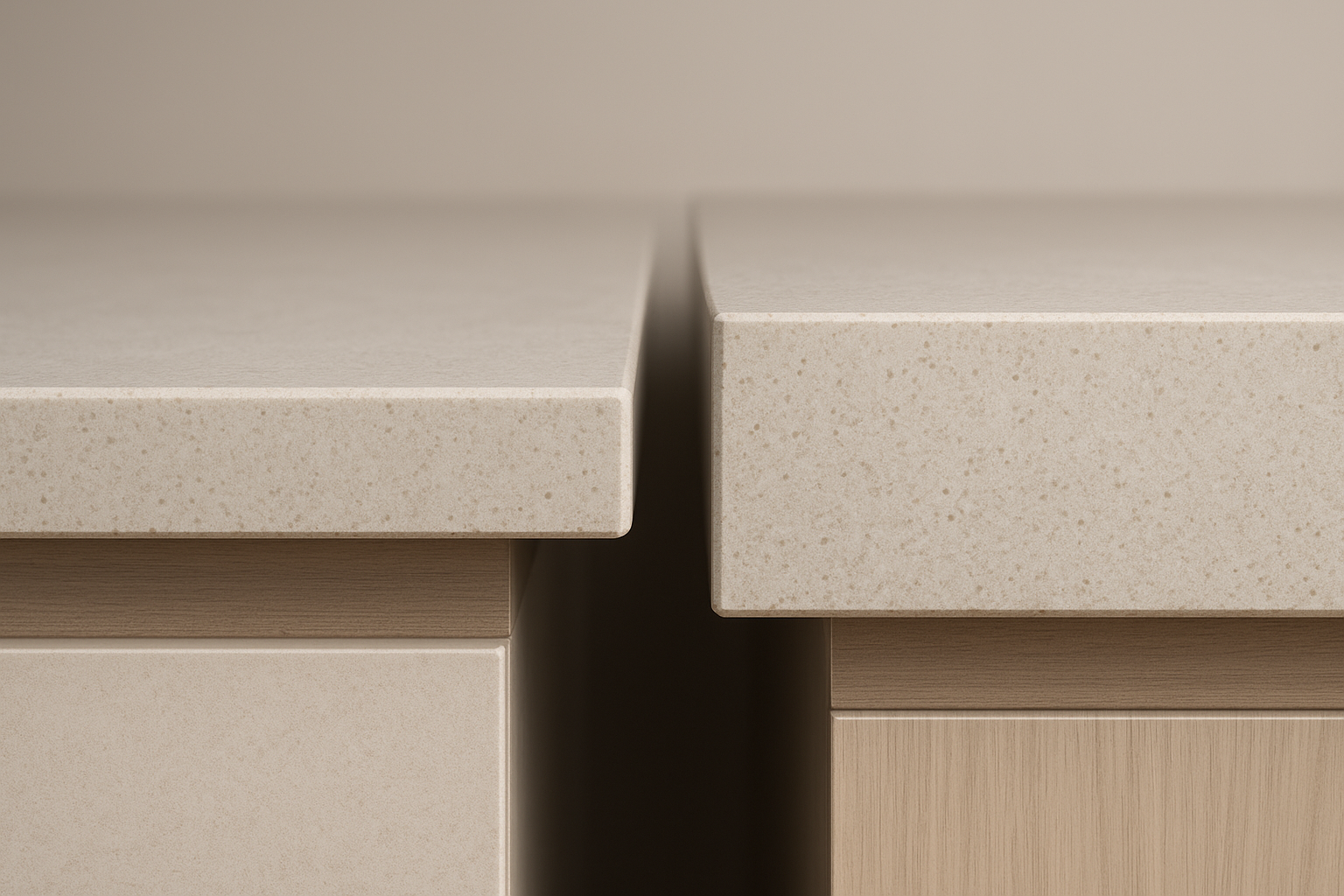
20mm vs 40mm is often a design choice, not a quality difference.
What is Caesarstone? It’s an engineered stone surface made in slab form, used for benchtops, splashbacks and vanities.
You’ll see different search terms for the same thing:
caesar quartz: a common way people describe engineered stone
caesar stone / caesar stone australia: a misspelling or shorthand
caesar stone bench / caesar stone bench top: people searching by application
If you’re planning a kitchen, your decision is less about the label and more about the look, the finish, the thickness, and the cut-outs.
What stands out about the Deluxe Range
The Deluxe Range is chosen because it’s easy to live with.
It suits:
Everyday family kitchens (busy benches, frequent wipe-downs)
Clean modern joinery lines
Renovations where you need a colour that plays nicely with existing tiles or flooring
It’s also a common step up for homeowners who want a bit more depth and movement than very plain whites.
If you’re comparing other lines you’ve seen online, you may also come across Stone Ambassador Essential Range or an Essastone range colour card. The same rules apply: pick a tone that suits your light and cabinetry first, then choose the pattern movement.
How to choose Caesarstone colours without surprises
Most issues we see aren’t “bad stone”. They’re colour choices made under the wrong light.
Here’s a simple way to pick Caesarstone colours confidently.
1) Match the undertone to your cabinetry
Hold your cabinet door sample against the slab.
Warm cabinets (beige, timber, off-white) usually suit warm stones
Cool cabinets (crisp white, grey, blue) often suit cooler whites and greys
A colour can look right in a showroom and wrong at home if the undertone clashes.
2) Decide how much pattern movement you want
Movement is the veining or speckle you see through the slab.
Low movement: calmer look, hides crumbs less, shows seams less
Higher movement: more character, but joins and direction matter more
On larger kitchens, a little movement often looks better than a flat colour.
3) Check it in your lighting
Kitchen lighting changes everything. LEDs can pull a stone warmer or cooler.
If you can, view your shortlist:
Near a window in daylight
Under your chosen downlights
Next to your splashback tile
Two classic colour searches: 4004 Caesarstone and Buttermilk Caesarstone
Some colours get searched by code or name because people have seen them in a friend’s kitchen or a display home.
4004 Caesarstone
If you’re searching 4004 Caesarstone, you’re usually chasing a light, versatile look that works with many cabinet colours.
Before you lock it in:
Confirm whether your cabinetry is warm or cool
Check how it reads under your lighting at night
Think about your sink choice (stainless, black, white) and tapware finish
Buttermilk Caesarstone
People searching Buttermilk Caesarstone are often after a warmer, creamy bench that softens a kitchen.
It can be a strong pick with:
Timber cabinetry
Warm whites
Brushed brass or chrome tapware
If your splashback tile is a cool white, make sure the tones don’t fight.
If you want help matching a colour to your cabinet sample, bring it in or send a clear photo in natural light.
Finish options: polished vs other textures
Finish changes how the bench looks day-to-day.
Polished: brighter, more reflective, shows light well
Honed/textured styles (where available): softer look, less shine
For most kitchens, polished is the straightforward choice.
If you’ve got kids, pets, or a lot of cooking, focus on what you’ll notice daily: fingerprints, light reflection, and how often you wipe down the island.
20mm vs 40mm: what you’re choosing
Are you set on 20mm or 40mm?
This is one of the first questions we ask because it affects the look, edge detail and sometimes the number of joins.
20mm: clean, modern line. Often suits flat-panel cabinetry.
40mm look: usually achieved with a mitred edge (a built-up front edge). It gives a thicker profile without needing a full 40mm slab.
We’ll confirm what suits your layout, especially around waterfall ends, breakfast bars and overhangs.
Benchtop details that affect price and lead time
If you’re planning to buy Caesarstone, these are the details that change the quote most.
Cut-outs and holes
Undermount sink cut-outs (more detail work)
Cooktop cut-outs
Tap holes (especially for filtered water systems)
Joins (and where they land)
Long runs and islands sometimes need joins.
A good join plan considers:
Slab size and direction of pattern
Cooktop and sink positions
Sight lines when you walk into the kitchen
Edge profile (the shape of the benchtop edge)
Most kitchens suit a simple square edge.
If you want a softer feel, ask about a pencil-round edge.
Splashbacks
Stone splashbacks look sharp and are easy to wipe down.
They also add:
More square metres
Power point cut-outs
Careful planning around windows and rangehoods
What to send us for an accurate quote (fast)
If you want a clear number and a realistic timeline, send:
Your kitchen plan (PDF is fine)
Cabinet maker drawings if you have them
2–4 photos of the space (wide shots help)
Your suburb and access notes (stairs, lifts, tight driveways)
Any colour shortlist (including code/name if you have it)
From there, we’ll confirm what’s needed for measure, fabrication and install.
For many standard jobs, fabrication after final measure is often around 3–5 working days. We’ll confirm once we have your details.
Comparing brands: Essastone vs Caesarstone (and other options)
People often ask about Essastone vs Caesarstone.
Here’s the main difference we see in real projects:
The colour you want may exist in one range and not the other
Availability can change lead time
Some patterns suit certain joinery styles better
If you’re still deciding, it’s worth looking across a few ranges. Start here:
Caesarstone is used for kitchen benchtops, bathroom vanities, laundry tops and splashbacks. It’s supplied in slabs and fabricated to suit your layout.
Do Caesarstone benchtops need sealing?
Engineered stone usually doesn’t need sealing like some natural stones do. Daily care is still important: wipe spills early and use non-scratch cleaning methods.
Can you match my current benchtop colour?
Often, yes. Send a photo in natural light, plus any paperwork with a colour name or code. If the kitchen is older, we’ll aim for the closest current match.
What do I need before booking a final measure?
Cabinetry must be installed and fixed in place. We also need sink, cooktop and tap specs so cut-outs land correctly.
Can I buy Caesarstone through SEQ Stone?
Yes. We supply and fabricate Caesarstone for projects across the Gold Coast, Brisbane and South East Queensland, and we can install as well.
https://seqstone.com.au/wp-content/uploads/2026/06/inline-1-9.png10241536adminhttps://seqstone.com.au/wp-content/uploads/2022/06/footer-logo-300x92.pngadmin2026-06-16 00:16:592026-06-16 00:16:59Caesarstone Deluxe Range: colours, finish options, and how to choose the right benchtop